
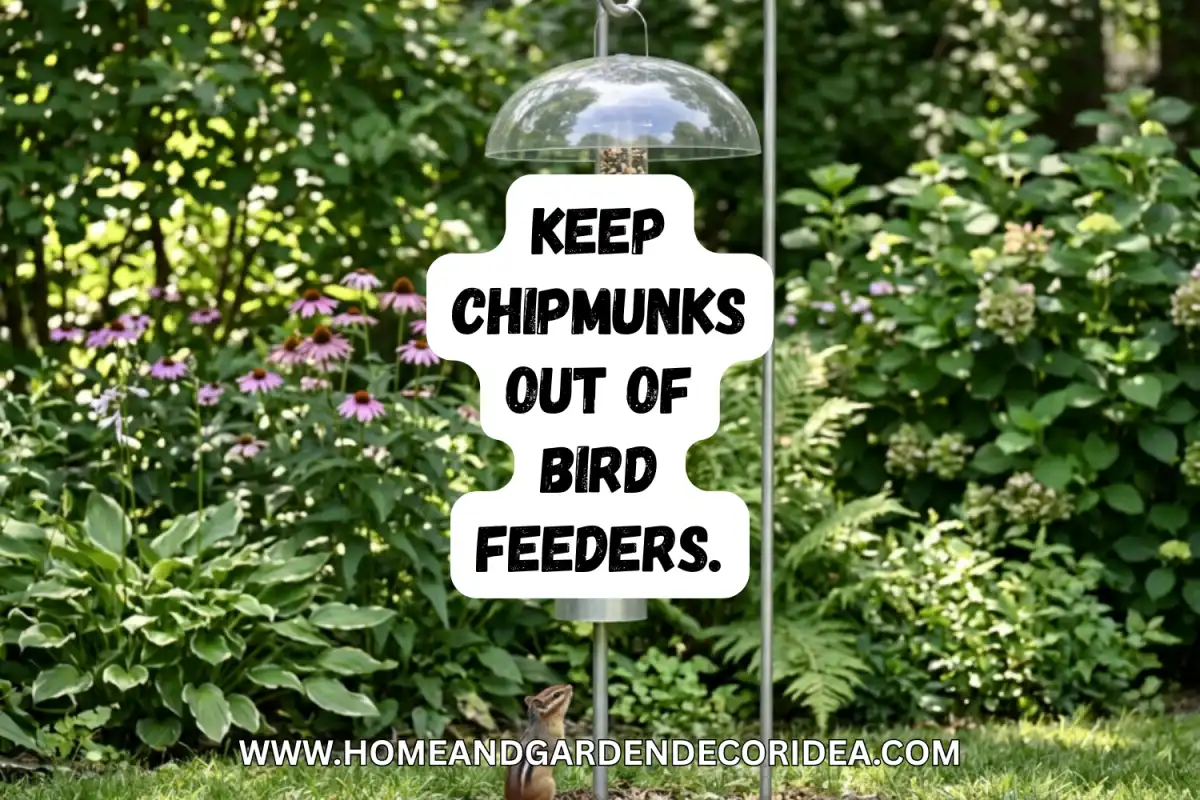
Chipmunks are cute creatures that bring life and charm to any garden. Chipmunks closely resemble squirrels and are best known for their distinct stripes along their backs and faces.
While chipmunks are a delight to observe, their presence can sometimes lead to unintended consequences. A common issue with chipmunks is their ability to exploit bird feeders as a food source.
They have an exceptional sense of smell, allowing them to locate the bird feeder in your outdoor space. To mitigate these issues by employing tactics to deter chipmunks, select chipmunks-resistant feeders that are weight sensitive. Utilizing metal cages can also prevent chipmunks from accessing the seeds, allowing smaller birds to feed.
The article will dig deeper into understanding chipmunks’ unique characteristics and behavior. By learning more about their behavior, you will be well suited to implement effective deterrents and striking a balance that allows enjoying the presence of chipmunks while ensuring the well-being of local ecosystems and birds.
Understanding Chipmunks
Chipmunks are adorable creatures with unique features that add life to your garden. However, with this in mind, it is crucial to understand their unique characteristics to keep them away from bird feeders.
These little creatures belong to the Sciuridae family and are closely related to squirrels. Chipmunks are well known for their distinctive stripes along their backs and faces.
The typical length for their fur creatures is 5 to 6 inches when fully grown with a weight of 2- 4 ounces. Their fur has a reddish-brown hue mixed with black and white stripes. The strip runs from its head to the base of the tail. Their tail resembles that of their close relative, the squirrel, bushy and often slightly flattened.
The chipmunks are diurnal creatures that are most active during the daytime. They prefer plenty of cover to remain hidden from predators. They prefer woodlands and brushy areas where they burrow systems with multiple entrances, providing shelter from predators and placing food.
While some may enjoy watching chipmunks scurry about, their presence can sometimes have unintended consequences. Because they are known for their ability to dig and burrow, chipmunks can cause damage to nearby plants and structures, especially near bird feeders.
Additionally, chipmunks are known for being prolific breeders, which can lead to an imbalance in the local ecosystem if their population is left unchecked and begins to spiral out of control.
Chipmunks are opportunistic feeders and can quickly discover and exploit bird feeders as a food source; their excellent smell helps them locate these food stations from a distance. Once they find out about your bird feeder, they will return frequently, often plundering the bird feeders and spilling seeds onto the ground.

How to Deter Chipmunks from Reaching Bird Feeders:
Chipmunks have an incredible sense of smell and are always searching for food. They are curious and agile, making it challenging to keep them out of bird-feeding areas.
However, we can discourage them with the right tactics and create a more concentrated feeding space for our feathered friends.
Choose the right bird feeder:
Chipmunks are intelligent creatures; therefore, selecting a suitable feeder that keeps away this rodent is crucial. If you find pesky chipmunks raiding your bird feeder and devouring all seeds, it’s time to look for bird feeders designed with chipmunk resistance.
One feature to look for when getting a new bird feeder resistance to chipmunks is considering a weight-sensitive perch mechanism. These feeders are equipped with perches that close off access to the seed supply when something heavier than a bird lands on them.
Heavier chipmunks trigger this mechanism compared to birds. This allows the seeds in the feeder to be only available for feathered visitors you intended to attract.
The other option for a chipmunk-resistant bird feeder is a tube feeder with metal cages around them. These cages create a barrier that stops chipmunks from getting to the seed ports while still allowing smaller birds to get to the food. The design of the metal cages works really well because chipmunks can’t squeeze through the narrow openings, so your bird food stays safe and undisturbed.
Elevate the bird feeder:
Raising bird feeders above the ground level is a deterrent for those pesky chipmunks. Mounting the feeder on a sturdy pole, the metal pole is an excellent material resistant to chewing. The pole needs to be long enough to provide adequate clearance from the ground, thus hindering attempts to reach the feeder.
Adding a baffle or cone just below the feeder is a brilliant concept to make the pole more effective. A baffle is a disk-shaped cone to deter the chipmunks from ascending the pole.
When placed around three feet above the ground, the obstacle foils the chipmunks ‘ acrobatic skills. The feeder should be positioned at least five feet above ground level to ensure ample distance between the crafty critters and the feeding platform.
Remove and clean fallen seeds regularly:
Establishing a routine for checking and cleaning the feeder area is needed. It’s important to do this at least two times a week, preferably in the evening when most of the feeding activity has ceased.
Use a broom or handheld vacuum cleaner to gently sweep or suction up any fallen seeds and dispose of them properly. I’ve learned that some bird seeds may sprout if left on the ground, potentially leading to unwanted plants around the feeder.
Keeping your environment clean and free from chipmunks is helpful and contributes to the overall health and well-being of the birds that visit your feeder.
By maintaining a clean and hygienic feeding area, birds are less likely to contract diseases that can be spread through contaminated seeds or bird droppings.






Leave a Reply