
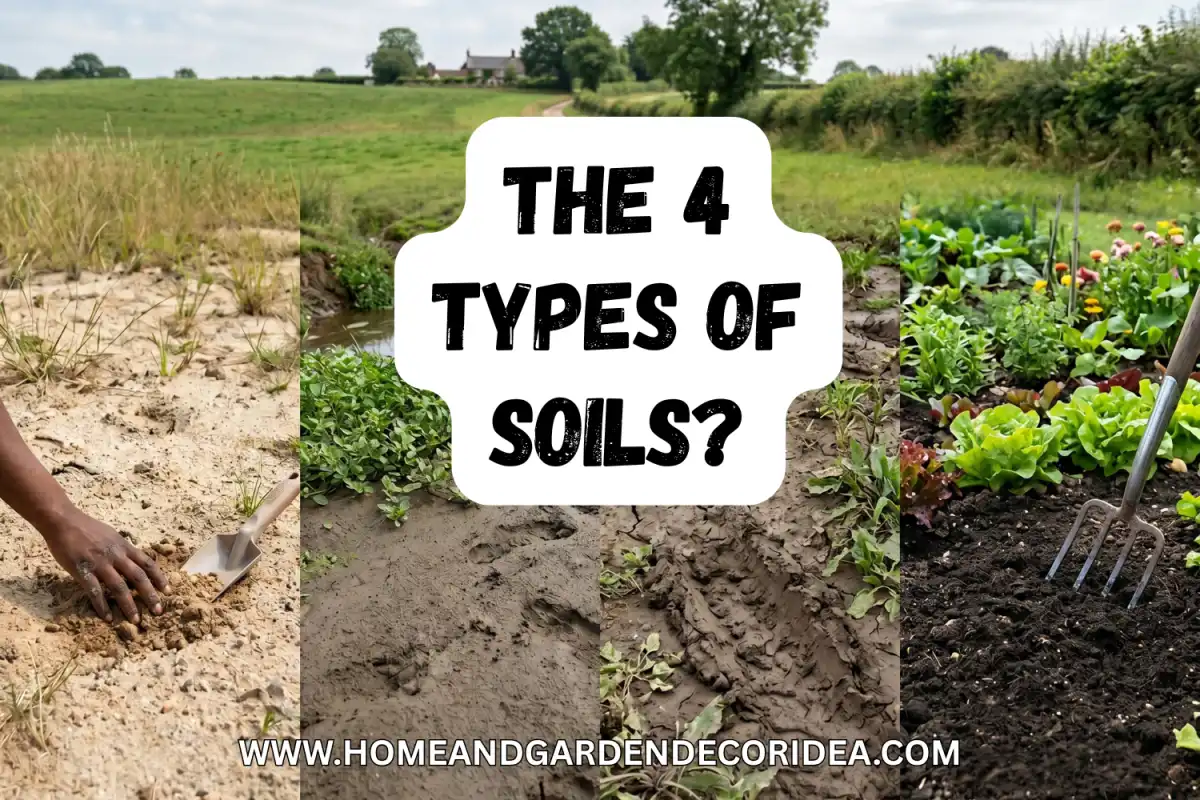
Soils can be classified into mineral and organic soils. Organic soils have much smaller proportions of sand, silt, and clay. These soils are light in weight and dark in color. The types of organic soils, peats, and mucks are based on the degree of decomposition of the organic fraction.
While much has few or no visible remains of plant tissues, peat is dominated by visible remains of plant tissues, and peaty muck is intermediate. Organic soils have poor drainage and are low in phosphorous and potassium. Organic soils have a high nitrogen content and are slow to warm up in the spring months.
Mineral soils have greater than 80 percent of mineral particles. These mineral particles include sand, silt, and clay. Mineral soils are typically classified on soil texture.
What is soil texture?
The soil texture refers to the soil’s size and distribution of sand, silt, and clay. These mineral particles affect the soil’s functions and behavior. The soil function and behaviors affected by these particles include the soil structure, soil water, nutrient holding capacity, and ease of cultivation.
Soil Structure:
Soil structure is the arrangement of soil particles(sand, silt, and clay) into peds or aggregate groups. Soil structure is created when microbial gums, iron oxides, organic matter, and clay bind soil particles together.
Soil scientists define structure in terms of aggregate shape, size, and strength.
The structure is a dynamic property that can be altered through management, such as plowing, rototilling, or adding organic matter. Well-developed structure enhances soil-plant relationships and affects the:
- Exchange of soil air with the atmosphere
- Rate of water movement through the soil.
- Size and amount of pore space.
- Amount of water a soil can hold.
- Ease with which plants extend their roots.
At times, a phenomenon called crusting occurs on bare soils. Crusts are created when raindrops’ impact destroys the surface layer’s structure.
Under these circumstances, the clay particles and organic matter that bind aggregates are washed away. Soil low in organic matter is most subject to crusting.
Crusts may nearly stop the exchange of air between the soil and the atmosphere, impede water infiltration, and inhibit the emergence of seedlings.

Soil water.
The most important component that determines the growth of plants is water. The growth of plants can not occur without water.
The ability to hold and contain water can be classified into two categories:
1 . Field Capacity occurs when all the gravitational water(i.e., That water that exists in very large soil pores) has drained.
Field capacity comprises tightly-held water and more loosely held, plant-available water.
2 . Wilting point is the amount of water in the soil when plants begin to wilt. At the wilting point, the only water remaining in the root zone is tightly held water. Many plants will also wilt when the soil is saturated, and no oxygen is available to the roots
Available water capacity(AWC) is the amount of water soil can hold for plant use. Water available to plants is between field capacity and wilting point. AWC is measured and reported on a volume basis.
| AWC | Per 1” of soil | Per 1’ of soil |
| LOW | <0.10 | <1.2 |
| MODERATE | 0.10 – 0.15 | 1.2 – 1.8 |
| HIGH | >0.15 | >1.8 |
Soils with low bulk density have a higher AWC than do soils with high bulk density because low bulk density soils have larger pores spaces.
Texture with large amounts of silt or very fine sand has the highest AWC.
Clayey soils hold the most significant amount of water; however, they have less AWC than loamy textures because they have many small pore spaces that hold water very tightly.
Sandy textures have the lowest AWC because they have huge pores that drain rapidly.
Organic matter holds more water than mineral matter. Thus, soils high in organic matter have higher AWC than soils low in organic matter.
Ease of cultivation:
Nutrient holding capacity:
Very few soils entirely exist with one particle size. Most soils consist of multiple sizes of particles.
Sandy texture soils:
Course textured soils typical y have a low water holding capacity, excessive drainage and low in nutrients, especially nitrogen and potassium.
Sand and Loamy Sand:
These soils are dominated by individual particles that can be seen without magnification. The particles feel gritty.
When squeezed, the most mass will form a cast; however, the cast will crumble when touched, Subclasses, based on the dominant size of the sand particles, include coarse sand and fine loamy sand.

Medium Texture soils:
Soils typically have good drainage and nearly ideal water-holding capacity.
Sandy Loam: These soils have enough silt and clay to be slightly coherent. Sand grains are dominant and can readily be seen and felt. When squeezed, a moist mass will form a cast that will bear careful handling without breaking.
Subclasses based on the dominant size of the sand particles include coarse sandy loam and fine sandy loam.
Loam: These soils have a slightly gritty feel, and some sand is visible. When squeezed, a moist mass will form a cast that can be handled freely without breaking.
Silt Loam:
When a dry mass of these soils is pulverized, the soil will feel floury. When squeezed, a moist mass will form a cast that can be readily handled without breaking.
Fine textured soils may need better drainage and are challenging to manage when wet.
Clay Loam and Silty Clay Loam:
When squeezed, a moist mass of these soils will form a cast that will bear much handling and forms a ribbon when squeezed between the thumb and forefinger.
Sand grains can be felt in a clay loam but not in a silty clay loam.
Fine Texture:
Fine textured soils are poorly drained but have high nutrient holding capacity.
Sandy Clay and Silty Clay
Sandy clays have more sand and less silt than clay soils. Silty clays have more silt and less sand than clay soils.
Clay: When dry, these soils feel hard. When squeezed, a moist mass will form a durable cast, forming a flexible ribbon between the thumb and forefinger.
Check out this related posts:
How do I know if my soil is clay or sand?
Why is soil testing important?

Leave a Reply