
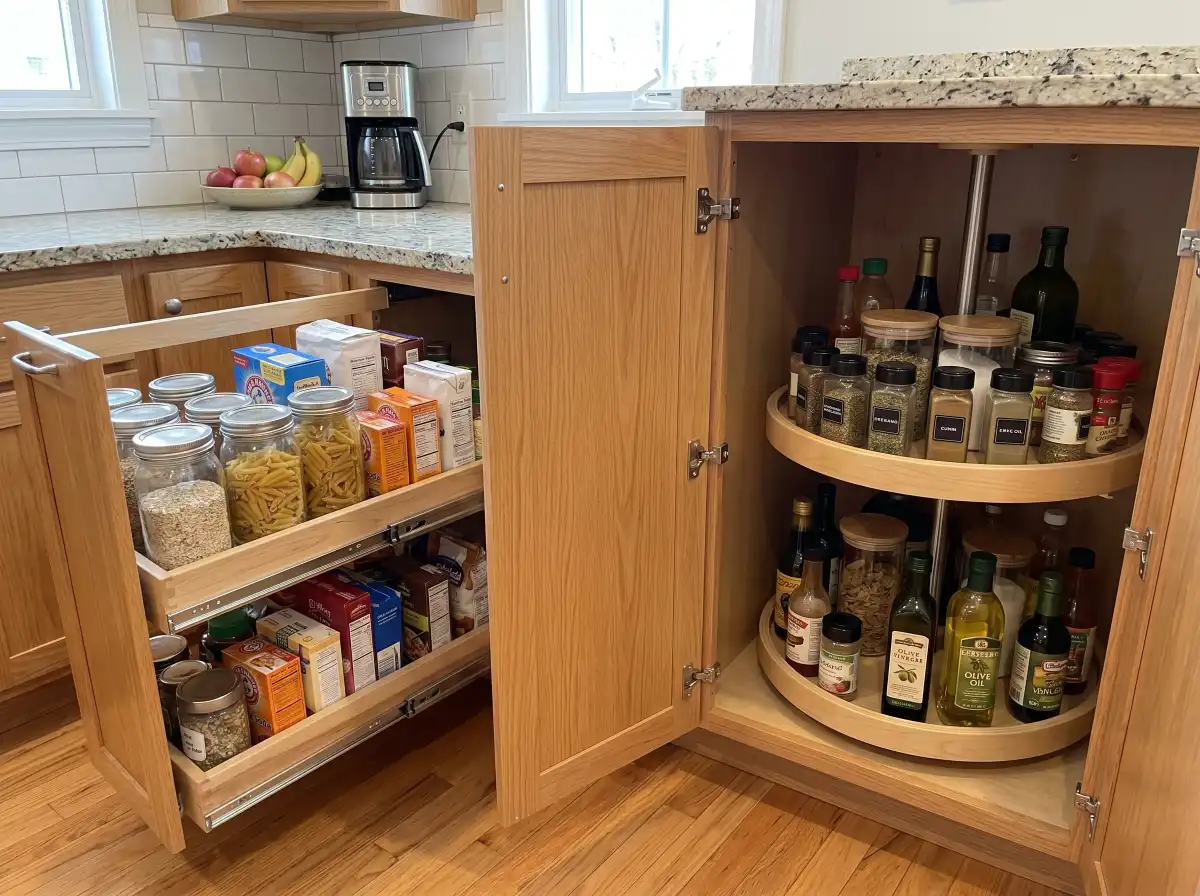
The most balanced, practical, and genuinely helpful guide to the lazy Susan vs pull-out shelf debate — because both are excellent cabinet organizers and the right choice depends entirely on your specific cabinet, your specific contents, and your specific life.
I have been asked this question — lazy Susan or pull-out shelf? — more times than I can count since I started writing about home organization.
It comes up in comments, in messages, in conversations with friends who are mid-kitchen-organization-project and standing in a hardware store aisle trying to decide between two options that both look promising and both have enthusiastic reviews.
And every time someone asks me, I feel the same slight tension between wanting to give them a clean, decisive answer and wanting to tell them the truth — which is that lazy Susan vs pull-out shelf is not a question with one universally correct answer.
It is a question with a correct answer for each specific situation, and the correct answer depends on factors that vary from cabinet to cabinet and kitchen to kitchen.
My friend Reem has both in her kitchen — lazy Susans in her corner cabinets and spice cabinet, pull-out shelves in her base cabinets under the cooktop and beside the sink — and she says that the combination is not a compromise but a genuinely intentional system where each organizer is doing the specific job it is best suited for.
She spent about six months using only pull-out shelves everywhere before adding lazy Susans to the corner and spice situations, and says the difference was immediately obvious — some cabinet situations genuinely want a lazy Susan and others genuinely want a pull-out shelf, and forcing the wrong solution into either situation produces a result that is annoying rather than helpful.
This guide is going to walk you through exactly how to know which situation wants which solution — with specific, honest guidance on where each organizer excels, where each one falls short, and how to make the decision for each specific cabinet in your home.
By the end, you will not just know which one to buy in general — you will know which one to buy for each specific cabinet you are trying to organize. Let’s settle this.
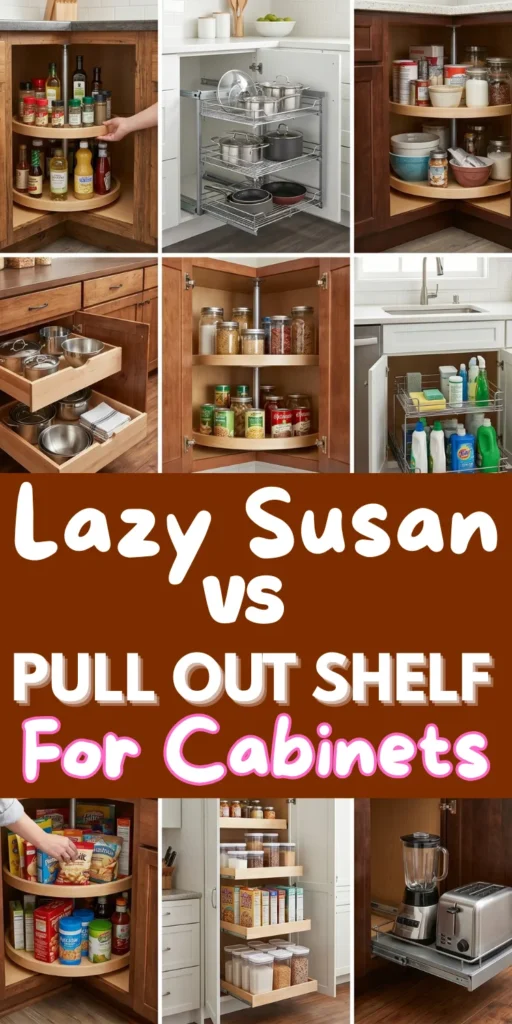
What Each Organizer Actually Does (And What That Means for Your Cabinet)
Before the comparison, clarity on exactly what each organizer does and how it solves the deep-cabinet accessibility problem — because understanding the mechanism helps you understand which mechanism is right for which situation.
The Lazy Susan: A lazy Susan is a rotating circular or D-shaped platform that sits on a cabinet shelf and spins. When you want an item at the back of the shelf, you spin the lazy Susan and that item rotates to the front. The lazy Susan’s solution to the deep-cabinet accessibility problem is rotation — no item is ever permanently at the back because every item can be brought to the front by spinning.
The Pull-Out Shelf: A pull-out shelf is a tray or basket mounted on drawer slides inside the cabinet that extends outward toward you when you pull it. When you want any item on the pull-out shelf, you pull the shelf toward you and the entire contents of the shelf slide out to where you can see and reach every single thing simultaneously. The pull-out shelf’s solution to the deep-cabinet accessibility problem is extension — everything comes to you, fully revealed, all at once.
These are genuinely different mechanisms solving the same problem in genuinely different ways — and each mechanism is better suited to certain cabinet types and certain content types than the other. That is the core of the comparison.
Where the Lazy Susan Wins Decisively
There are specific cabinet situations where the lazy Susan is unambiguously the better choice — where the rotating mechanism solves the problem in a way that a pull-out shelf either cannot match or would require significant expense and effort to replicate.
Corner Cabinets — The Lazy Susan’s Native Habitat
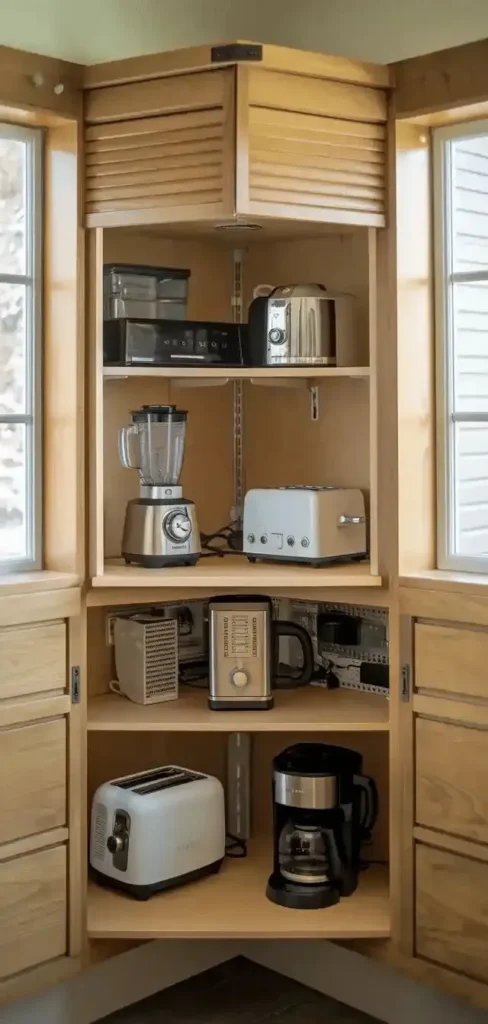
This is where the lazy Susan is more or less irreplaceable, and if you have corner cabinets, this point alone may settle the entire debate for you.
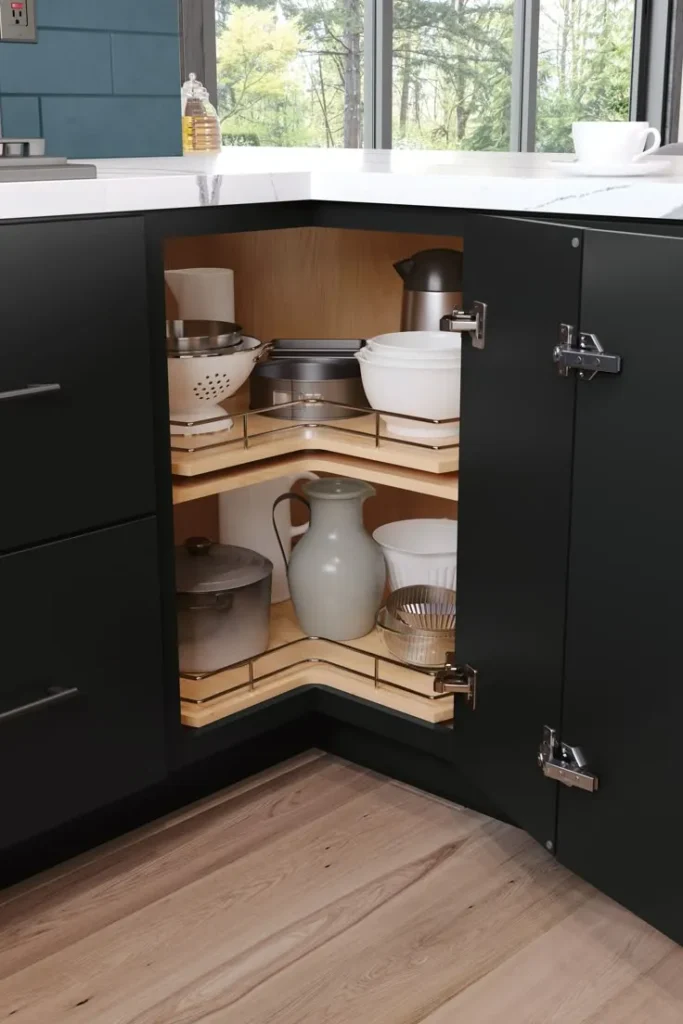
Corner base cabinets are the most notoriously inaccessible storage in any kitchen — they are deep in two directions simultaneously, the door opening is typically smaller than the full cabinet interior, and anything placed beyond the door opening is essentially only accessible by getting on your knees and reaching into the dark. A pull-out shelf can be installed in a corner cabinet — dedicated corner pull-out systems exist — but they are expensive, they require professional installation in most cases, and even the best ones do not make corner cabinet contents as accessible as a well-chosen lazy Susan.
A two-tier lazy Susan in a corner base cabinet allows every item in the cabinet to rotate to the door opening with one hand motion. Yes, you might not be able to see every item simultaneously the way a pull-out shelf allows, but the rotational access makes corner cabinet items significantly more accessible than they would be without any organizer at all — and more practically accessible than any pull-out system for the same price point.
Spice Organization — Where the Lazy Susan Shines
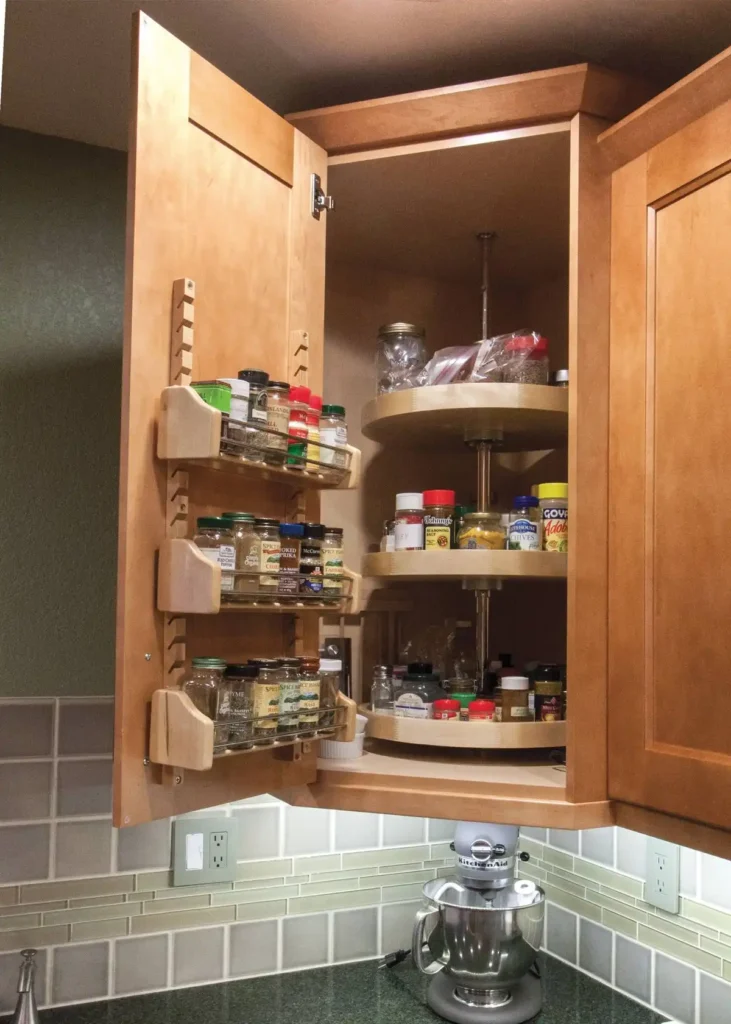
Spice storage is the second cabinet situation where the lazy Susan is genuinely excellent — because spices are small, numerous, similar in shape, and arranged in a cabinet in rows that make back-row items impossible to read from the front.
A lazy Susan in a spice cabinet lets you spin to see the label on any spice bottle in the cabinet in one rotation. A pull-out shelf in the same situation requires you to either see the front-row bottles and reach past them for back-row ones, or pull the entire shelf out every time you need a back-row spice. The lazy Susan is faster and more intuitive for spice-specific retrieval because the quick spin to find and retrieve a spice is genuinely one of the most efficient cabinet access motions in kitchen use.
Two-tier lazy Susans for spices — with shorter jars on the top tier and taller bottles on the bottom tier — double the storage capacity of the rotating footprint and are worth the slight premium over single-tier options.
Cleaning Supplies Under the Sink — The Lazy Susan Wins by Default
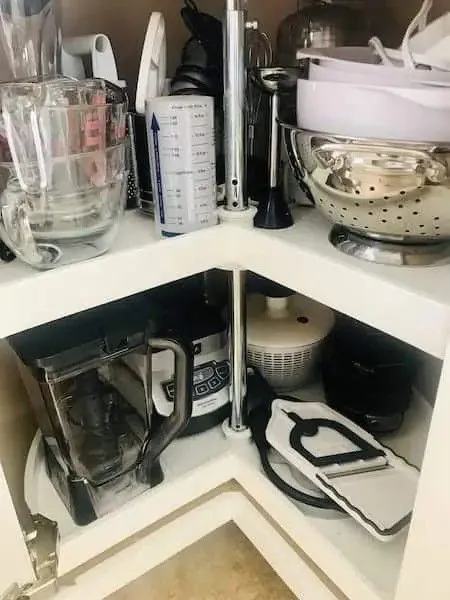
Under-sink cabinets are the most plumbing-obstructed cabinets in any kitchen, and the plumbing pipe running through the center of most under-sink spaces makes pull-out shelf installation complicated, expensive, and sometimes geometrically impossible without specialized equipment.
A lazy Susan — or two half-moon D-shaped lazy Susans that fit around the pipe — works with the under-sink plumbing obstruction rather than against it. The spinning access allows you to rotate cleaning supplies, spray bottles, and under-sink products to the front without needing to design around the pipe. No installation beyond placing the lazy Susan on the shelf is required.
Small, Round Items in Miscellaneous Storage — The Lazy Susan’s Practical Advantage
Canned goods, jars, round bottles, small containers — items that are round or that tend to roll — are genuinely better corralled on a lazy Susan than on an open shelf because the lip around the edge of the lazy Susan prevents them from rolling off during rotation. On a pull-out shelf, the same round items roll to the back whenever the shelf is pushed in and roll to the front when it is pulled out — requiring either tall sides or individual corralling to manage effectively.
Where the Pull-Out Shelf Wins Decisively
The pull-out shelf has its own set of cabinet situations where it is unambiguously the better choice — where the full-extension mechanism produces an accessibility advantage that rotation simply cannot replicate.
Standard Deep Base Cabinets — The Pull-Out’s Home Territory
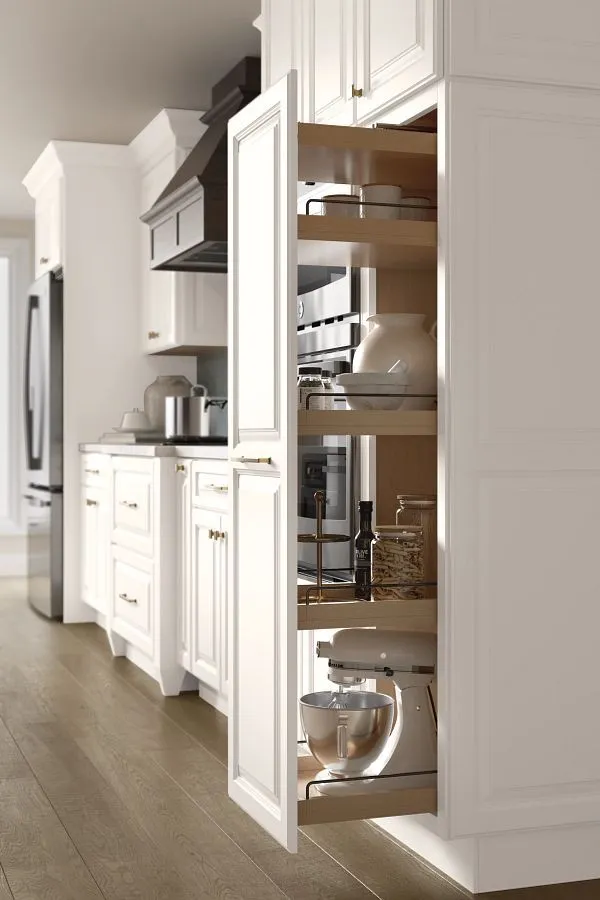
In a standard rectangular base cabinet — the kind that makes up the majority of kitchen base storage — the pull-out shelf is definitively the more useful organizer. Here is why: the lazy Susan in a rectangular cabinet does not use the cabinet’s full footprint. A circular or even a D-shaped lazy Susan wastes the corners of a rectangular cabinet, which means a significant portion of the available shelf space is simply not used. A pull-out shelf uses the full width and full depth of the rectangular cabinet with no wasted corners.
Additionally, in a standard rectangular base cabinet, a full-extension pull-out shelf makes every single item on the shelf simultaneously visible and simultaneously accessible — you can see everything at once. A lazy Susan in the same cabinet requires you to rotate through items sequentially to find what you want rather than seeing everything in one view.
For pots, pans, and large kitchen items in base cabinets, the pull-out shelf is particularly superior — these items are too large to rotate easily on a lazy Susan without awkward maneuvering, and the ability to pull the entire shelf out and select the specific pot or pan you want without moving anything else is genuinely significantly more convenient.
Very Heavy Items — Where the Pull-Out Outperforms
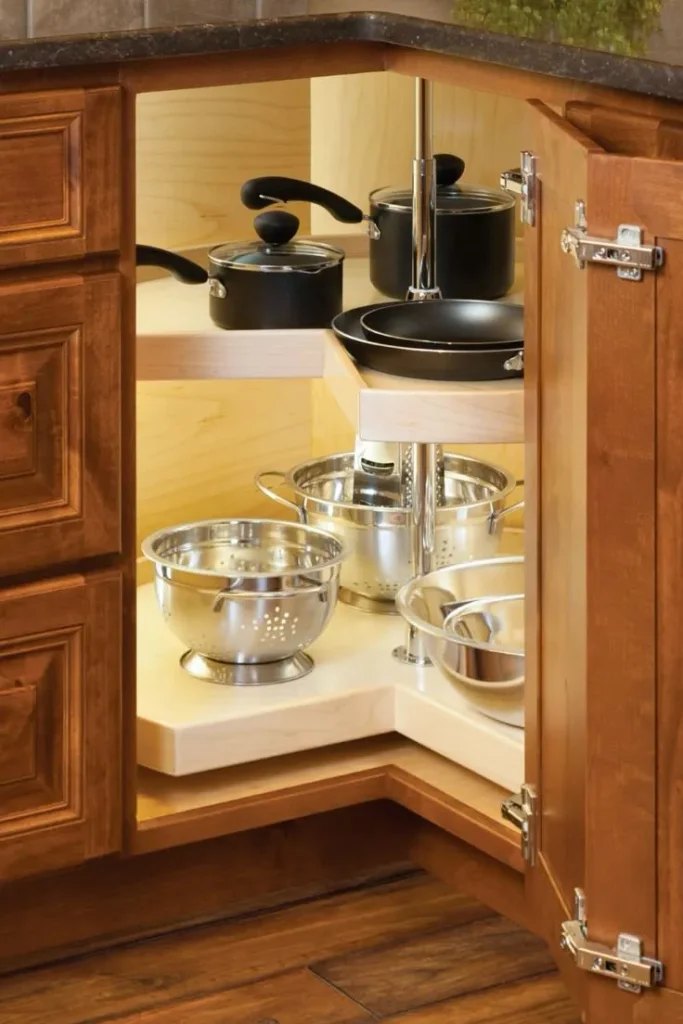
Lazy Susans have a weight limitation that pull-out shelves exceed. A standard lazy Susan handles light to moderate loads well but can become difficult to spin smoothly when loaded with very heavy items — cast iron cookware, large appliances, heavy bulk pantry items. The friction required to rotate a fully loaded, heavy lazy Susan can be significant enough that the rotation advantage disappears when the thing is hard to spin.
Pull-out shelves with ball-bearing slides are rated for heavy loads — quality slides handle 75 pounds or more without difficulty, and the linear extension motion does not become harder with increased weight the way rotation does. For heavy storage, pull-out shelves are the more practical choice.
Awkward-Shaped or Tall Items — The Pull-Out’s Advantage
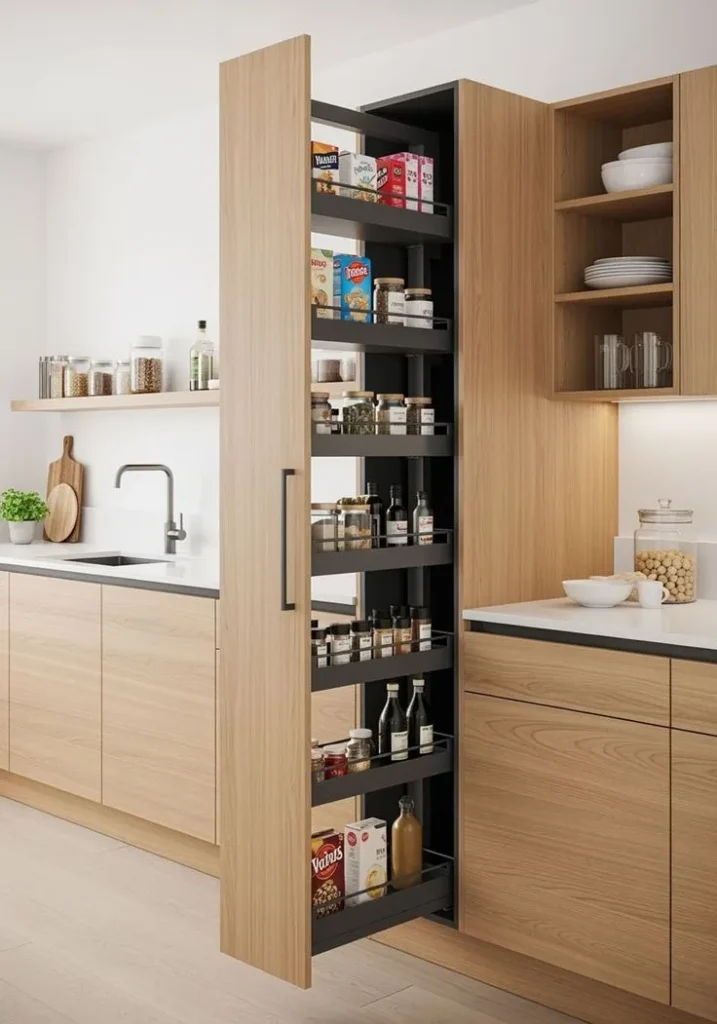
Items that are tall, awkwardly shaped, or that cannot be rotated without risking tipping — a tall bottle of olive oil, a large blender carafe, a wide mixing bowl — are poor candidates for a lazy Susan because they are difficult to rotate past other items without things falling over. On a pull-out shelf, these items simply sit in place while the shelf extends out from under them, accessible without any rotation or maneuvering around other items.
Upper Cabinets — Where the Pull-Out Provides Safety Advantages
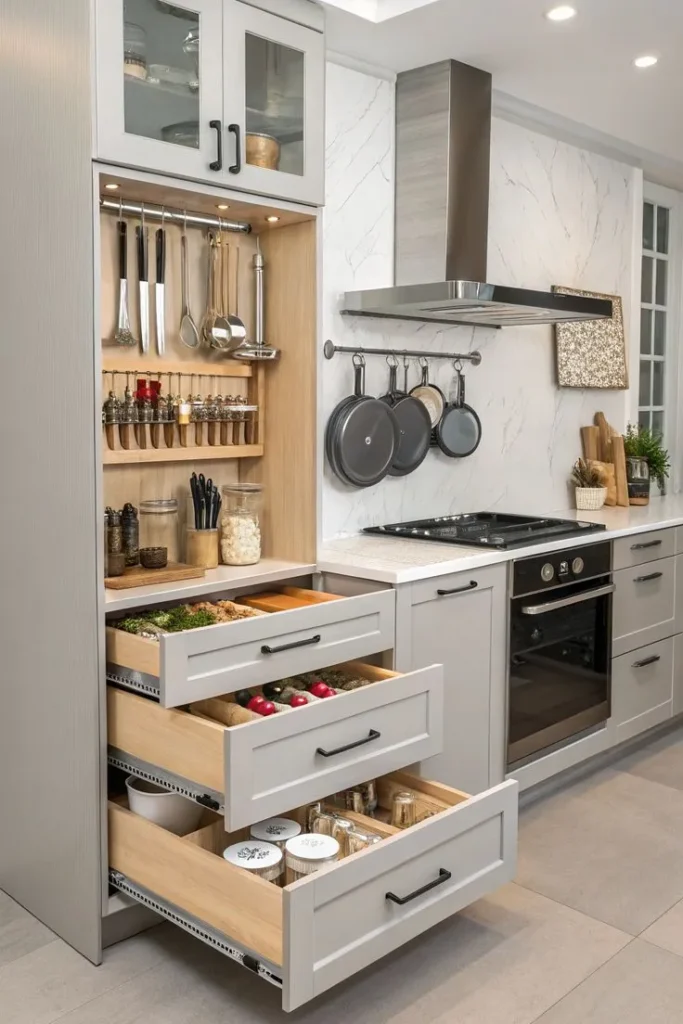
For upper cabinet shelves — particularly high upper shelves or upper shelves that hold less frequently used items — a pull-out shelf has an important safety advantage over a lazy Susan. Items on a high lazy Susan must be reached for and potentially removed while balancing on a step stool, increasing the risk of items being knocked or dropped during rotation. A pull-out shelf on a high upper shelf extends the shelf content downward and toward you, reducing reach distance and reducing the risk of items being disturbed during retrieval.
The Situations Where Either Works — And How to Choose Between Them
There are cabinet situations where both a lazy Susan and a pull-out shelf would work reasonably well — and in these situations, the tiebreaker factors come down to cost, installation effort, and personal preference.
Pantry Shelves: Both lazy Susans and pull-out shelves improve pantry shelf accessibility. Lazy Susans are cheaper, require no installation, and are better for round and small items. Pull-out shelves require installation but provide full-extension visibility of all contents. For pantry shelves with deep storage and a high value on seeing everything at once, pull-out shelves win. For pantry shelves with many small bottles and jars where quick rotation access is sufficient, lazy Susans win.
Bathroom Vanity Cabinets: Both work in bathroom vanity base cabinets. The under-sink plumbing consideration applies here as well — if your vanity cabinet has plumbing running through the center, lazy Susans accommodate this more easily. For vanity cabinets with clear interior access, a pull-out shelf provides better full-content visibility and is worth the installation effort.
Linen Closet Shelves: Lazy Susans work reasonably well for smaller linen closet items (toiletry supplies, first aid). Pull-out shelves work better for heavier folded textiles. For very deep linen closet shelves, pull-out shelves provide meaningfully better accessibility.
The Cost and Installation Comparison
This is a genuinely significant practical difference between the two organizers that affects many purchase decisions.
Lazy Susan — Low Cost, Zero Installation
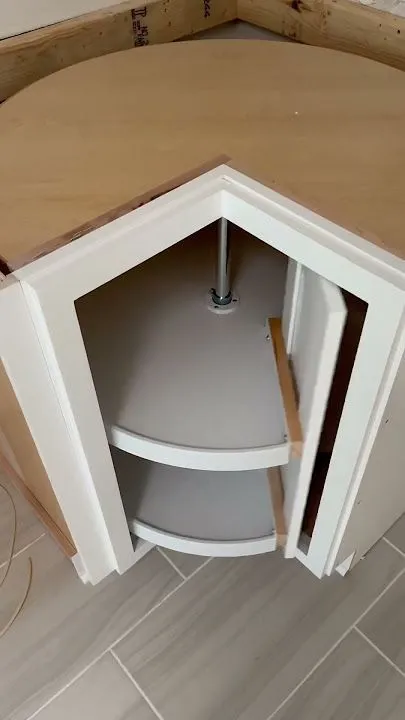
A quality single-tier lazy Susan for a standard cabinet costs $10 to $25. A two-tier version for corner cabinets costs $25 to $60. Installation consists of placing the lazy Susan on the cabinet shelf. No tools, no drilling, no time. The lazy Susan is immediately functional from the moment it arrives at your door.
For renters, for people who are not comfortable with DIY installation, or for anyone who wants an immediate improvement without an installation project, the lazy Susan’s zero-installation requirement is a meaningful advantage.
Pull-Out Shelf — Higher Cost, Requires Installation
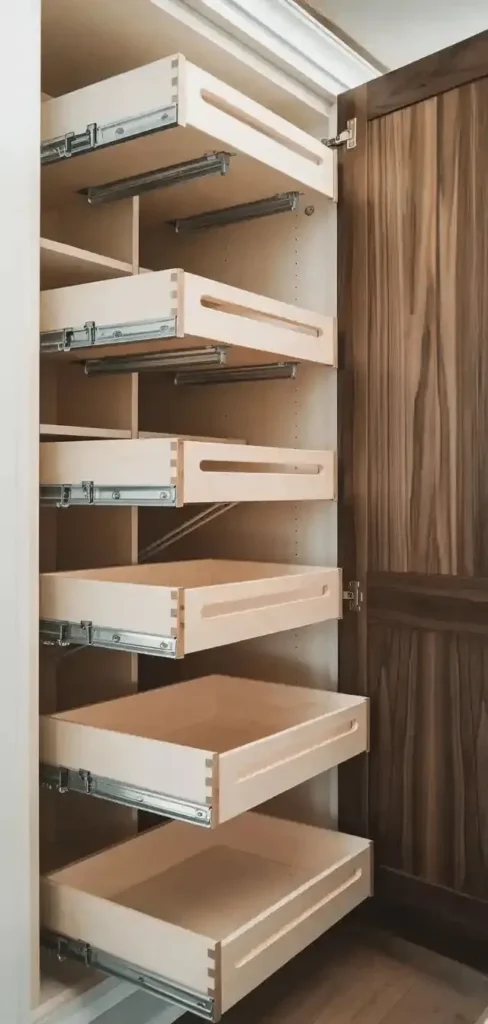
A quality single pull-out shelf unit costs $30 to $80 for the organizer itself, plus the time and tools for installation. Installation requires measuring, drilling, leveling, and mounting — a 30 to 60 minute project per shelf for someone comfortable with basic DIY, longer for a first-time installer. For a full kitchen of base cabinets (8 to 12 cabinets), the total materials cost can be $300 to $600 and the installation time can be a full weekend.
The pull-out shelf investment is significantly higher than the lazy Susan in both money and effort. The functional return on that investment is also significantly higher — but only in the cabinet situations where the pull-out shelf’s full-extension mechanism is genuinely the better solution.
The Honest Side-by-Side Comparison
Let me put the complete comparison in one place for easy reference.
Lazy Susan: ✓ No installation required ✓ Very affordable ($10 to $60) ✓ Ideal for corner cabinets ✓ Ideal for spice storage ✓ Works around plumbing obstacles ✓ Good for small, round items ✓ Can spin to access any item quickly ✗ Wastes corners in rectangular cabinets ✗ Items not simultaneously visible ✗ Can be hard to spin when very heavily loaded ✗ Not ideal for very tall or awkward items ✗ Not the best solution for heavy cookware
Pull-Out Shelf: ✓ Full visibility of all contents simultaneously ✓ Uses full cabinet footprint efficiently ✓ Ideal for rectangular base cabinets ✓ Ideal for heavy cookware ✓ Rated for significant weight loads ✓ Works for tall and awkward items ✓ Ideal for upper cabinet safety ✗ Requires installation (30 to 60 minutes per shelf) ✗ Higher cost ($30 to $80 per shelf plus hardware) ✗ Not ideal for corner cabinets ✗ Installation complicated by plumbing obstacles ✗ Not a renter-friendly solution without permission
The Recommendation by Cabinet Type
Based on everything above, here is the specific recommendation for each major cabinet type — the answer I would give my friend who is standing in the hardware store aisle and needs to make a decision.
Corner base cabinet: Lazy Susan. Every time. The two-tier version if your cabinet is deep enough for it.
Standard rectangular base cabinet: Pull-out shelf. The full-extension accessibility and full-footprint use make it the right answer in the vast majority of situations.
Under-sink cabinet (with plumbing obstacles): Lazy Susan or the Delamu two-piece under-sink organizer. The plumbing makes pull-out shelf installation complicated enough that the lazy Susan wins by practicality.
Spice cabinet: Lazy Susan. Preferably the two-tier version designed specifically for spice storage.
Pantry shelves (deep): Pull-out shelf if you can install it. Lazy Susan if you cannot.
Upper cabinet (high shelves): Pull-out shelf for improved safety and reduced reach distance.
Bathroom vanity (with plumbing): Lazy Susan or specialized under-sink organizer.
Bathroom vanity (without plumbing obstacles): Pull-out shelf for better full-content visibility.
What My Friend Reem Does — And Why It Works
I want to come back to Reem’s system for a moment because I think it illustrates the right conclusion to this entire comparison better than any summary I could write.
Reem has lazy Susans in her corner cabinets — two two-tier lazy Susans, one per corner cabinet, and she says retrieving anything from those previously-inaccessible corners is now something she does without thinking. She has lazy Susans in her spice cabinet — a two-tier version that holds every spice she owns in one rotating, quickly accessible display. She has a lazy Susan under her kitchen sink where the plumbing made pull-out installation impractical.
And she has pull-out shelves in every other base cabinet — the cabinet under the cooktop where her pots and pans live, the cabinet beside the sink where her cleaning supplies are stored, the two base cabinets on either side of her dishwasher where her everyday dishes and pantry overflow are organized.
When I asked her which she preferred, she laughed and said she prefers not having to prefer — that both are doing exactly what they are supposed to be doing in the cabinet where they belong, and that the combination is why her kitchen works as well as it does.
That is the right answer to the lazy Susan vs pull-out shelf question. Not one or the other — the right one for each specific cabinet.
Now go pin this complete comparison guide, share it with whoever is currently standing in the hardware store aisle trying to decide between these two excellent organizers, and go look at each cabinet in your home with this framework in mind.
Pin this and save it — every time you’re trying to decide between a lazy Susan and a pull-out shelf for a specific cabinet, this guide will give you the exact right answer for that exact situation!









Leave a Reply