
Choosing the right living room rug size can instantly make your space look bigger, more expensive, and professionally styled—and there’s one simple rule that works every single time.
Girl, if you’ve ever stood in a home store staring at rugs and wondering, “Wait… what size rug for living room spaces actually looks right?”—you are definitely not alone.
I used to think rug shopping was easy. You just picked a cute pattern, brought it home, and rolled it out, right? Oh my, was I wrong. A few years ago I bought a gorgeous rug online that looked amazing in the photos. When it arrived, it was so tiny that it basically floated in the middle of my living room like a lonely island. Not exactly the Pinterest-worthy vibe I was going for, lol.
My friend Jess made the exact same mistake. She found a budget-friendly rug on sale and couldn’t resist. Once she placed it in her living room, it actually made the entire space look smaller instead of larger. That’s when we both learned that rug size matters way more than color or pattern.
The good news? Figuring out what size rug for living room layouts need is actually pretty simple once you know the rule designers use. In this guide, I’m sharing the exact method I use every time, plus common mistakes to avoid and pro tips that instantly elevate your space.
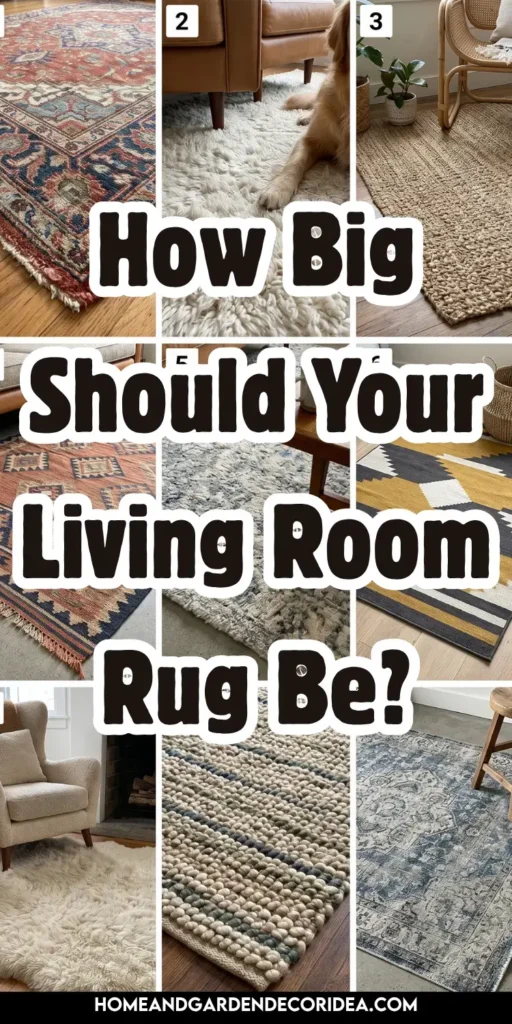
Why Rug Size Matters More Than You Think
Before we talk about what size rug for living room spaces need, let’s talk about why size is such a big deal.
A properly sized rug creates visual balance. It helps all your furniture feel connected and intentional rather than randomly placed around the room. This is one of the biggest reasons professionally designed living rooms feel so polished.
I’m seriously obsessed with how much larger a room can feel when the rug size is right. It’s one of the most budget-friendly design tricks out there because you don’t need new furniture—you just need the correct foundation.
Plus, this idea is trending everywhere right now. Scroll Pinterest or TikTok and you’ll notice that the most viral living rooms almost always have oversized rugs anchoring the space.
The Rule That Always Works: Front Legs On The Rug
When people ask me what size rug for living room layouts should have, this is the first thing I tell them.
At minimum, the front legs of every major seating piece should sit on the rug. That means your sofa and chairs should partially overlap the rug instead of floating around it.
This instantly creates a cohesive look. Everything feels connected and intentional rather than separate pieces scattered around the room.
If your rug is too small to reach the front legs of your furniture, it’s probably too small for the room. I know that’s not what our wallets want to hear, but trust me—this rule changes everything.
My favorite designer-inspired look is when all furniture legs fit completely on the rug. It feels luxurious, high-end, and incredibly aesthetic.
What Size Rug for Living Room Spaces? Quick Size Guide
If you’re wondering exactly what size rug for living room layouts typically need, here’s a simple comparison table.
| Living Room Size | Recommended Rug Size |
|---|---|
| Small Apartment Living Room | 5′ x 8′ or 6′ x 9′ |
| Standard Living Room | 8′ x 10′ |
| Larger Living Room | 9′ x 12′ |
| Open Concept Living Room | 10′ x 14′ or larger |
| Oversized Living Room | 12′ x 15′ |
I highly recommend measuring your room before shopping. Never guess. Trust me on this one.
One of the biggest decorating mistakes I see is people buying based on what “looks right” online instead of what actually fits their dimensions.
Why Bigger Is Usually Better
Let’s talk honestly for a second.
When deciding what size rug for living room spaces need, most people buy too small—not too large.
A larger rug visually expands your room. It creates the illusion of more floor space and makes furniture feel proportionate.
I can’t say enough about how dramatic this transformation can be. My current living room rug is significantly larger than the one I originally planned to buy, and it completely changed the space.
Meanwhile, tiny rugs often make rooms feel disconnected. They draw attention to what’s missing rather than what’s beautiful.
The 18-Inch Rule Designers Love
One of the most popular ideas among interior designers is the 18-inch rule.
When determining what size rug for living room spaces require, leave approximately 12–18 inches of exposed flooring around the rug’s perimeter.
This creates balance between the rug and the room itself. The space feels intentional rather than overcrowded.
Of course, this isn’t a strict law. Smaller rooms might need less exposed floor, while larger rooms can handle more.
But honestly, it’s one of the easiest guidelines to follow when you’re unsure.
Rug Placement Styles Compared
Not every living room uses the same rug layout.
Here’s a quick breakdown:
| Style | How It Looks | Best For |
|---|---|---|
| All Legs On | Every furniture leg sits on rug | Large rooms |
| Front Legs On | Front legs only on rug | Most homes |
| Coffee Table Only | Rug under coffee table only | Small spaces |
| Floating Rug | Rug isolated from furniture | Not recommended |
I personally prefer the front-legs-on approach because it’s practical, stylish, and works in almost every living room.
The coffee-table-only setup can work temporarily, but I don’t recommend it if you’re aiming for that designer-inspired look.
How To Measure Before You Buy
Whenever someone asks me what size rug for living room shopping requires, I always tell them to grab painter’s tape first.
Use tape to outline the rug dimensions directly on your floor.
This trick lets you visualize exactly how the rug will fit before spending money.
My friend Sarah did this when decorating her first apartment, and it saved her from ordering the wrong size twice. Seriously, it’s such a simple hack.
You can even walk around the taped area and test furniture placement before making a final decision.
Pro Tip: Think About Your Future Furniture Too
Here’s something most decorating guides never mention.
When deciding what size rug for living room layouts need, think ahead.
If you’re planning to upgrade your sofa, add accent chairs, or rearrange your space later, choose a rug that can accommodate those changes.
A slightly larger rug gives you flexibility and longevity. That’s why I usually encourage people to size up whenever possible.
It’s one of those purchases that pays off over time.
Common Rug Sizing Mistakes To Avoid
The biggest mistake is choosing the cheapest size available.
I totally understand the temptation because larger rugs can be expensive. But a rug that’s too small often ends up looking awkward and unfinished.
Another mistake is ignoring furniture placement entirely. The rug should support your layout—not compete with it.
Finally, don’t forget to measure door clearance, walkways, and surrounding furniture. A beautiful rug isn’t helpful if it creates daily frustration.
Final Thoughts: The Best Answer to “What Size Rug for Living Room?”
If you remember only one thing from this article, remember this:
Your living room rug should be large enough for at least the front legs of your seating furniture to sit on it comfortably.
That’s the rule that works almost every time.
Whether you’re decorating your first apartment, upgrading your forever home, or simply refreshing your space, choosing the right what size rug for living room solution can make your room look larger, more expensive, and much more intentional.
And girl, once you see the difference, you’ll never look at rug sizing the same way again. Trust me.

Leave a Reply