
And now my apartment looks like a jungle (in the best way possible)
Okay, let me just start by saying this: if you’ve ever looked at a cute little fiddle leaf fig at Target, brought it home with all the hope in the world, and watched it dramatically wilt into a sad, crispy stick within two weeks — I SEE YOU, GIRL. 🙋♀️
I’m not even kidding when I say I went through SEVENTEEN plants before I finally figured out how to care for indoor plants for beginners. Seventeen! My friend Jess used to call my apartment “the plant cemetery” and honestly? She wasn’t wrong. I’d buy these gorgeous leafy babies, name them (yes, I named them), and then somehow manage to either drown them or dehydrate them to death. It was a talent, really.
But here’s the thing — I was overcomplicating EVERYTHING. I thought I needed fancy fertilizers, distilled water, and some kind of botanical degree just to keep a snake plant alive. Spoiler alert: I was so wrong. Once I stripped it all back and learned the actual basics of how to care for indoor plants for beginners, everything clicked. And now? My apartment looks like a freaking urban jungle and I’m seriously obsessed with every single one of my green babies.
So if you’re ready to finally become that girl with the beautiful, thriving plants — the one whose Instagram feed is full of lush greenery and aesthetic plant corners — grab your favorite drink and let’s get into it. I’m about to share EVERYTHING I wish someone had told me when I was starting out. These tips are so simple, I promise you’ll be like “wait, THAT’S it?” lol.
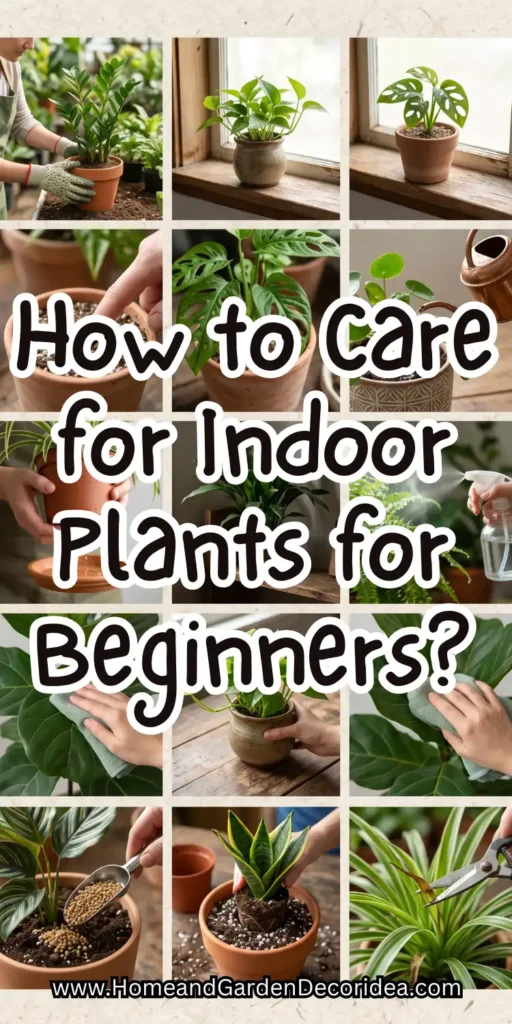
1. UNDERSTAND THAT LESS WATER IS ACTUALLY MORE (I LEARNED THIS THE HARD WAY)
Okay, real talk — this is THE most important thing when you’re learning how to care for indoor plants for beginners. And I’m gonna say this loud for the people in the back: OVERWATERING KILLS MORE PLANTS THAN UNDERWATERING.
I used to water my plants on a strict schedule because that’s what I thought you were supposed to do, right? Every Tuesday morning, I’d give them all a big drink. And then I’d wonder why my poor pothos was turning yellow and looking sad. My friend Sarah, who has like 50 plants in her tiny studio, finally sat me down and was like “girl, STOP. You’re drowning them.”
Here’s what I learned: most houseplants actually prefer to dry out a bit between waterings. The real secret to how to care for indoor plants for beginners is sticking your finger about an inch into the soil. If it’s dry? Water it. If it’s still damp? PUT THE WATERING CAN DOWN. Step away from the plant!
And can we talk about drainage for a second? Oh my god, this was a game-changer for me. If your pot doesn’t have a drainage hole, you’re basically giving your plant a bath with nowhere for the water to go. That’s how you get root rot, and trust me, it’s not cute. I highly recommend getting pots with drainage holes OR keeping your plants in those cheap plastic nursery pots and just placing them inside a cute decorative pot. That way, you can take them out to water, let them drain, and pop them back in. It’s literally one of the most popular ideas for how to care for indoor plants for beginners and it’s SO simple!
| Watering Style | Plant Types That LOVE It | Plant Types That DON’T |
|---|---|---|
| “Drench and dry” (water thoroughly, let dry completely) | Snake plants, ZZ plants, succulents | Ferns, Calatheas, Peace lilies |
| “Keep consistently moist” | Ferns, Spider plants, African violets | Any succulent, Cactus |
| “Bottom watering” (let plant drink from tray) | African violets, Peperomias | Large/tall plants, succulents |
Pro Tip: Get yourself a moisture meter! They’re literally like $10 on Amazon and take ALL the guesswork out of how to care for indoor plants for beginners. You just stick it in the soil and it tells you exactly how wet it is. I don’t recommend relying on it 100% forever, but when you’re starting out? Life-changing.
2. LIGHT MATTERS MORE THAN YOU THINK (AND IT’S NOT AS COMPLICATED AS IT SEEMS)
I cannot say enough about how important light is in the whole “how to care for indoor plants for beginners” journey. For the longest time, I just put my plants wherever they looked cute and prayed for the best. Big mistake. Huge.
Here’s what I wish someone had told me: there’s a huge difference between “bright indirect light,” “direct light,” and “low light.” And honestly, most of the viral plants on TikTok — like monsteras and fiddle leaf figs — NEED bright indirect light to thrive. They’re trending on Pinterest for a reason, but they’re not gonna look aesthetic if you stick them in a dark corner of your bedroom.
My apartment doesn’t get amazing natural light, so I had to get creative. What I found works best when you’re trying to figure out how to care for indoor plants for beginners is to actually OBSERVE your space for a day. Notice where the light hits at different times. That spot that gets gorgeous morning sun but not harsh afternoon rays? That’s your prime plant real estate, girl!
And if you’re like me and you don’t have windows that face the right direction? Grow lights are where it’s at! They’re honestly so cute now — I got these little clip-on ones that look aesthetic and my plants are literally thriving. One of my favorite tips for how to care for indoor plants for beginners is to get a plant app that helps you identify your plant and tells you exactly what light it needs. I use Planta and honestly it’s been a lifesaver.
Quick Guide to Light Requirements:
- Direct light: Right in a sunny window, literally sunbeams hitting the plant. Great for succulents and cacti.
- Bright indirect light: Near a window but not in direct sunbeams. Monsteras, fiddle leaf figs, and philodendrons LOVE this.
- Medium indirect light: A few feet away from a window. Most pothos and snake plants are happy here.
- Low light: Dark corners, rooms with small windows. ZZ plants and snake plants can handle this (but they won’t grow much).
3. CHOOSE “UNKILLABLE” PLANTS FIRST (YOUR CONFIDENCE WILL THANK YOU)
Okay, I’m gonna be real with you — when you’re just starting to learn how to care for indoor plants for beginners, you need some wins. You need plants that are basically like “eh, I’ll survive even if you forget about me for a while.” Because let’s be honest, we all have those weeks where we’re so busy we forget to eat, let alone water our plants lol.
My first successful plant was a snake plant, and honestly, I’m convinced they’re indestructible. My friend Mia has one that she literally forgot about for three months and it was FINE. They thrive on neglect, which is perfect for beginners trying to figure out how to care for indoor plants for beginners without the stress of a high-maintenance diva plant.
Here are my top recommendations for beginner-friendly plants that are viral on TikTok for being basically impossible to kill:
- Snake Plant — these are everywhere and for good reason. They’re low light tolerant, drought tolerant, and just generally don’t care about your life choices.
- ZZ Plant — literally the same vibe as a snake plant. They have these beautiful waxy leaves and they’ll survive basically anything.
- Pothos — this was the first plant I actually kept alive! They trail beautifully, grow quickly, and will literally tell you when they’re thirsty by getting a little droopy. It’s like they communicate with you.
- Spider Plant — these are so forgiving and they’re fun because they grow these little baby spider plants that you can propagate and give to friends (plant lady friendship is the best friendship).
This is my absolute favorite tip for how to care for indoor plants for beginners — start with these confidence builders before you drop $100 on a rare monstera albo that will have a meltdown if you look at it wrong. I don’t recommend starting with super expensive or rare plants because you’ll just stress yourself out and honestly? That takes all the fun out of it!
Pro Tip: Pothos plants are probably the BEST starting point for learning how to care for indoor plants for beginners because they literally tell you what they need. Droopy leaves? They need water. Yellow leaves? You overwatered. Brown crispy edges? They’re too dry or need more humidity. It’s like having a plant teacher, I swear.
4. HUMIDITY IS THE SECRET WEAPON (AND IT’S CHEAPER THAN YOU THINK)
Okay so here’s something that NO ONE told me when I was first trying to figure out how to care for indoor plants for beginners: indoor air is DRY. Like, really dry. Especially if you live somewhere with cold winters where the heat is running all the time. That’s why so many plant parents struggle with brown leaf tips and crispy edges!
My calathea was literally the bane of my existence until I figured this out. I’d bought this beautiful prayer plant because it was trending on Pinterest and looked SO aesthetic in all the photos, but mine just kept getting brown edges and looking generally sad. I was about to give up on how to care for indoor plants for beginners entirely until my friend Lauren — who’s literally a plant guru — was like “girl, does your plant get humidity?”
UM, EXCUSE ME? Humidity? I thought plants just needed water and light. Turns out, many of the most popular houseplants are tropical plants and they’re used to humid environments. Who knew?
The good news is that increasing humidity is SO easy and budget-friendly. Here’s what I do:
- Misting: I keep a little spray bottle near my plants and give them a spritz every few days. Honestly, it’s kind of therapeutic.
- Pebble trays: This is one of my favorite ideas for how to care for indoor plants for beginners. You literally just put some pebbles in a shallow tray, add water, and place your plant pot on top (make sure the bottom of the pot isn’t sitting IN the water, just above it). As the water evaporates, it creates humidity around the plant. So simple and cheap!
- Grouping plants together: Plants naturally release moisture through their leaves, so when you group them together, they create their own little humid microclimate. Plus, it looks aesthetic AF.
- Humidifier: If you want to get fancy, there are cute little humidifiers that look amazing. I got a pretty pink one from Amazon and honestly, it’s been game-changing for learning how to care for indoor plants for beginners.
Let’s break it down:
| Plant Type | Humidity Need | Signs It’s Not Getting Enough |
|---|---|---|
| Tropical (monstera, calathea, ferns) | High humidity (50%+) | Brown, crispy leaf edges |
| Succulents, cacti | Low humidity | Actually thrive in dry air |
| Most common houseplants | Moderate humidity (40-50%) | Leaves looking dull, slow growth |
5. CLEAN YOUR LEAVES AND ROTATE YOUR PLANTS (YES, REALLY)
Okay, I know this might sound like extra, but hear me out because this is genuinely one of the most overlooked parts of how to care for indoor plants for beginners. Dust accumulates on leaves, and when it does, it BLOCKS the light! Your plant is basically trying to photosynthesize through a layer of dust and that’s just not fair to them lol.
I try to wipe down my plant leaves once a month or so with a damp microfiber cloth. For plants with smaller leaves, I’ll just put them in the shower (gently!) and let water run over them for a minute. I seriously cannot say enough about how much this helps. It makes the leaves all shiny and beautiful too, which is obviously important for the ‘gram.
And here’s another one: ROTATE YOUR PLANTS. This was a revelation for me in my journey of how to care for indoor plants for beginners. Plants grow toward the light, right? So if you never rotate them, they’ll start leaning dramatically toward the window and get all lopsided. I just turn mine a quarter turn every time I water them. It takes two seconds and keeps them growing nice and evenly.
This is especially important for plants like monsteras and fiddle leaf figs that are known for having that gorgeous, symmetrical aesthetic. All the plant influencers on TikTok who have those perfect, lush plants? They ABSOLUTELY rotate them regularly.
Pro Tip: When you’re dusting your plants, check for pests while you’re at it! Little bugs like spider mites and mealybugs can sneak up on you, and catching them early is seriously the best way to handle it. I do a quick leaf inspection every time I clean them, and honestly, that little habit has saved so many of my plants from infestation. One of the most underrated tips for how to care for indoor plants for beginners is just regularly LOOKING at your plants and noticing when something seems off.
6. DON’T REPOT TOO SOON (AND KNOW WHEN IT’S ACTUALLY TIME)
This is something I messed up SO BAD when I first started learning how to care for indoor plants for beginners. I’d bring home a new plant and immediately be like “okay, you’re getting a pretty new pot with cute drainage and aesthetic vibes!” And then I’d wonder why my plants were sad or dropping leaves.
TURNS OUT, plants actually like being a little root-bound! They get stressed out when you mess with their roots. Who knew?
So here’s the deal on how to care for indoor plants for beginners when it comes to repotting: WAIT. Seriously. Give your new plant at least a few weeks (or even months) to acclimate to your home before you even THINK about repotting it. Let it adjust to the light, your watering habits, and the general vibes of your space.
When you do need to repot, you’ll know because:
- Roots are coming out of the drainage holes
- The plant looks like it’s about to burst out of its pot
- Water runs straight through the soil without absorbing
- It’s been like 1-2 years since the last repotting (depending on the plant)
Spring and summer are the BEST times to repot because that’s when most plants are actively growing and can recover faster. I highly recommend not repotting in the middle of winter when plants are kinda dormant anyway.
Pro Tip: When you DO repot, only go up ONE pot size. So if your plant is in a 4-inch pot, move it to a 6-inch pot max. Too much space and the soil stays wet longer, which can lead to root rot. This is such an important part of how to care for indoor plants for beginners that I honestly don’t see talked about enough!
YOUR PLANT JOURNEY STARTS TODAY, GIRL!
Okay, I know this was a LOT of info, but I promise you — once you start implementing even a few of these tips, you will be AMAZED at how quickly you transform from a self-proclaimed plant killer into the plant parent you were always meant to be. Like, it’s seriously so empowering when your plants actually start thriving instead of just… surviving?
Here’s the thing about how to care for indoor plants for beginners that nobody tells you — it’s actually supposed to be FUN. It’s supposed to bring you joy! There’s something so magical about waking up and seeing a new leaf unfurling on your monstera or noticing that your pothos has grown like three inches in a week. It’s just… the best.
Don’t stress about being perfect. Your plants are so much more forgiving than you think. I’ve killed SEVENTEEN plants (yes, I’m still counting lol) and now I have over 30 healthy ones. You just have to learn from your mistakes and be gentle with yourself.
So tell me in the comments — have you ever been a plant killer? What’s the first plant you want to try to keep alive? I genuinely want to know! And if you’re looking for more tips on how to care for indoor plants for beginners, I’m thinking about doing a whole post on plant styling and how to make them look aesthetic in your space. Would you be into that?
Now go forth and be the plant queen I know you are! 🌿✨
Save this post for later — you KNOW you’re gonna need to reference these tips when you’re standing in the plant aisle at Home Depot feeling overwhelmed lol!

Leave a Reply