
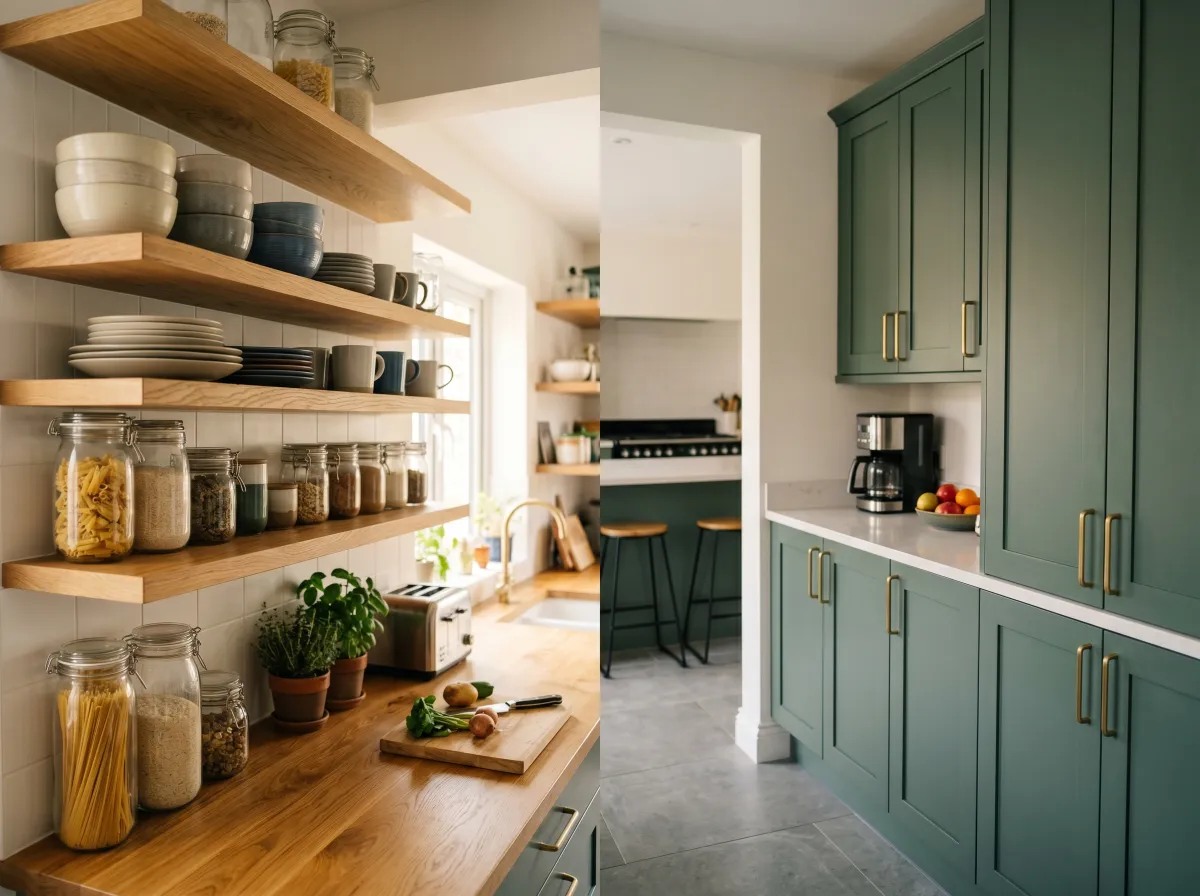
The most balanced, honest, and genuinely helpful guide to the open shelving vs closed cabinets storage debate — because the right answer is different for every person, every room, and every home, and this guide will help you figure out exactly which one is yours.
There is a debate that has been dividing the home design and organization world for years — probably longer than social media made it seem like a hot take — and it goes like this: open shelving is beautiful but impractical, and closed cabinets are practical but boring.
Or, depending on which camp you’ve stumbled into: closed cabinets are the only sensible choice for a functional home, and open shelving is an aspirational fantasy that only works in magazine photoshoots.
I have heard both arguments made passionately and specifically. I have watched people tear out perfectly good closed kitchen cabinets to install open shelving because they saw it on a renovation account they loved, and then quietly reinstall the cabinets two years later because the dust and the visual noise of keeping everything out and always on display was genuinely exhausting.
I have also watched people close off every open shelf in their home in a fit of organization ambition and then find themselves living in a space that felt oddly claustrophobic and disconnected from the things they loved.
The truth about the open shelving vs closed cabinets storage question — the actual, honest, not-trying-to-sell-you-a-particular-aesthetic truth — is that neither is universally better. Both are right for certain situations, certain rooms, certain households, and certain personalities.
The question is never open shelving vs closed cabinets as a general philosophical position. The question is always: for this specific space, with these specific contents, used by these specific people, in this specific home — which approach actually serves the situation better?
My friend Inaya has one of the most thoughtfully designed homes I have ever spent time in, and what strikes me about it is that she uses both approaches — extensively, intentionally, and in a way that makes both look completely right.
Her kitchen has open shelves for her everyday dishes and closed cabinets for everything else. Her living room has open shelves for books and art objects and a closed media console for the things she would rather not look at.
Her home office has closed cabinets for files and open shelves for reference books and plants. Every space has been thought about individually, and the result is a home that is both beautiful and genuinely functional.
That is the approach this guide is going to walk you through. Not a verdict on the debate — but the complete framework you need to make the right decision for every specific space in your home. Let’s settle this, once and for all, for you specifically.
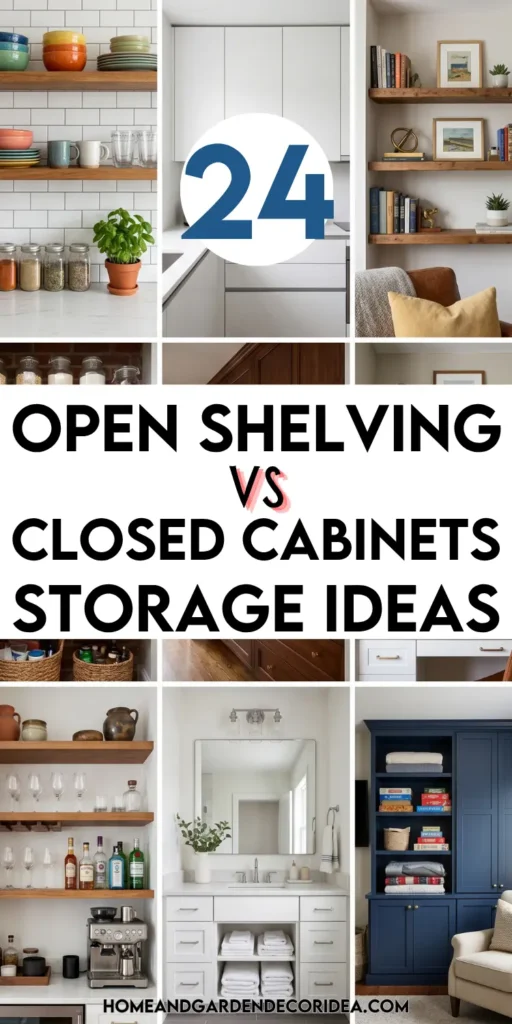
Understanding What You Are Actually Choosing Between
Before we can talk about open shelving vs closed cabinets storage in any useful way, I want to make sure we’re talking about the same things — because both terms cover a range of approaches that are not all equal.
Open shelving means storage where the contents are visible and accessible without opening any door. This includes wall-mounted floating shelves, open bookcases, wire shelving units, plate racks, pegboards, and any shelving configuration where what’s stored on it is visible from the room. Open shelving ranges from minimal floating shelves with careful curated styling to fully packed floor-to-ceiling library walls.
Closed cabinets means storage where the contents are hidden behind doors — either swinging, sliding, or folding — and are not visible until the door is opened. This includes standard kitchen cabinetry, bathroom vanity cabinets, wardrobes with doors, media consoles with doors, sideboards, and any storage furniture where doors conceal the contents. Closed cabinets range from simple flat-panel doors to glass-front doors that partially reveal the contents in a more curated way.
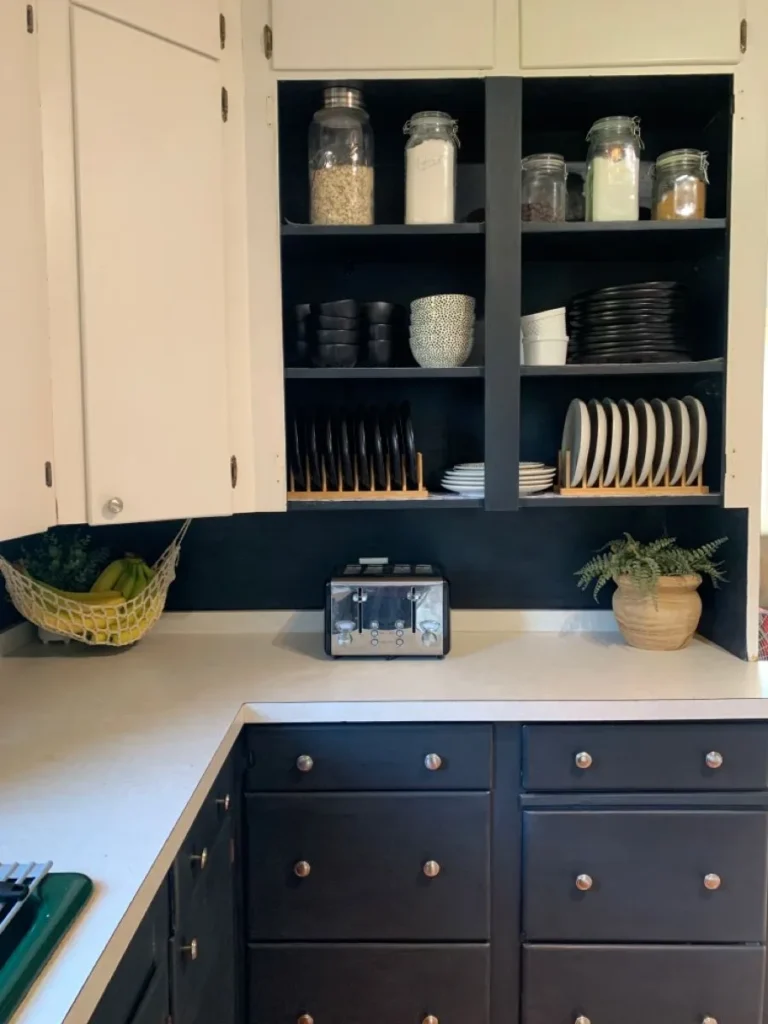
The hybrid middle ground — which is the approach most well-designed homes actually use — combines both within the same room or even the same unit. Upper cabinets with glass-front doors. A shelving unit with open top shelves and closed bottom cabinets. A wardrobe with open hanging sections and closed drawer sections. The hybrid is not a compromise — it is often the most thoughtful and functional approach available.
Keeping these distinctions clear will help you apply the framework that follows much more precisely to your specific spaces.
The Open Shelving vs Closed Cabinets Decision Framework: 7 Questions to Ask About Every Space
Rather than telling you that open shelving is better or closed cabinets are better, I am going to give you seven questions that, when answered honestly for any specific space in your home, will tell you definitively which approach — or which combination — is right for that space. Answer these questions for your kitchen, your living room, your bedroom — any space you’re trying to decide for — and the right answer will emerge clearly.
How organized and consistent is the household that will use this space?
This is the most important question in the open shelving vs closed cabinets storage debate and it is the one most people skip because it requires an honesty that feels a little uncomfortable.
Open shelving only looks good when what’s on it looks good — which means things need to be consistently put back neatly, the styling needs to be maintained, and the contents need to be inherently attractive enough to be on display. If you are the kind of household where things get returned exactly to their designated place, where dishes are stacked consistently and evenly, and where the visual state of your shelves is something you naturally maintain without effort — open shelving will look gorgeous and serve you beautifully.
If you are the kind of household — and most households, honestly, are — where things get returned in the approximate right area rather than the exact right place, where stacks get uneven and items get pushed to different spots and the visual arrangement drifts within days of being straightened — closed cabinets are your ally. They hide the perfectly normal imperfection of a real household behind a door, and they look clean and intentional regardless of what is happening inside.
Neither of these is a character judgment. It is simply an honest assessment of how your household actually functions, which is the most useful data you have for making this decision.
How visually appealing are the actual items that will be stored here?

Open shelving showcases what’s on it. That is its strength and its vulnerability simultaneously. If the items that need to live in this space are beautiful — matching dishes in a color you love, a collection of books with attractive spines, a curated group of plants and art objects and candles — open shelving makes your storage into display and your display into a design feature. The storage essentially disappears because what’s on the shelves is so lovely that it reads as intentional decor.
If the items that need to live in this space are utilitarian — mismatched containers, products in their original packaging, practical items that are functional but not beautiful — closed cabinets are the right call. There is no shame in having things that are useful rather than decorative. A closed cabinet door means these things live happily and practically out of sight, serving their purpose without competing with the rest of the room’s aesthetic.
A good test: look at the items that would live on the open shelf and ask whether, if someone photographed this space right now, you would feel proud of what was visible or embarrassed by it. Proud — open shelving might work. Embarrassed — closed cabinets will serve you better.
How much visual rest does this room need?
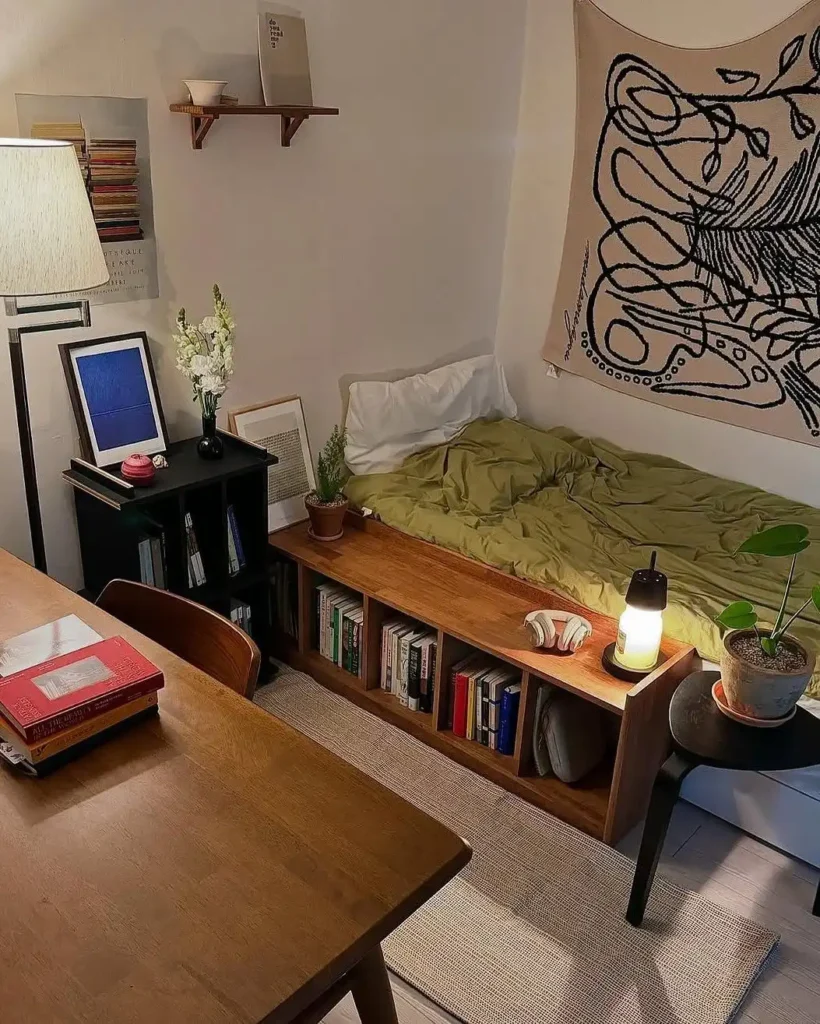
Every room has a visual weight — an amount of visual information the eye processes when it takes in the space. Open shelving adds visual weight because everything on the shelves is visible, which means the eye processes every item on every shelf as part of the room’s visual information. In a room with a lot of other visual activity — pattern, color, furniture detail, artwork — this additional visual weight can tip a room from richly layered to visually overwhelming.
Closed cabinets, by contrast, reduce visual weight. A cabinet door is visually simple — it registers as one surface, one color, one texture — regardless of what is inside it. In a busy, visually active room, closed cabinets provide the visual rest that keeps the space from feeling chaotic.
Look at the room you’re deciding for. Is it already rich with visual detail — bold colors, patterned textiles, distinctive furniture, lots of artwork? Closed cabinets will give the space breathing room. Is it fairly minimal and calm, with clean lines and a restrained palette? Open shelving can add warmth, interest, and visual personality without tipping the balance.
How much dust and grease will be in this environment?

This is the practical question that open shelving advocates sometimes gloss over and that closed cabinet advocates correctly raise — and it matters enormously, especially in kitchens.
Open shelves collect dust. Everything on them collects dust. In a kitchen, they also collect grease and cooking residue. Every item on open kitchen shelves needs to be wiped down regularly — not just occasionally, regularly — or it develops a film that is both unhygienic and visually unappealing. Dishes stored on open shelves that are used daily self-clean through regular washing. Dishes stored on open shelves that are used only occasionally accumulate dust and need to be washed before use even if they were clean when stored.
In a bathroom, open shelves collect dust and also have to contend with humidity, which affects some materials and products. In a living room, open shelves collect dust at a rate proportional to how much air moves through the room.
Closed cabinets protect their contents from dust and grease. Items inside closed cabinets stay cleaner for longer and require less maintenance to stay in a display-ready condition.
If you are someone who regularly and genuinely enjoys dusting and wiping shelves, this consideration matters less. If you are someone who finds cleaning shelves a tedious and irregular chore — and most people are in this camp — closed cabinets significantly reduce the maintenance burden of your storage.
How much does accessibility matter for the items being stored?
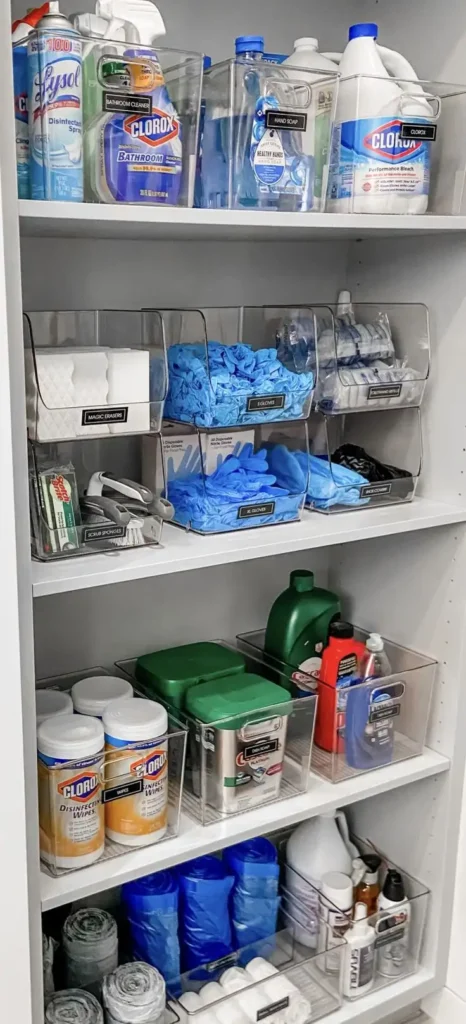
Open shelves are faster to access. You see what you want, you reach for it, you take it. No door to open, no searching in a dark cabinet, no removing things in front to get to things behind. For items you reach for multiple times a day — everyday dishes, frequently consulted books, daily-use cooking tools — open shelving makes the retrieval process genuinely faster and more intuitive.
Closed cabinets are slightly slower to access. You open the door, you look inside, you get what you need, you close the door. For items accessed daily this is a small but real friction. For items accessed occasionally it barely matters.
For the items that are most central to your daily routine in any given room, the speed-of-access advantage of open shelving is a meaningful practical benefit. For items that are used less frequently, it is less significant and the visual and dust-protection benefits of closed cabinets often outweigh it.
What is the scale of the space?
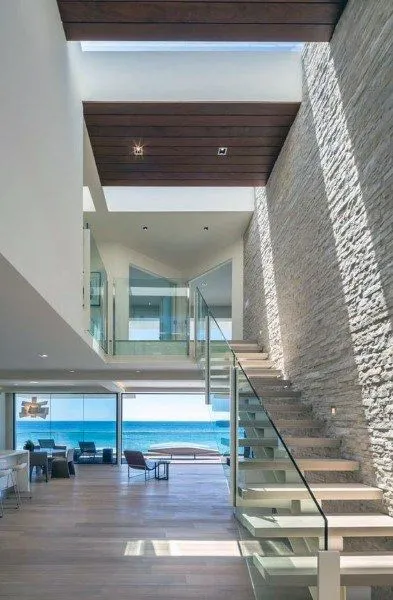
Open shelving visually expands small spaces because the eye travels through the open shelves to the wall behind them, creating a sense of depth and visual continuation. In a small kitchen, bathroom, or bedroom, open shelving can make the space feel significantly larger and more airy than solid cabinet doors would.
Closed cabinets in a small space can feel visually heavy — especially if the cabinets go all the way to the ceiling and the doors are solid panels that create a wall of visual mass. Glass-front cabinet doors solve this partially by maintaining the visual openness of open shelves while providing the protection and containment of closed storage.
In large spaces, this consideration reverses somewhat — a large room with entirely open shelving can feel overwhelming or unfinished, while closed cabinets provide visual definition and weight that grounds the space.
What is your relationship with visual order and visual stimulation?
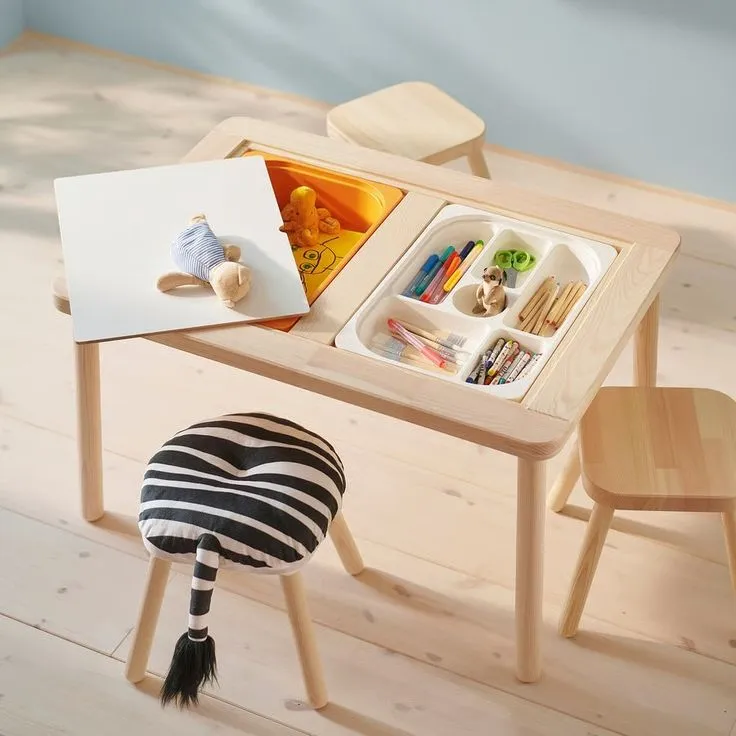
Some people find open shelving visually inspiring and energizing — the books, the objects, the plants, the dishes all create a richness and personality that makes them feel at home in the most literal sense. They are stimulated positively by visual variety and they find a room full of closed cabinets to feel bland, sterile, and personality-free.
Other people find open shelving visually draining — the constant awareness of every item on display, the inability to “switch off” the visual input of the room because everything is always visible, the low-grade anxiety of knowing that a slightly uneven stack of dishes is visible from across the room. These people find closed cabinets genuinely restful. The visual simplicity of a cabinet door allows their brain to relax in a way that open shelving never quite permits.
Neither of these is wrong. They are simply different neurological responses to visual environments and they are worth taking seriously when making this decision. Which experience do you have in spaces with open shelving — energy and warmth, or low-grade visual noise? Your honest answer is highly relevant data.
Open Shelving vs Closed Cabinets Storage: Room by Room
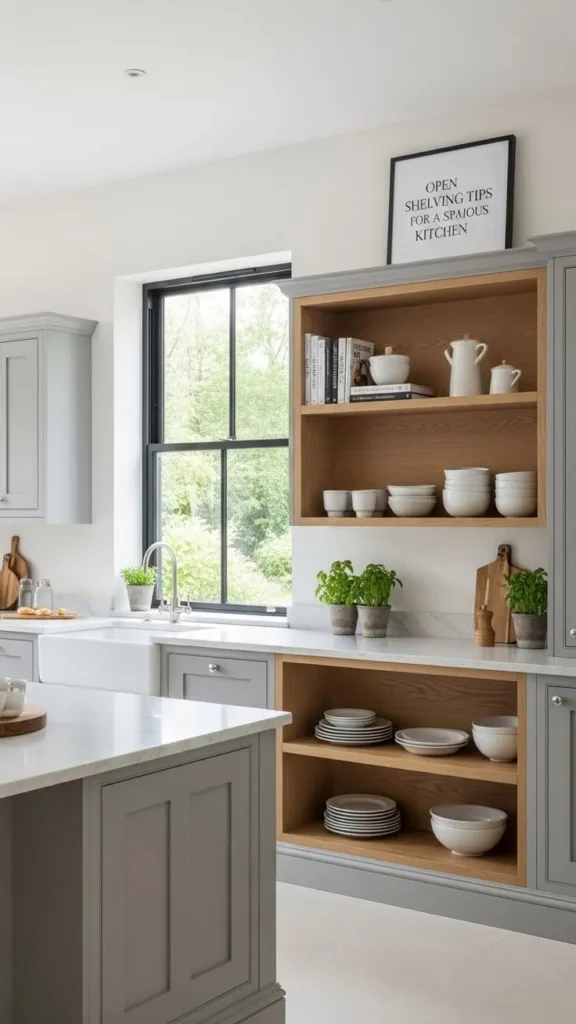
Now let me apply the framework to each major room in your home with my honest, specific recommendations — because the right answer in the kitchen is often different from the right answer in the living room.
The Kitchen
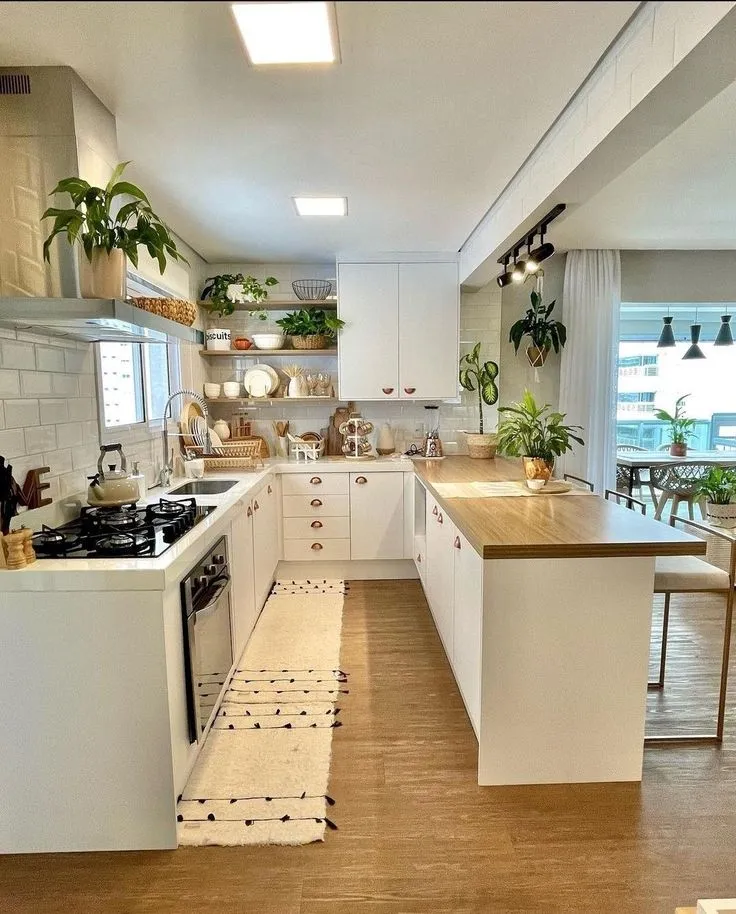
The kitchen is where the open shelving vs closed cabinets storage debate is most heated — and where both the case for and against open shelving is most compelling.
Open shelving works beautifully in kitchens when: the household is genuinely organized and consistent, the dishes and cookware are attractive enough to display, the kitchen is a space you cook in regularly so items on shelves self-clean through frequent use, and you genuinely enjoy the warm, lived-in aesthetic of a kitchen where everything is visible.
Closed cabinets work better in kitchens when: the household is realistically more chaotic than organized, the contents include a mix of attractive and utilitarian items, grease and cooking residue are a concern, or the visual rest of a clean cabinet line is what the kitchen needs to feel calm rather than busy.
The hybrid approach I see working most consistently in real kitchens: open shelving for everyday dishes, glasses, and a few beautiful objects at eye level — the things you reach for daily and that look good — and closed cabinets above and below for everything else. This gives you the warmth and accessibility of open shelving where it matters most while protecting the rest of the kitchen’s contents and maintaining visual calm.
The Living Room
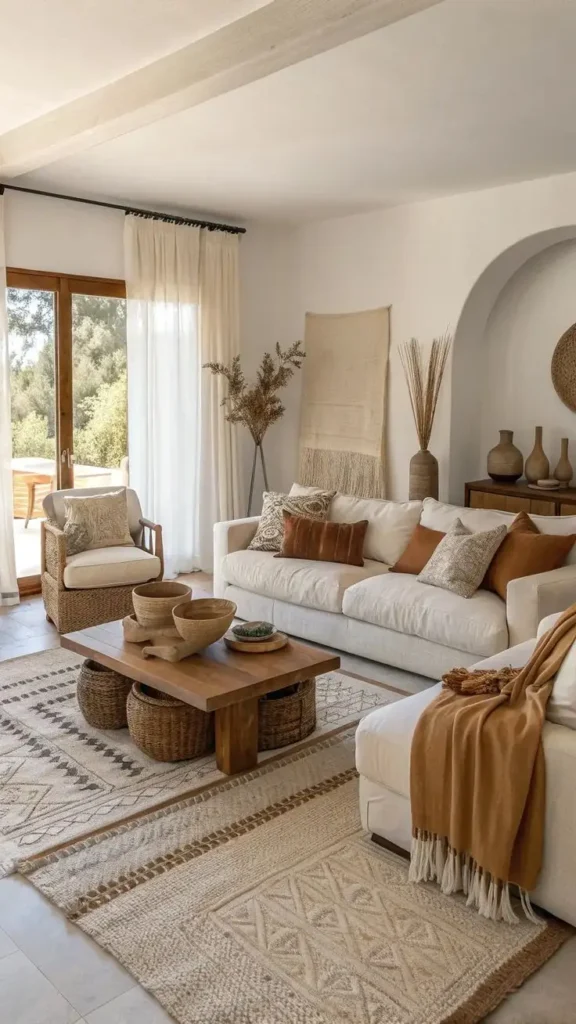
The living room is where open shelving typically performs best — because the items that naturally live in a living room (books, plants, art objects, candles, decorative pieces) are inherently displayable, the room is not subject to grease or significant moisture, and the warmth and personality that open shelving adds to a living room is genuinely one of its most powerful design contributions.
The exception is media storage — cables, remotes, router equipment, streaming devices, game controllers — which is almost always better behind closed doors. A living room that has beautiful open shelving for books and objects and a closed media console for the technology tangle is the combination that works best in almost every living room situation.
The Bedroom and Closet
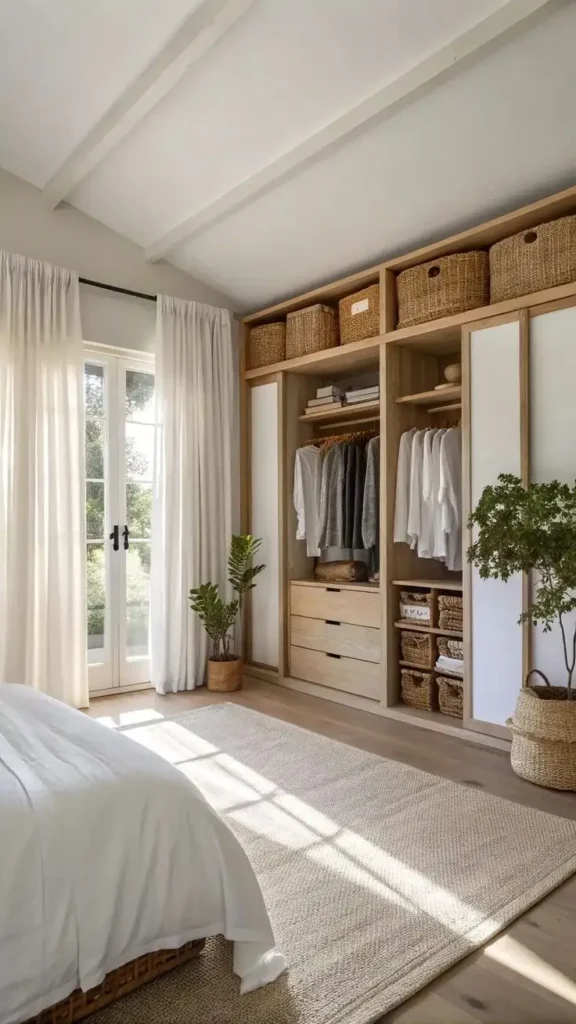
Bedrooms benefit from visual calm more than almost any other room — because the bedroom’s primary function is rest, and visual rest is part of what enables physical rest. This makes the case for more closed storage in bedrooms stronger than in most other rooms.
Wardrobe storage is almost always better closed. A wardrobe with doors — whether solid or mirrored — creates a clean, restful wall that a hanging rail of visible clothing never quite achieves. Open closets look great in design photos and are genuinely more convenient in terms of seeing your whole wardrobe at once, but they require a level of consistent neatness that most bedrooms realistically don’t maintain long-term.
The exception in bedrooms is bedside shelving and display shelving — small floating shelves for books, a plant, a lamp, meaningful objects. These work beautifully as open shelving because the items are few, curated, and genuinely decorative rather than merely practical.
The Bathroom
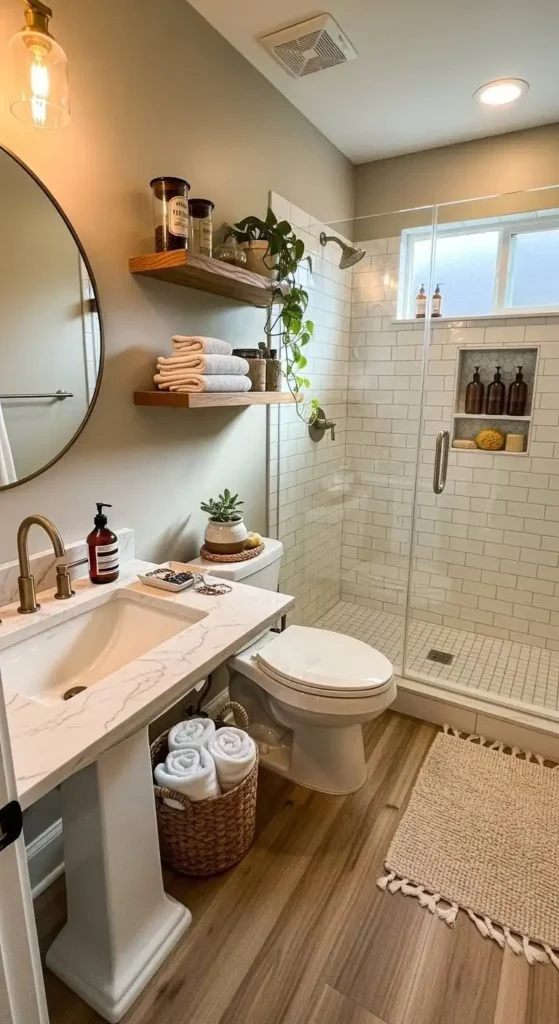
Bathrooms are where closed storage is almost always the more practical and visually restful choice. The combination of humidity, the generally non-decorative nature of most bathroom products, and the intimacy of the space means that a bathroom with mostly closed storage and a few well-chosen open display elements (a candle, a plant, a basket of folded towels on a ladder shelf) almost always looks more sophisticated than a bathroom where everything is on open shelves.
The exception is the ladder shelf — a freestanding ladder shelf in a bathroom provides open storage that is genuinely lovely when styled thoughtfully, and it works because you’re choosing exactly what goes on it rather than storing everything there by necessity.
The Home Office
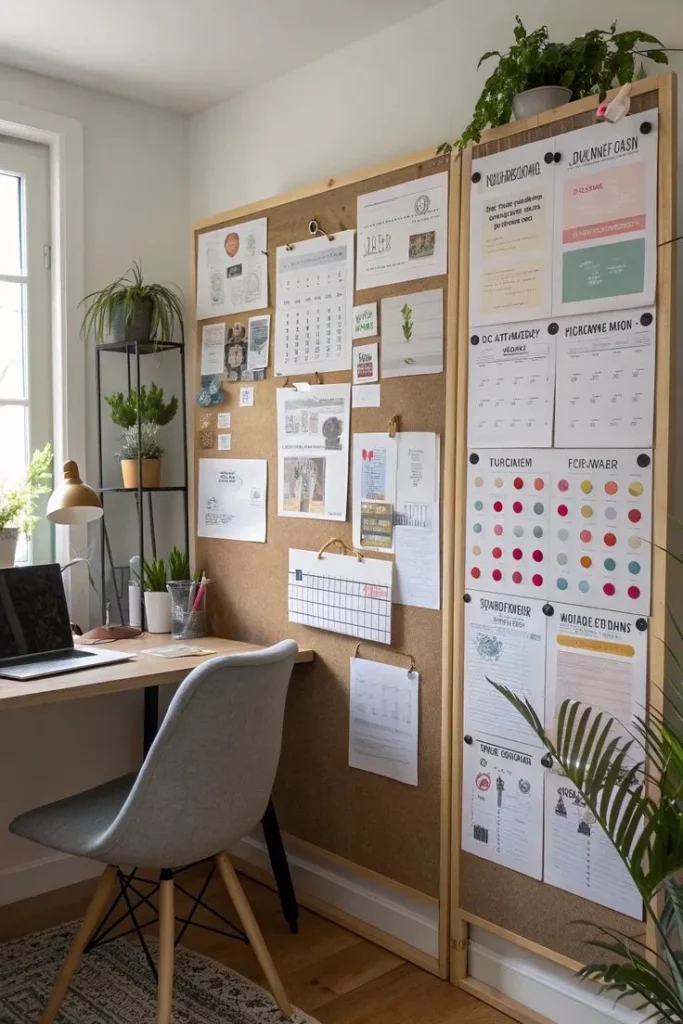
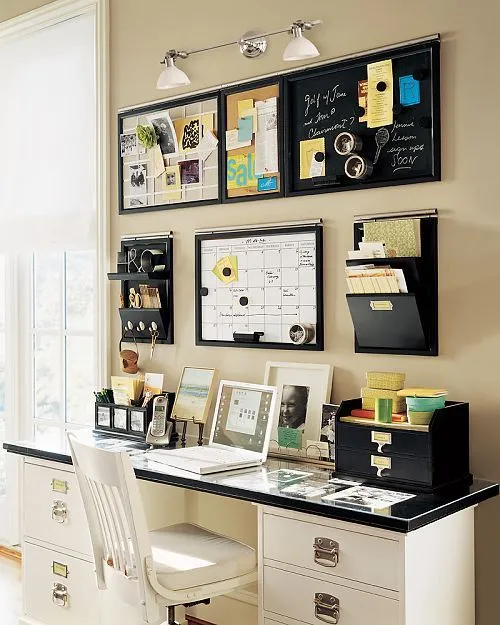
Home offices need both — and the right balance depends on what you’re storing. Books and reference materials benefit from open shelving because visibility makes them accessible and findable. Files, tech equipment, cables, printer supplies, and general office supplies are almost always better in closed storage because they are utilitarian, often unattractive, and benefit from being out of sight both aesthetically and cognitively. A home office where the work clutter is hidden behind closed doors feels significantly calmer and more conducive to focus than one where every file and supply is constantly visible.
The Honest Verdict on Open Shelving vs Closed Cabinets Storage
After all of that — after the framework, the room-by-room recommendations, and the seven diagnostic questions — here is the honest, complete verdict on the open shelving vs closed cabinets storage question.
Choose open shelving when: The items are beautiful enough to display, the household is organized enough to maintain the visual standard, the room needs warmth and personality, the items are accessed frequently enough to stay clean, and you find visual richness genuinely energizing rather than draining.
Choose closed cabinets when: The items are practical rather than beautiful, the household is realistically more chaotic than perfectly organized, dust or grease is a concern, the room needs visual rest, or you find the constant visual presence of open storage draining rather than inspiring.
Choose the hybrid approach — which is almost always the right answer — when: Some items are beautiful and some are not, some items are accessed daily and some are not, or you want the warmth and personality of open shelving in part of the space and the clean simplicity of closed storage in another part.
My friend Inaya’s instinct — to make every decision individually for every specific space rather than committing to one approach for the whole home — is the wisest position in the entire debate. The most beautifully and functionally organized homes are almost never entirely open or entirely closed. They are thoughtfully mixed, with each choice made for specific reasons that suit the specific space and the specific household.
You now have the framework to make those choices for every space in your home. Trust the answers the seven questions give you. Be honest about how your household actually functions rather than how you wish it did. And know that whatever combination you arrive at — if it is based on the honest reality of your space, your contents, and your life — is the exactly right answer for you.
Now go pin this complete guide, share it with whoever in your life has been going back and forth on the open shelving vs closed cabinets storage question for their kitchen renovation or living room redesign, and go answer those seven questions for the space you’ve been trying to decide about.
Pin this and save it — every single time you’re designing or redesigning a space and trying to decide between open shelving and closed cabinets, this is the guide that will give you the exact right answer for your specific situation!

Leave a Reply