
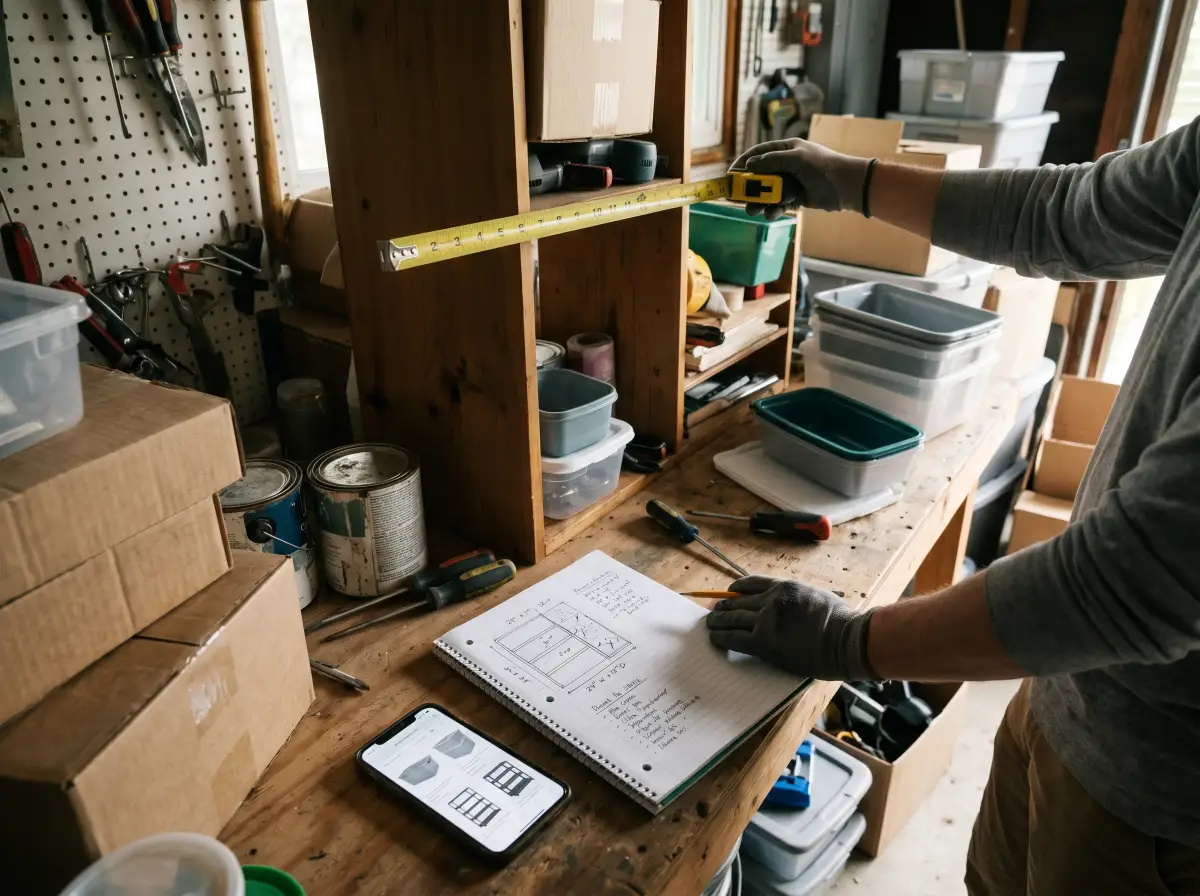
The honest, practical guide on how to plan home storage before buying a single thing — because the best storage purchase you will ever make is the one you planned properly before clicking add to cart.
Let me describe a scene that I think you might recognize. You walk into a home goods store — or you open Amazon, or you start scrolling through the Target home organization section — and within about fifteen minutes you have filled a cart with things that are genuinely beautiful.
A set of matching acrylic drawer organizers. Some woven seagrass baskets in three sizes. A set of clear pantry bins. A label maker. A hanging closet organizer. A little bamboo shelf riser.
Everything in that cart looks like it belongs in an organized, beautiful home. You check out. You bring it all home. And then — somehow, almost impossibly — none of it quite fits. The acrylic organizers are a quarter inch too tall for your drawer.
The seagrass baskets are too wide for the shelf you had in mind. The pantry bins are the right size but you bought too few of them. The hanging closet organizer is for a different rod style than the one you have.
Into the return pile it all goes. Or worse — into the “I’ll figure it out later” pile, which becomes the “stack of things in the corner that I feel guilty about every time I look at them” pile. And you still don’t have an organized home. You just have less money and more stuff.
I know this scene because I have lived it more times than I want to admit. My friend Ola — who is genuinely one of the most practically minded people I have ever met — watched me do this once and said something I have thought about almost every week since.
She said: “You’re buying the solution before you’ve fully understood the problem.” Seven words that completely changed how I approach every single storage purchase I make now.
This guide is the process Ola taught me. It is the complete answer to how to plan home storage before buying anything — and following it will save you money, save you returns, save you frustration, and produce organizing results that actually last because every product you buy will be exactly right for exactly where it’s going. Let’s walk through it step by step.
Why Planning Before Buying Changes Everything
Before we get into the specific steps, I want to make sure you understand why this planning process is so important — because “think before you shop” sounds obvious and yet the pull of a beautiful organizing product is genuinely hard to resist.
The fundamental reason that storage products fail — why the bins don’t work, why the baskets don’t fit, why the organizers get returned or abandoned — is almost never the product itself. It is the mismatch between the product and the situation. The wrong size. The wrong material. The wrong capacity. The wrong style for how the space actually gets used. And every single one of those mismatches happens because the purchase was made before the situation was properly understood.
When you know how to plan home storage before buying, you reverse the order entirely. You start by deeply understanding the problem — the space, the items that need storing, how you actually use the space, what specifically isn’t working and why. Then you identify what kind of solution would solve that specific problem. Then — and only then — you go find and buy the exact right thing.
The result is that every product you bring into your home is the right product for the right place. Nothing goes back. Nothing sits in a pile. Nothing gets used in a compromised, almost-right way because you don’t want to admit you bought the wrong thing. Everything works — because it was chosen to work for that specific situation.
That is how to plan home storage before buying. Now let’s do it properly.
Step 1: Audit the Space Before You Touch It
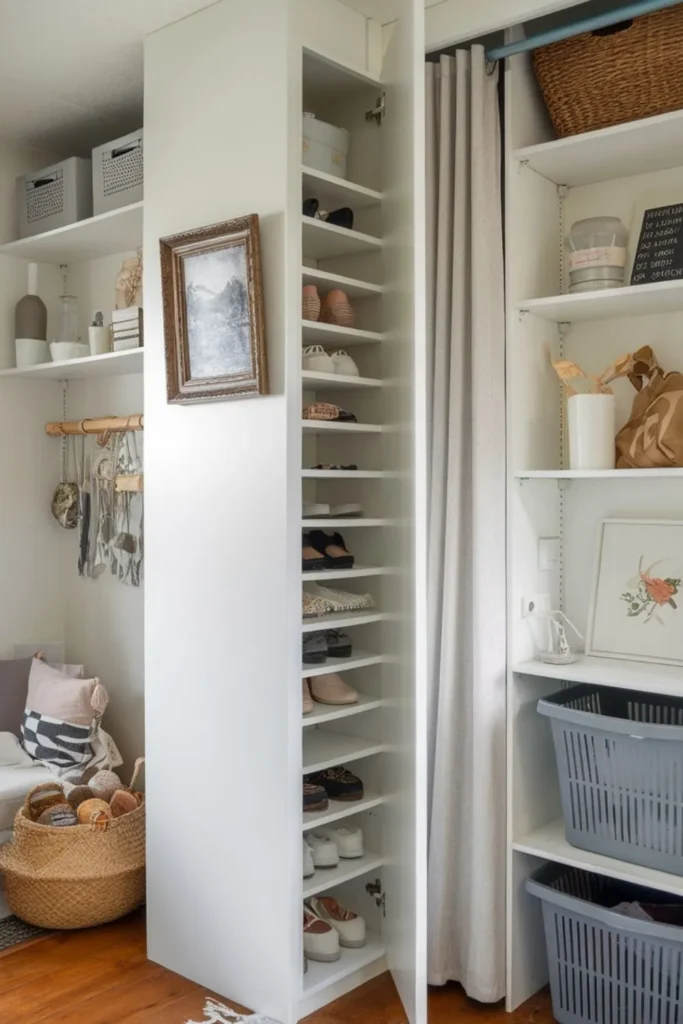
The first and most important step in how to plan home storage before buying anything is to properly audit the space you want to organize — not tidy it, not improve it, not start sorting things. Just look at it honestly, in its current state, and understand exactly what you are working with.
Pull up the notes app on your phone. Walk to the space you want to organize. And answer these questions as honestly as you can.
What specifically is wrong with this space right now? Not a general feeling of chaos — specific problems. Is it that things fall out when you open the door? Is it that you can never find what you’re looking for? Is it that there isn’t enough space for everything that needs to live there? Is it that the things stored here don’t actually belong here? Write down the specific, concrete problems. These are what your storage solution needs to solve.
What is currently in this space? Take a full inventory. Not just “clothes” or “kitchen stuff” — actual categories. In a pantry: how many canned goods, what categories of dry goods, how many condiments, how much baking supply, how many snack items. In a closet: how many hanging items, how many folded items, how many pairs of shoes, what accessories. In a drawer: what specific types of items are in there. The more specific your inventory, the more precisely you can plan.
What does this space need to do that it currently isn’t doing? This is the core of the audit — identifying the gap between what the space currently does and what you need it to do. “I need to be able to find the spice I’m looking for in under ten seconds.” “I need every family member to be able to access their own items independently.” “I need to fit six months of pantry supplies without anything getting lost or expired.” These are your requirements for the storage solution.
Write all of this down. Do not rely on your memory. You are going to need these notes when you go to buy.
Step 2: Measure Everything Twice — And Write It Down
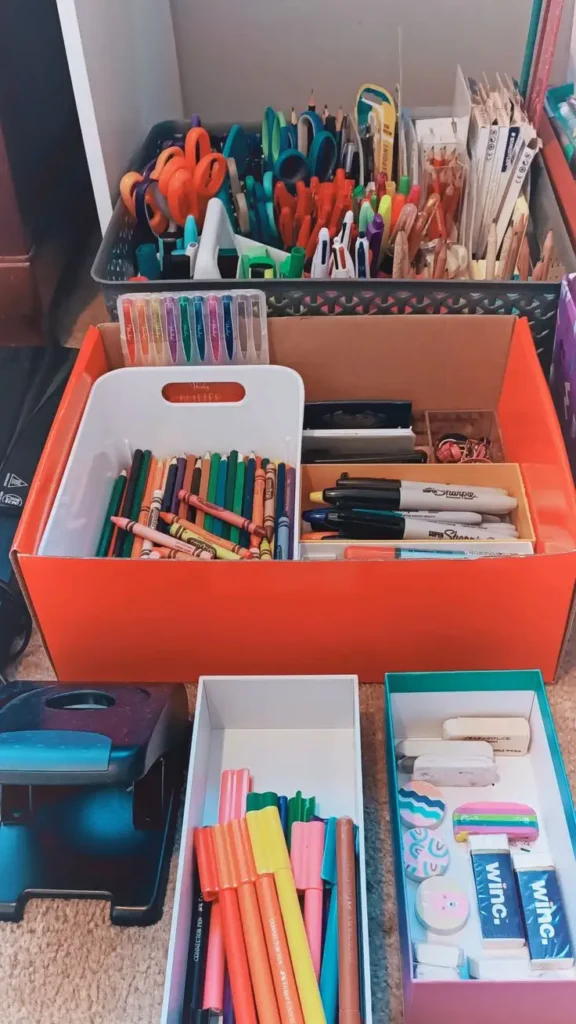
This step is the one that saves the most money and prevents the most returns, and it is the step that the majority of people skip because measuring feels tedious and they just want to get to the buying part.
Please do not skip this step. I am asking you personally and sincerely. Measure everything.
For the space itself: measure the total width, the total height, and the total depth. Measure any internal shelves — their height, width, and depth, and the clearance between shelves. Measure the height from each shelf to the shelf or ceiling above it so you know exactly how tall a bin can be. If there are obstacles — pipes, outlets, weird angles — measure where they are and how much space they take up.
Write every measurement down in your phone with a note about what each one refers to. “Shelf one — 14 inches wide, 11 inches deep, 8 inches clear height.” “Under sink — 24 inches wide, 18 inches deep, but pipe at 8 inches from the left side.” “Drawer — 16 inches wide, 19 inches deep, 3.5 inches tall.” These specifics will tell you immediately, when you’re looking at products, whether something will fit or won’t.
For the items you need to store: if size matters — and it usually does — measure the items too. How tall is your tallest spice jar? How wide is the pasta box that needs to lie flat? How long is the broom handle that needs to hang? How many inches of hanging rod do your shirts require? Items that seem like standard sizes very often are not, and a container that almost fits the item is not a container that works.
My friend Ola keeps a note in her phone called “Home Measurements” that she has been adding to for two years. Every time she measures a space, she adds it. She says she has saved hundreds of dollars in returns by having this note and checking it before every organizing purchase. This is a habit worth building from today.
Step 3: Understand How the Space Is Actually Used
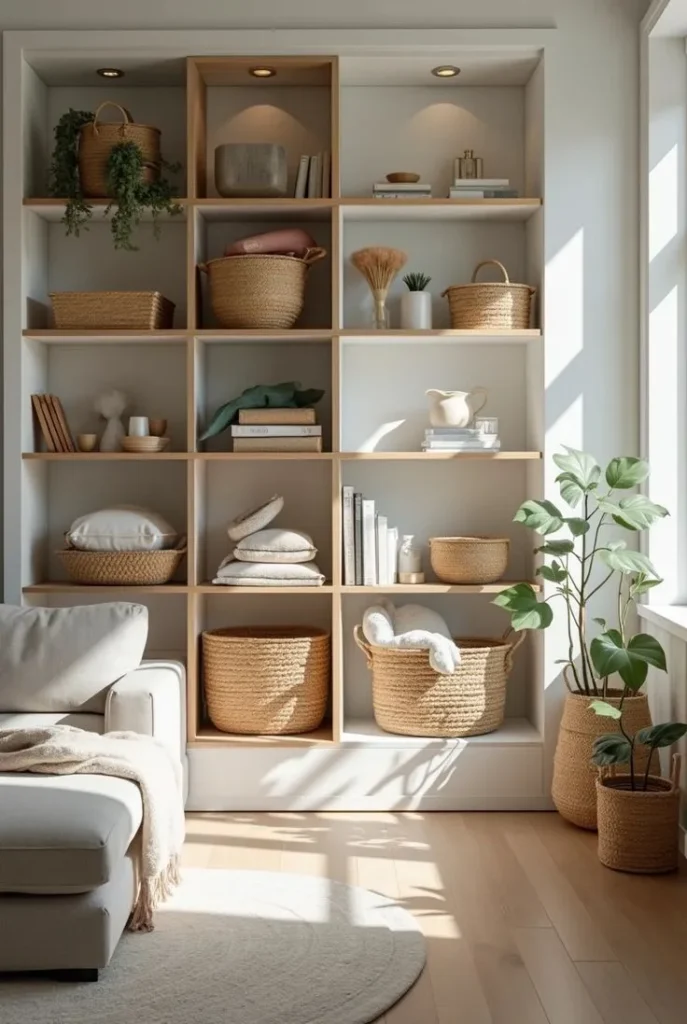
This is the step in how to plan home storage before buying that produces the most functionally successful organizing results — and it is the step most often skipped in favor of focusing entirely on the physical dimensions and aesthetic of the storage solution.
A storage product that is the right size for the space but wrong for how the space is used will fail. Every time.
Spend a day or two actually observing how you — and every other person in your household who uses the space — actually interact with it. Not how you should interact with it. How you do interact with it. Right now. In your real life.
Ask yourself: who uses this space and how old are they? A storage solution accessible to an adult is not necessarily accessible to a child. A solution that requires both hands to open is not workable for someone who is always carrying something when they access it. A solution that requires careful placement of items back in a specific way will not be maintained by anyone who uses the space in a hurry.
Ask yourself: how often are these items accessed? Daily-use items need to be at the most accessible level, in the most accessible containers — no lid to open, no reaching required, no special technique needed. Weekly-use items can be a bit less accessible. Seasonal or rarely-used items can be in harder-to-reach places with lidded containers that provide more protection.
Ask yourself: what is the realistic minimum effort this household is going to consistently put into using and maintaining this system? I know this question is a little uncomfortable but it is genuinely the most important one. Because a system maintained imperfectly by your real household is worth ten times more than a system maintained perfectly only in your imagination. Design for real life. The organization will last.
Step 4: Define What “Organized” Looks and Functions Like for This Specific Space
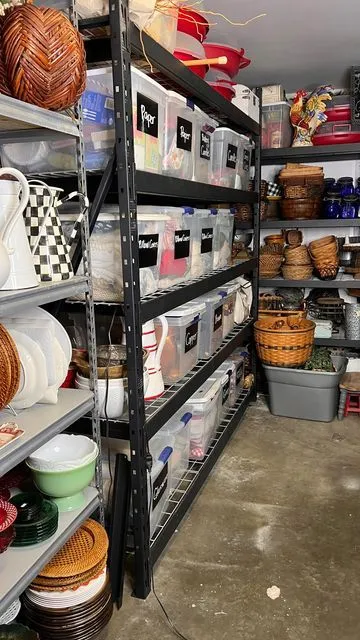
Before you can shop for the right storage solution, you need to be clear on exactly what you want the finished result to look and function like. “More organized than it is now” is not a specific enough goal to shop from. You need a concrete vision.
Answer these questions to define your specific organized goal for this space.
Open or closed storage? Do you want the contents visible (which means everything needs to look reasonably tidy all the time) or hidden (which means you need containers with lids or doors, but things can be less perfectly arranged inside)? For living spaces and high-traffic areas, many people prefer a combination — open storage for beautiful or frequently needed items, closed for the less attractive or less frequently needed. For utility spaces, closed is usually better. For pantries, clear-sided containers give the best of both.
How important is the aesthetic? Be honest about this. If this space is inside a closed cabinet that no one but you ever sees, you do not need to spend $40 on a beautiful woven basket — a $5 plastic bin that works perfectly is the right call. If this space is on open shelves in your living room that guests see every time they visit, aesthetics matter enormously and are worth investing in. Spend beauty money on visible spaces. Spend practical money on invisible ones.
What would make this space feel genuinely satisfying to use every day? Close your eyes and imagine the ideal version of this space — not Pinterest-perfect, but genuinely right for your life. What does it feel like to open it? What happens when you reach for something? How easy is it to put things back? Use that image as your shopping brief.
What is your realistic budget for this space? Set a number before you shop. Not a vague “I don’t want to spend too much” — a specific number. It is so easy to overspend on organizing products because each individual item seems reasonably priced and the total sneaks up on you. A budget keeps you focused and prevents the common trap of buying beautiful things you don’t quite need because they’re on sale.
Write all of this down in the same note as your measurements and audit findings. You now have a complete brief for your storage solution — and shopping from a brief instead of from impulse changes everything.
Step 5: Research Solutions Before You Go to the Store or Open Amazon
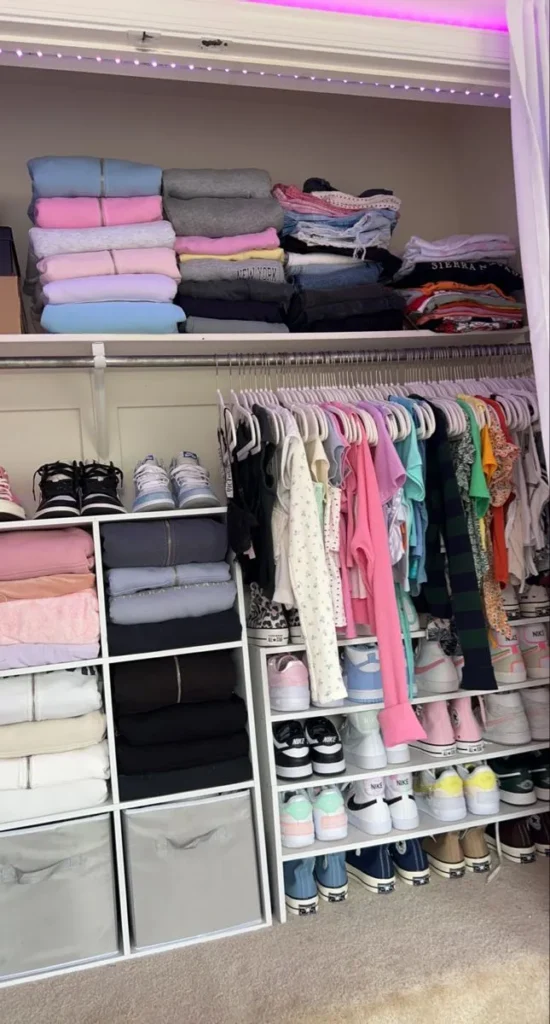
Now — and only now — is it time to start looking at products. But even here, the order matters. You are not browsing. You are researching. There is a difference.
Browsing is looking at storage products and imagining where they might go. Researching is looking for the specific type of storage solution that your audit, measurements, and brief have identified as the right fit — and evaluating options against your actual requirements.
Start by identifying the category of solution you need. Not the product — the category. “I need a bin that is between 8 and 10 inches wide, under 6 inches tall, clear, and can hold approximately twenty-five spice packets.” That is a category. Now search for products that meet those specs rather than browsing everything and hoping something looks right.
Read the reviews — but read them specifically. Don’t just look at the star rating. Look for reviews that mention the specific things you care about: does it hold its shape when full? Is the material as described? Do the measurements match what is listed? Is the lid easy to open one-handed? Does it look as good in real life as in the photos? Reviews answer the questions that product descriptions don’t.
Look at the dimensions listed and compare them to your measurements. If a product doesn’t list dimensions, do not buy it. Assume that unlisted dimensions are hiding a problem.
Check the return policy before you buy anything. Even with perfect planning, sometimes something doesn’t work as expected. Knowing you can return it easily makes the purchase lower-risk and saves you from keeping something wrong just to avoid the hassle.
Step 6: Buy One First — Then Buy the Rest
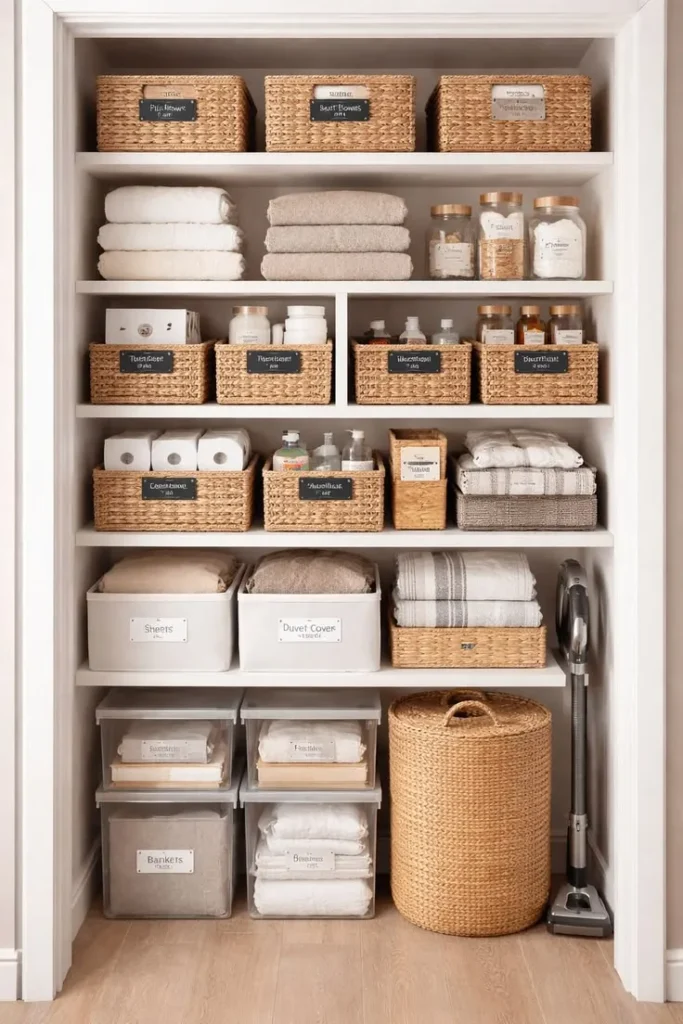
This is the step in how to plan home storage before buying that sounds unnecessary and is absolutely not. Buy one — just one — of the container you’ve decided on, before you buy the full set you need.
Take it home. Put it in the space. Open it, close it, fill it with the items it’s meant to hold, take it off the shelf and put it back, check whether it fits the way you expected. Live with it for a day.
If it works exactly as you hoped, go back and buy the rest. If it’s almost right but not quite — the lid doesn’t open the way you wanted, or it’s slightly taller than it seemed, or the material isn’t as sturdy as it looked — you’ve only bought one and you return one, not eight.
The “buy one first” rule has saved my friend Ola from so many bulk-buy mistakes that she calls it her most important shopping rule for home organization products. She says the test-one step adds maybe two days to any organizing project and saves her returns literally every single time she discovers a problem with something she almost bought eight of.
For large, expensive, or hard-to-return items — custom shelving, premium baskets, significant storage furniture — this rule is even more important. The larger the investment, the more critical the test run.
Step 7: Set Up, Assess, and Adjust Before Calling It Done
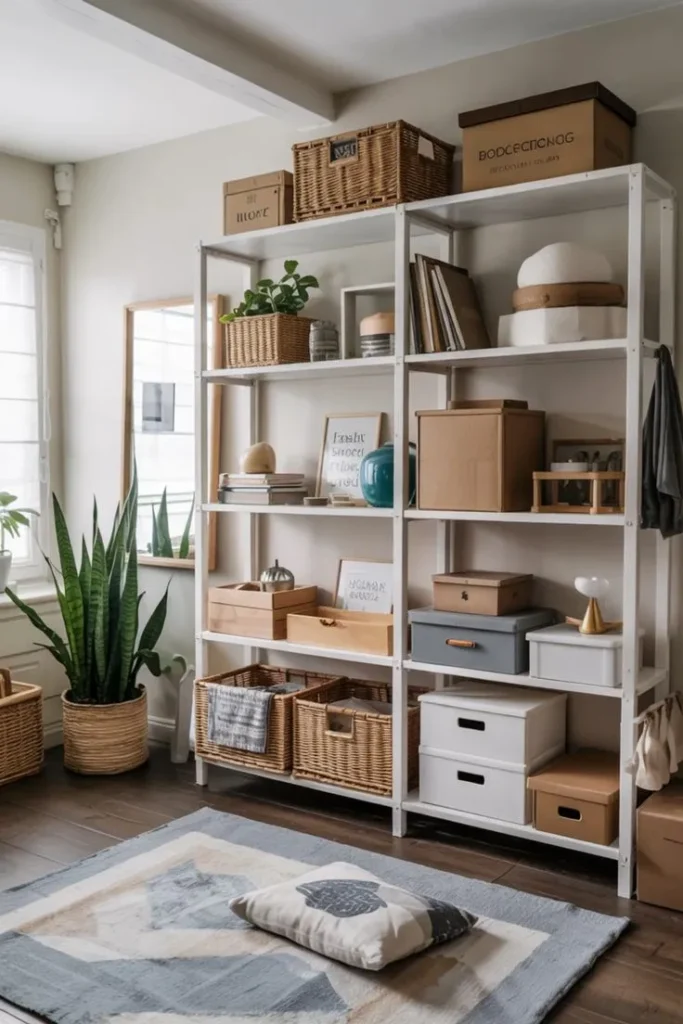
You have planned, you have measured, you have researched, you have tested one, you have bought the right quantity, and you have set up your storage system. Before you call this space done and move on to the next one, give it a two-week assessment period.
Use the space normally for two weeks. Pay attention to what works and what doesn’t. Notice if anything is consistently ending up outside its designated home — that tells you either the home isn’t right or the system is slightly too complicated. Notice if the container is too full (you underestimated the volume and need one more bin) or too empty (you can consolidate and free up space). Notice if other people in your household are using the system correctly — if they aren’t, ask them why and adjust based on their feedback.
Two weeks of real use will tell you more about whether a storage system works than any amount of planning can. The planning gets you to 90% right. The two-week assessment gets you to 100%.
Make any adjustments needed — add a bin, remove a divider, reposition a shelf, change a label. Then the system is truly done. Not done because you finished setting it up, but done because it works for your real life.
The Complete Planning Checklist: How to Plan Home Storage Before Buying
Let me put the whole process in one scannable checklist that you can screenshot, save, and use every single time you’re planning an organizing project.
Before you touch the space:
- Audit the space honestly — what’s wrong, what’s in it, what does it need to do
- Write everything down in your phone notes
Before you shop:
- Measure the total space dimensions (width, height, depth)
- Measure every shelf and the clearance above each shelf
- Measure any obstacles (pipes, outlets, irregular angles)
- Measure any unusually sized items that need storing
- Define open vs closed storage preference for this space
- Set a realistic budget for this space
- Define what the finished organized space should look and function like
When researching products:
- Identify the category of solution needed (not a specific product — a category)
- Check that listed dimensions fit your measurements
- Read reviews specifically for durability, real dimensions, and usability
- Confirm the return policy before buying
When buying:
- Buy one item first and test it in the space for at least a day
- Only buy the full quantity after confirming the test item works
- Keep receipts and packaging until you’re certain the system is right
After setting up:
- Use the space normally for two weeks
- Assess what is working and what isn’t
- Make any adjustments needed
- Officially close out the space as done
This Is How to Plan Home Storage Before Buying — And It Changes Everything
The planning process I’ve just walked you through is not complicated. It does not take weeks. For a single drawer or shelf, the audit and measuring takes fifteen minutes. For a pantry or a closet, maybe an hour. The research and test purchase adds a day or two. The two-week assessment runs in the background of your normal life.
What this process gives you in return for those few extra hours is enormous. Storage products that fit. Systems that work. Money not spent on returns. An organized space that stays organized because it was designed properly the first time. And the particular satisfaction — which I truly cannot overstate — of knowing that every container in your home is there because it is exactly right for exactly where it lives.
That is how to plan home storage before buying. That is the whole secret. It was never about finding the most beautiful organizing products. It was always about understanding the problem well enough to solve it properly.
My friend Ola organizes a new space in her home about once every six weeks. She says the planning process now takes her about twenty minutes per space because she has done it so many times that it’s become instinctive. The organizing projects themselves go smoothly because everything she buys is right. Nothing gets returned. Nothing goes in the pile. The space gets done and it stays done.
That can be you. It genuinely can. Start with the next space you want to organize, follow this process from the beginning, and see what happens when every single thing you buy is exactly the right thing for exactly the right place.
Now go pin this complete planning guide, share it with whoever in your life is drowning in returned storage bins and organizing products that don’t quite work, and go start your audit of the next space you want to tackle. Your planning notes are waiting.
Pin this and save it — every single time you’re about to buy a storage product, this is the guide that will make sure you buy exactly the right one!






Leave a Reply