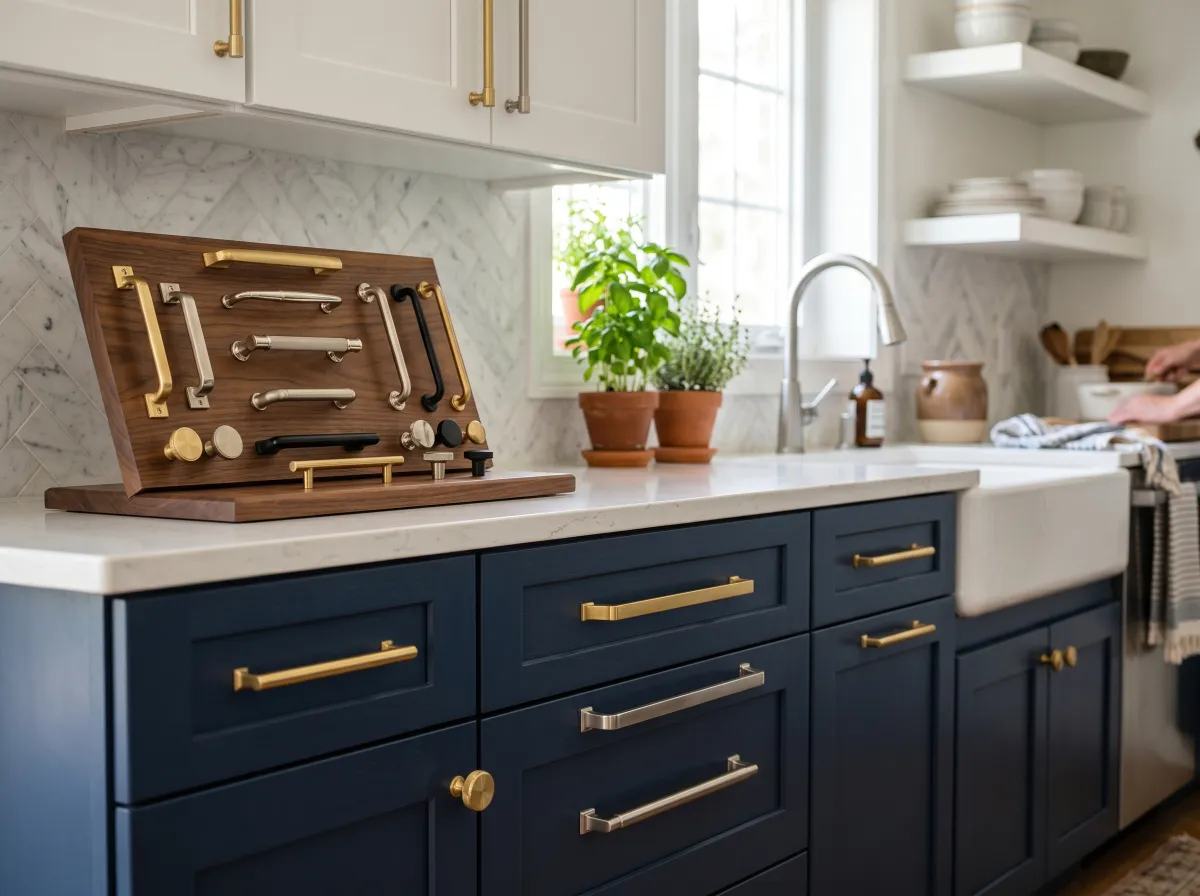
The most current, honest, and genuinely helpful guide to the best cabinet hardware for a modern kitchen — because the right hardware is the single most cost-effective way to update your kitchen, and choosing it well changes everything.
I want to start this guide with something that every interior designer I have ever spoken to about kitchens has said in some version, and that I have come to completely, wholeheartedly believe: cabinet hardware is the jewelry of the kitchen. It is the detail that finishes the whole look.
The thing that takes a cabinet from generic to considered, from builder-grade to designed, from fine to genuinely beautiful. And the thing most people think about last, budget the least for, and choose the fastest — which is exactly backwards from how it should work.
The hardware decision deserves real thought, real research, and real testing — because done well, it transforms a kitchen. I know this because I changed the hardware in my kitchen as part of my cabinet makeover project (the one I described in the previous guide — the $178 cabinet refresh with the “disappointed oak” cabinets) and the hardware change alone — before I even painted — was visible and significant.
The moment I put the first matte black bar pull on a cabinet door and stepped back, the kitchen already looked more modern, more intentional, and more like mine.
My friend Leena — who has an actual gift for hardware selection and has advised basically everyone we know on their kitchen hardware choices — says that most people approach the hardware decision by looking at what they already have and trying to find an upgrade.
She says the better approach is to look at the full vision of what you want your kitchen to feel like and then choose hardware that serves that vision. The hardware does not describe the kitchen — it completes it.
This guide covers the best cabinet hardware styles, finishes, and specific product recommendations for a modern kitchen update right now in 2026 — incorporating the current design trends, the most versatile options for different kitchen styles, and the practical guidance on sizing, placement, and mixing that makes a hardware selection feel professional rather than random.
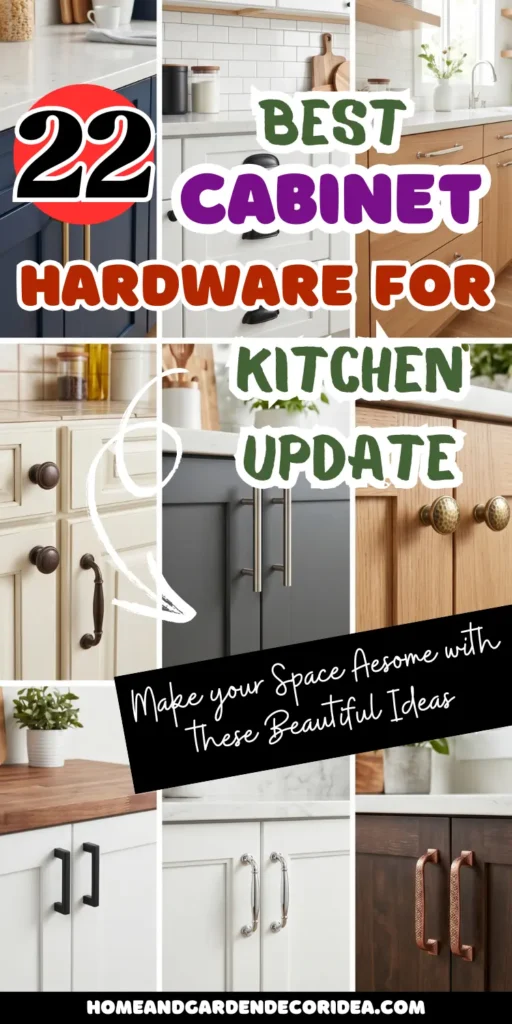
The Hardware Decision Framework: Four Questions Before You Shop
Before we get into specific styles and products, here are the four questions that every good hardware decision is built on. Answer these first and every subsequent choice becomes significantly clearer.
Question 1: What is your cabinet color and style? Hardware must work with what it is attached to. White shaker cabinets can accept almost any finish. Sage green cabinets love brass and unlacquered gold. Navy cabinets are extraordinary with brass or black. Dark espresso or charcoal cabinets look beautiful with brushed nickel or matte black. Natural wood cabinets look best with black iron or warm bronze. The cabinet color and style is the starting point for every hardware decision.
Question 2: What other metal finishes are in the kitchen? The “all one finish” rule has officially been retired. In 2026, mixing metal finishes is not just acceptable — it’s encouraged. The key is intentionality. Rather than accidentally ending up with mismatched finishes, today’s best-designed kitchens are deliberately combining two complementary metals in a way that feels curated. But two metals feels designed — three or more starts to feel chaotic. Identify what metal finish your faucet, light fixtures, and appliance handles are in before choosing cabinet hardware, and plan for a deliberate two-finish combination rather than an accidental mismatch.
Question 3: What is your kitchen’s design style? Modern farmhouse, contemporary, transitional, industrial, cottagecore, maximalist — each has a hardware vocabulary that feels authentic and one that feels out of place. Bar pulls feel contemporary and modern. Cup pulls feel farmhouse and traditional. Knurled pulls feel industrial and premium. Ceramic knobs feel cottagecore and artisanal. Matching your hardware style to your kitchen’s design language makes the hardware feel like it always belonged there.
Question 4: What is your practical budget per piece? Hardware is sold per piece — per knob, per pull — and a kitchen with 30 doors and 8 drawers needs 38 pieces of hardware minimum (plus extras for mistakes or future replacements). At $3 per piece you spend $120. At $8 per piece you spend $300. At $15 per piece you spend $570. The per-piece price matters enormously to the total project cost, and knowing your budget per piece before you fall in love with a $25 pull that you need 38 of saves significant heartache.
The Best Cabinet Hardware Finishes for a Modern Kitchen
Finish is the decision that has the most immediate visual impact — more than style, more than shape — because finish is what catches the light and what the eye registers first when it looks at a kitchen.
Matte Black — The Bold, Modern Classic That Works Everywhere
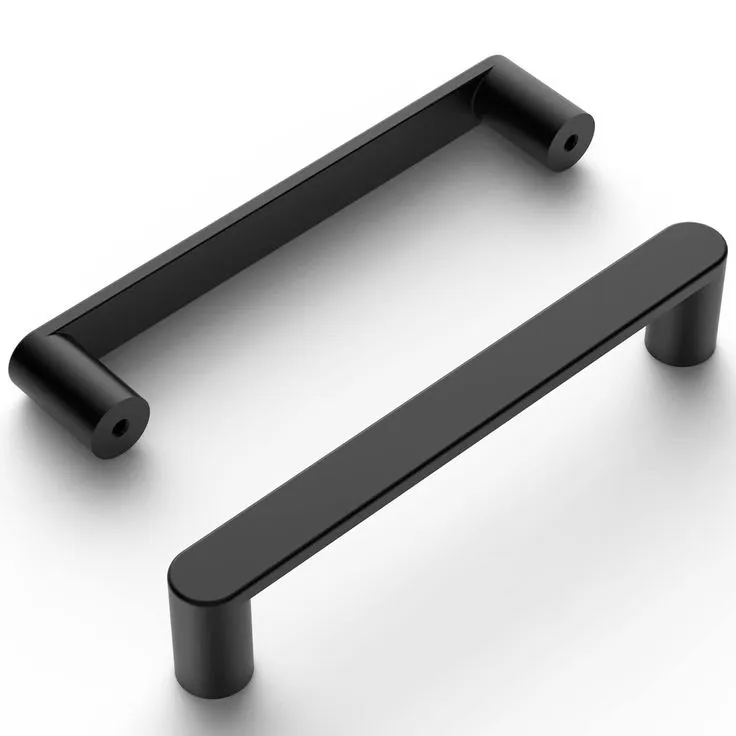
Matte black hardware has been a staple of modern kitchen design for several years now, and it remains one of the top choices in 2026. The appeal is straightforward: it’s bold, it’s clean, it reads as both modern and timeless, and it pairs well with almost every cabinet color — from bright white to deep charcoal to warm sage.
Matte black is the most universally versatile hardware finish available right now. It creates a strong contrast against light cabinets that makes a kitchen look sharper and more defined. It grounds darker cabinets in a way that feels intentional rather than heavy. And the non-reflective matte surface is significantly more forgiving of fingerprints than any polished finish — which in a kitchen that gets daily use is a genuinely meaningful practical advantage.
The key to making matte black work is consistency. When you commit to matte black hardware, carry that finish through your faucet, your light fixtures, and even your appliance handles if possible. A unified finish creates a level of polish that makes a kitchen look professionally designed rather than assembled piece by piece.
Best for: White, cream, grey, sage green, navy, and two-tone cabinet combinations. Contemporary, modern farmhouse, and industrial kitchen styles. Any kitchen where you want clean lines and a design-forward statement.
Best picks: Cosmas 702 series matte black bar pull (Amazon, excellent quality-to-price ratio), Amerock Matte Black collections (available at most hardware stores), Richelieu matte black bar pulls.
Brushed Brass and Satin Gold — The Warm Finish Having Its Bigges
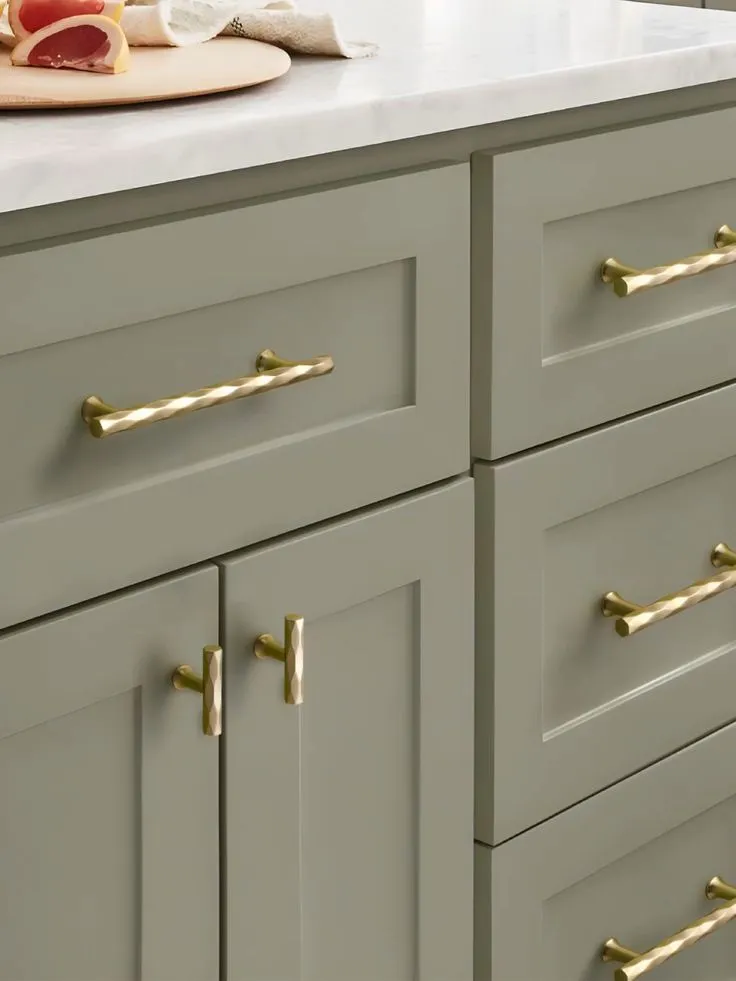
t Moment
Warm metal hardware can make kitchen cabinets feel softer, warmer, and more custom. Finishes like brass, champagne bronze, and soft gold bring in a gentle glow that takes the edge off stark whites, cool blues, and other painted tones. They also sit comfortably between classic and current, which helps cabinets read as more custom and considered.
Warm finishes are still climbing: brass, antique brass, and brushed gold tones. They pair well with white oak, greiges, deep greens, and warm whites, which keeps them relevant across many cabinet colors.
Brushed or satin brass is the hardware finish that makes a kitchen feel most elevated and most personal — it has a warmth and depth that no cool-toned finish can replicate, and it photographs extraordinarily well, which is why you see it in almost every current kitchen renovation that is being shared online.
The critical distinction between finishes in this family: brushed brass is a softer, more contemporary version of the traditional shiny brass (which looks dated); unlacquered brass develops a beautiful patina over time and is for people who love that lived-in quality; champagne bronze is a lighter, slightly more rose-toned warm gold that works beautifully in kitchens with warm wood tones.
Best for: White, cream, sage green, navy, forest green, and terracotta cabinets. Farmhouse, transitional, and organic-modern kitchen styles. Kitchens with warm wood countertops or flooring.
Best picks: Amerock Golden Champagne pulls, RAVINTE Brushed Gold bar pulls (Amazon — excellent quality for the price), Top Knobs Warm Brass collections.
Brushed Nickel and Satin Chrome — The Clean, Timeless Neutral
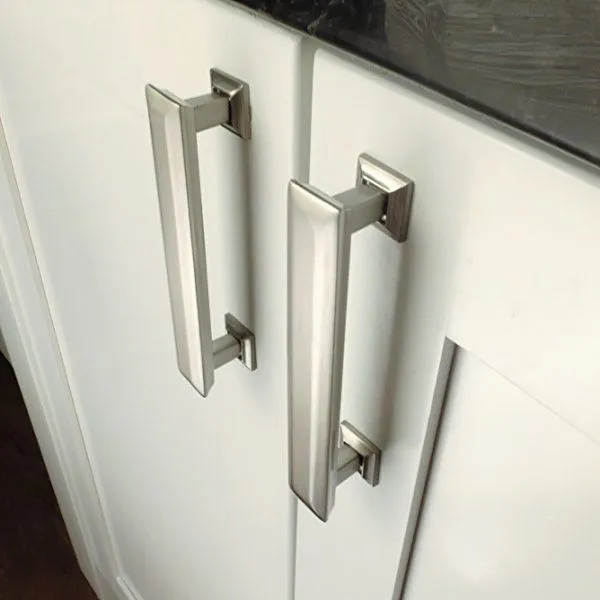
Brushed nickel is the hardware finish equivalent of white paint — it works everywhere, it never offends, it makes everything look clean and considered without making a bold statement. If you want to update your kitchen hardware without making a design commitment, brushed nickel is the universally safe, universally flattering choice.
It pairs beautifully with cool-toned cabinets (white, grey, blue-grey, two-tone white-and-grey) and with chrome and stainless steel appliances. It has a slight warmth that makes it softer than polished chrome without the warmth of brass. And it has been a kitchen hardware staple for decades for the simple reason that it never looks wrong.
Best for: White, grey, greige, light blue, and two-tone cabinets. Contemporary, transitional, and any kitchen with stainless steel appliances. Any situation where you want a reliable, versatile result.
Best picks: Franklin Brass brushed nickel bar pulls, Liberty Hardware brushed nickel collections, Rok Hardware brushed nickel bar pulls.
Unlacquered and Aged Brass — The Character Finish That Feels Collected
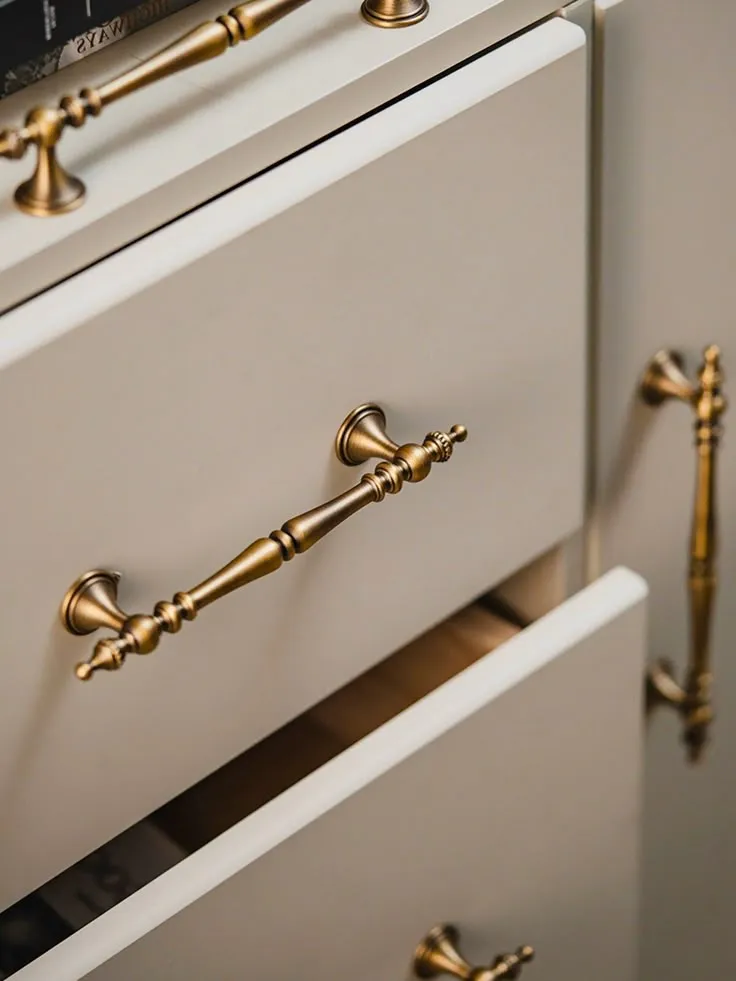
Vintage-inspired hardware is back in a big way. Think oil-rubbed bronze, unlacquered brass, or polished nickel. These add a sense of history to shaker-style or inset cabinetry. These finishes imbue the kitchen with an inviting warmth, especially when paired with darker cabinets or natural wood tones. They’re perfect for homeowners who want that “collected over time” feel.
Unlacquered brass is the finish choice for someone who wants their kitchen to feel genuinely lived-in and personal rather than freshly designed. Unlike lacquered brass which maintains a consistent bright gold, unlacquered brass naturally develops a patina — darkening slightly in areas of regular contact, lightening where it is frequently touched, gradually developing the warmth and depth of something genuinely old. If you love that quality, unlacquered brass is deeply beautiful. If you want consistent appearance over time, choose lacquered or satin brass instead.
Best for: Natural wood cabinets, warm cream and off-white cabinets, dark green and navy cabinets. Traditional farmhouse, English country, and maximalist kitchen styles.
Best picks: Rejuvenation unlacquered brass hardware (the premium standard), Anthropologie hardware collections for more decorative options, CB2 unlacquered brass bar pulls.
Oil-Rubbed Bronze — The Warm Dark Finish for Traditional and Transitional Kitchens
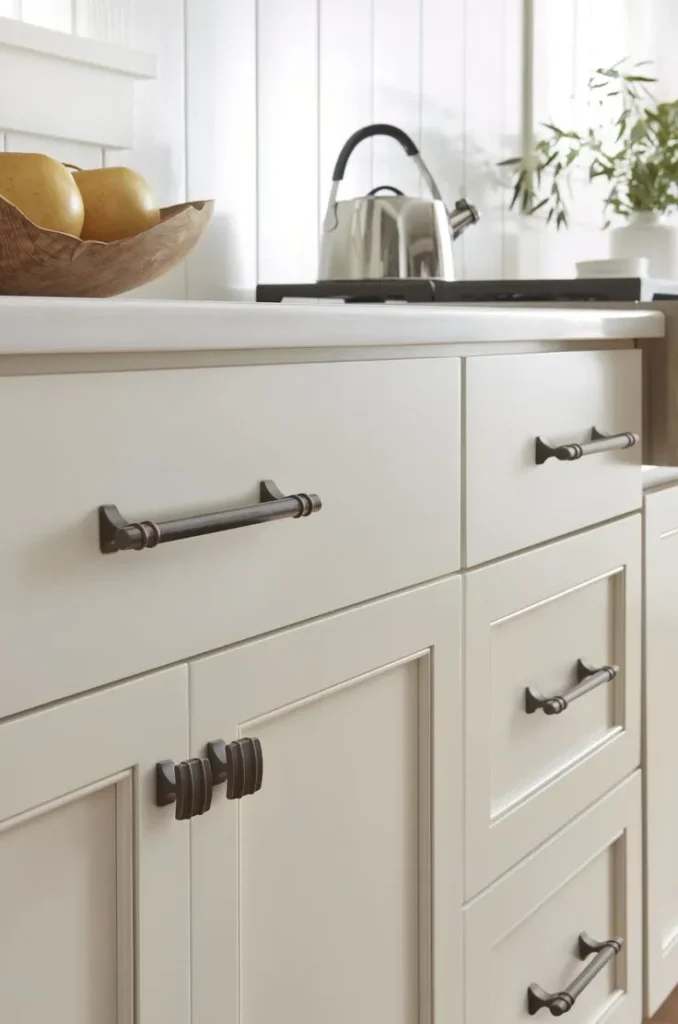
Oil-rubbed bronze is the dark, warm alternative to matte black — it has a similar drama and contrast effect but with a brown-warm undertone that feels more traditional and less industrial than black. It pairs beautifully with darker cabinet colors and with warm-toned kitchens where the cool darkness of matte black would feel out of place.
If your kitchen has warm wood tones, warm-colored cabinets, or a traditional design style, oil-rubbed bronze reads as more natural and more harmonious than matte black — which tends to feel most at home in contemporary and modern spaces.
Best for: Warm wood, honey, terracotta, and cream cabinets. Traditional, transitional, and rustic kitchen styles. Kitchens with bronze or oil-rubbed bronze faucets and light fixtures.
Best picks: Amerock oil-rubbed bronze collections, Liberty Hardware Rustic Bronze series, Richelieu oil-rubbed bronze pulls.
The Best Cabinet Hardware Styles for a Modern Kitchen
Beyond finish, the shape and style of your hardware determines whether your kitchen reads as contemporary, traditional, farmhouse, or something else entirely.
Bar Pulls — The Modern Standard
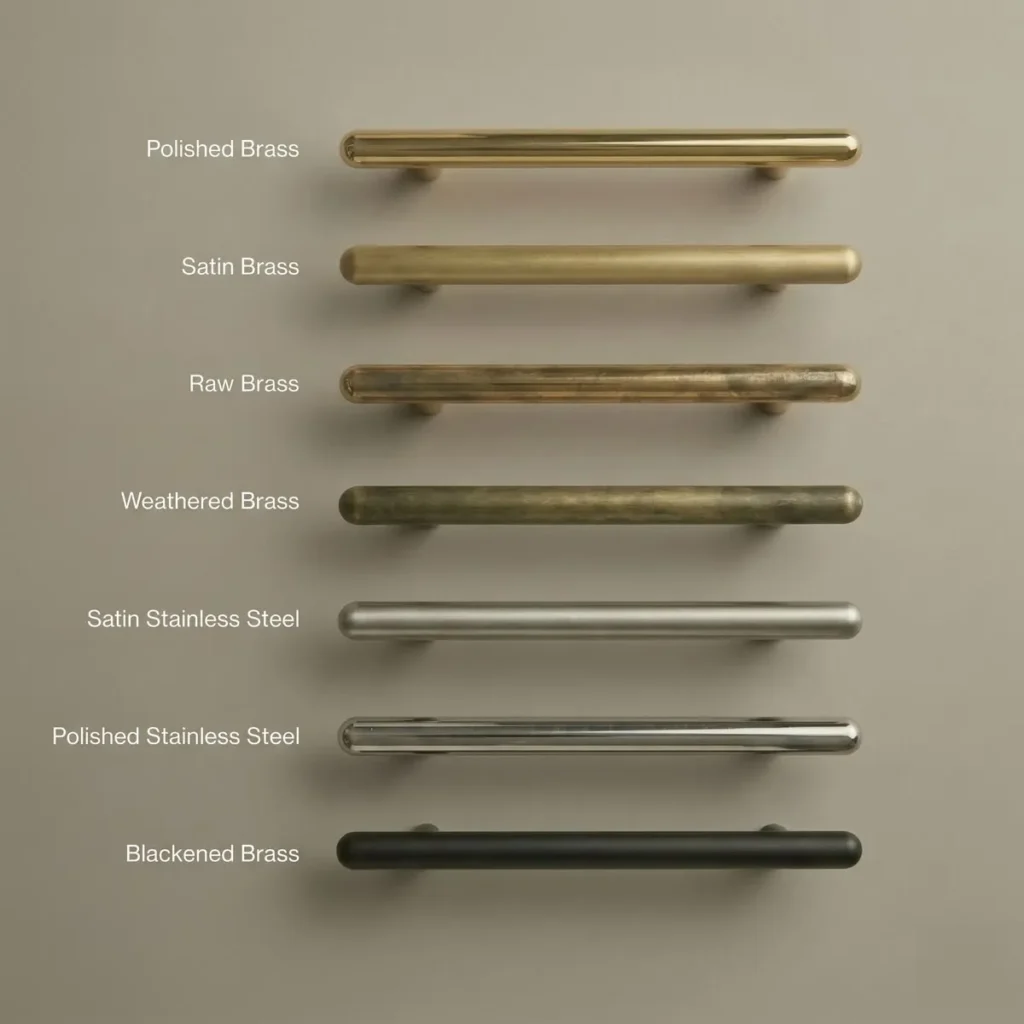
Bar pulls are the horizontal or vertical straight bars that have become the defining hardware style of contemporary kitchen design. They come in various lengths (the most popular being 3-inch, 5-inch, 8-inch, and 12-inch for wide drawers), various thicknesses, and in every finish imaginable.
Longer pulls are not just a style choice. They make drawers easier to open, especially wide pots-and-pans drawers and trash pull-outs. Homeowners also like the “clean line” they create across a bank of drawers.
The standard guideline for bar pull length: use pulls that are approximately one-third to one-half the width of the drawer or door they are on. A 30-inch wide drawer looks most proportionate with a 10 to 12-inch pull. A 3-inch wide cabinet door looks best with a 3 to 4-inch pull.
Bar pulls are the most forgiving hardware style for a DIY installation because the straight lines are easy to align consistently across multiple cabinets.
Best picks: Cosmas 305 series bar pulls, RAVINTE Cabinet Pulls (Amazon — the best value bar pull on the platform right now), Franklin Brass bar pulls in every finish.
Cup Pulls — The Farmhouse Favorite
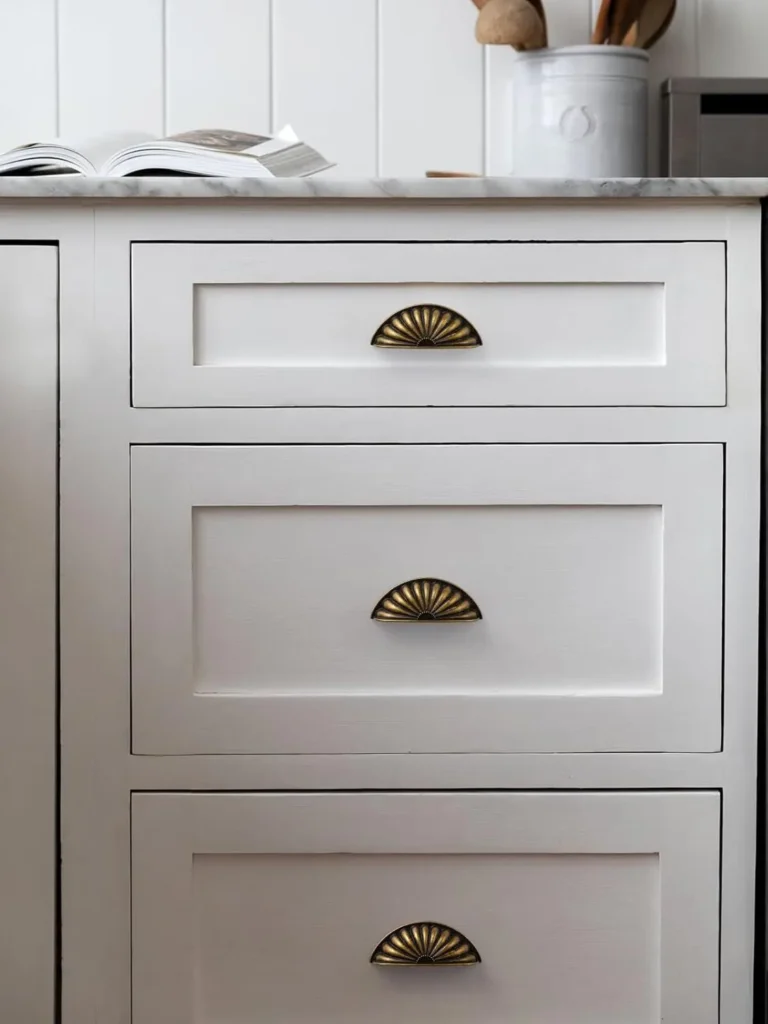
Cup pulls — the C-shaped pulls that your fingers cup into from below — are the hardware style that most strongly communicates farmhouse, cottage, and traditional design. They work beautifully on lower cabinet doors and on drawer fronts in a kitchen that wants warmth and character rather than sleek contemporary lines.
Cup pulls are particularly beautiful in antique brass, oil-rubbed bronze, and black iron finishes. They pair well with shaker cabinet doors and with white or cream painted cabinets. In a kitchen where the rest of the design is contemporary, a cup pull will feel out of place — this is a style-specific choice rather than a universal one.
Best picks: Amerock cup pulls in all finishes, Liberty Hardware cup pull collections, Top Knobs cup pulls in nickel and brass.
Knurled Pulls — The Textured, Premium Statement
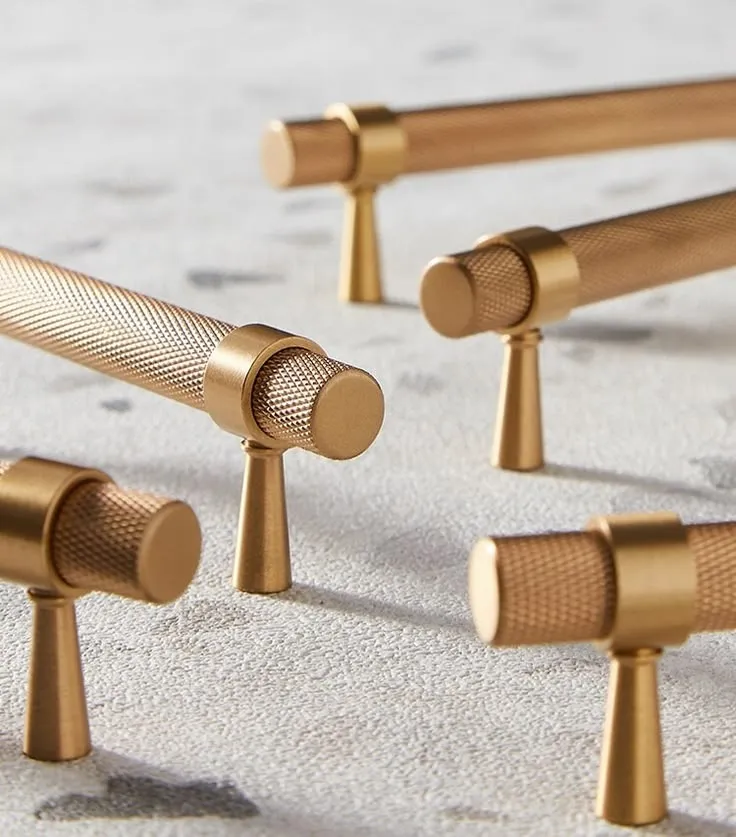
Knurled detailing is an attention-getting option that adds grip and visual interest without needing louder colors or patterns. Knurled pulls are ideal for modern kitchens and industrial-leaning spaces, or anywhere you want a premium “machined” look.
Knurled pulls — with a crosshatch or diamond texture machined into the pull surface — have the tactile quality of precision-engineered objects and they feel genuinely luxurious in the hand. They work beautifully in matte black and in brushed brass, and they bring a detail richness to a kitchen that flat bar pulls cannot replicate.
Best picks: Cosmas 4413 series knurled pulls, Amazon “knurled cabinet pulls” search for a wide range of styles and finishes, Rejuvenation knurled hardware collections for premium options.
Ceramic and Porcelain Knobs — The Artisanal, Cottagecore Choice
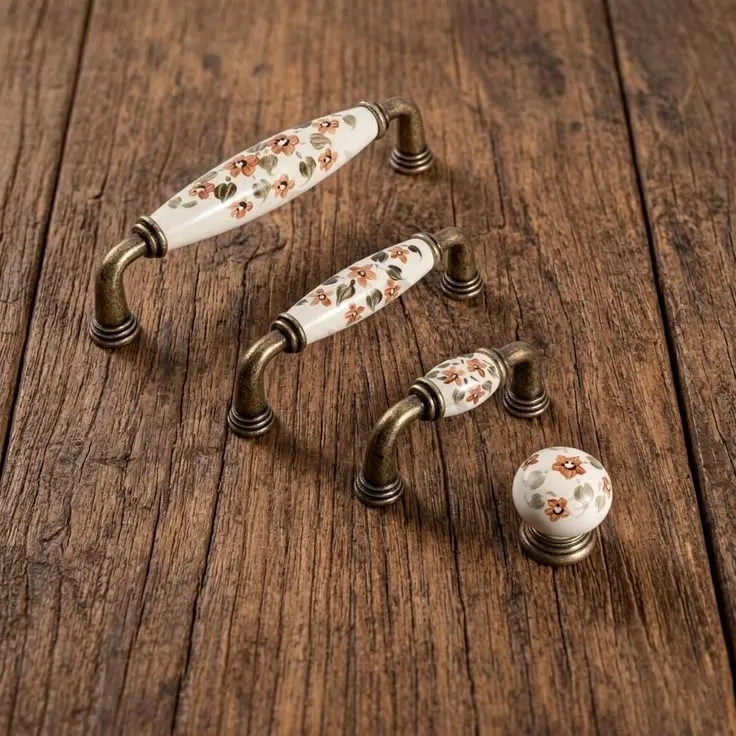
Ceramic and porcelain knobs are making a genuine comeback, particularly in kitchens that lean into a warmer, more artisanal aesthetic.
Ceramic knobs with hand-painted details, solid-color porcelain knobs, and artisan-made ceramic hardware add a deeply personal and handcrafted quality to a kitchen that no metal hardware can replicate. They feel most at home in cottagecore kitchens, in European farmhouse aesthetics, and in any kitchen that is assembled with the “collected over time” quality rather than a single coordinated design decision.
Best picks: Anthropologie ceramic knobs (the most beautiful variety available), Etsy handmade ceramic knobs (for truly unique, artisan-made options), Liberty Hardware porcelain knob collections for a more affordable entry point.
Edge Pulls and Integrated Hardware — The Minimal, Handle-Free Look
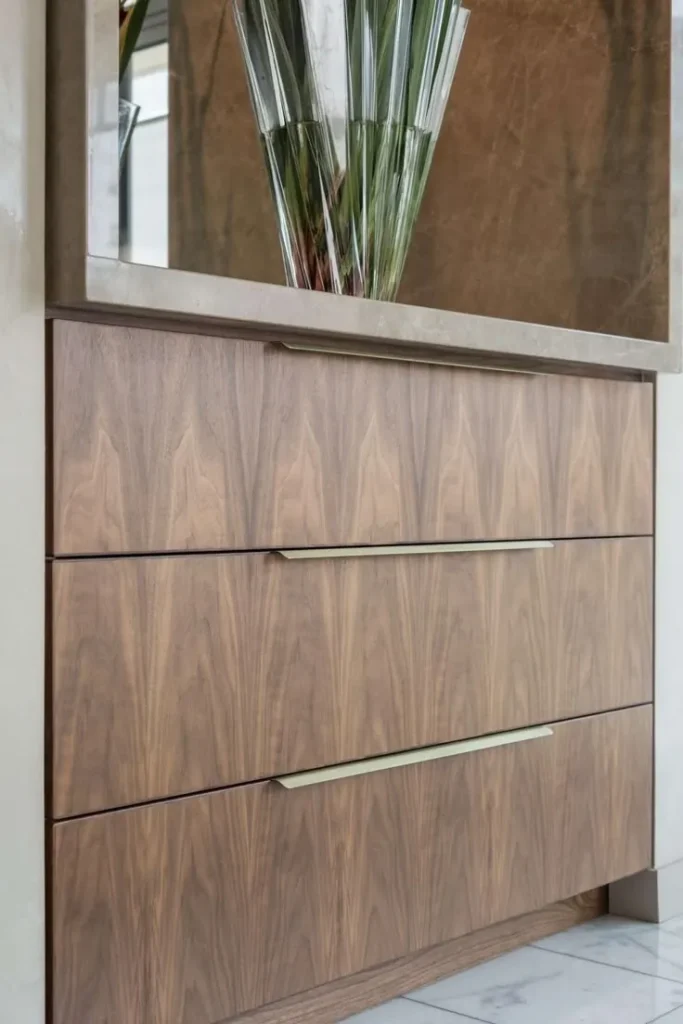
For the most minimal, sleek, contemporary kitchen aesthetic, edge pulls — the thin metal strips that are recessed into the top or bottom edge of cabinet doors — and push-to-open mechanisms that eliminate visible hardware entirely, are the 2026 direction for truly modern kitchen design.
Edge pulls are typically seen in European-style kitchens with slab (flat-front, no frame, no detail) cabinet doors, where any protruding hardware would interrupt the clean visual plane of the cabinet face. The result is a kitchen with an architectural, gallery-like quality that feels extremely contemporary.
Best picks: Sugatsune edge pulls, Emtek edge pull collections, or search “cabinet edge pull” on Amazon for a range of price points.
The 2026 Hardware Trends Worth Knowing
Matching everything is fading. In 2026, designers are leaning into mixed metal hardware because it adds depth fast and stays flexible when the rest of the room evolves. Pick a “primary” finish for most doors and drawers. Add a “secondary” finish in one controlled place: island cabinets, a tall pantry bank, or the bathroom vanity. Keep it to two finishes for most homes. Two reads curated. Three can read cluttered.
Cabinet hardware may be one of the smallest elements in a kitchen, but its influence continues to grow. Looking ahead to 2026 and beyond, designers are treating knobs and pulls less like accessories and more like intentional design features. The future of cabinet hardware is confident, tactile, and thoughtfully chosen to elevate both form and function.
The three trends I think are most worth understanding for a modern kitchen hardware update right now:
Trend 1: Warm finishes over cool finishes. Brushed brass, champagne bronze, warm gold, and unlacquered brass are gaining over brushed nickel, chrome, and cool silver tones. The overall design direction of 2025 and 2026 is toward warmth, organic materials, and livability — and warm hardware finishes serve that direction directly.
Trend 2: Texture and tactile detail. Knurled handles, hammered finishes, hand-forged textures, and leather-accented pulls are the hardware version of the larger design trend toward materials that feel genuinely crafted rather than machine-produced. Texture is having a major moment. Knurled handles, hammered knobs, and brushed bronze pulls add a tactile element that feels both modern and handmade.
Trend 3: Longer pulls, used boldly. The trend for pull length is definitively toward longer rather than shorter — 6-inch, 8-inch, and 10-inch pulls on drawers that would previously have had 3-inch pulls. Longer pulls create a stronger linear statement and look more expensive and more designed than shorter ones at the same price point.
Hardware Sizing Guide: How to Get the Proportions Right
This is the practical information that every hardware shopping guide should include and most don’t — because beautiful hardware in the wrong size looks wrong regardless of how good the quality is.
For cabinet doors: A pull or knob should be positioned vertically on doors, centered in the stile (the vertical frame member on the side of the door), at a height of approximately 2.5 to 3 inches from the bottom of the door for lower cabinets, and approximately 2.5 to 3 inches from the top of the door for upper cabinets. This is where your hand naturally reaches when you open a door.
For drawer fronts: Pulls on drawer fronts are typically centered horizontally and centered vertically, or centered horizontally and positioned slightly above center for a more modern look. On very deep drawers (6 inches or taller), two pulls positioned symmetrically look more proportionate than one centered pull.
For pull length: The standard guideline is that a pull should be one-third to one-half the width of the drawer or door it is on. Most design professionals now recommend erring toward the longer end of this range — longer pulls look more expensive and more intentional than shorter ones.
Center-to-center measurement: This is the distance between the two screw holes on a pull, and it must match the distance between your drill holes (or the existing holes if you are not drilling new ones). Standard center-to-center measurements are 3 inches (76mm), 3.75 inches (96mm), and 5 inches (128mm). Always buy hardware with a center-to-center measurement you can work with given your existing holes or your planned drill template.
The Hardware Budget Guide: What to Spend Where
Cabinet hardware pricing ranges from under $2 per piece to over $50 per piece, and the question of where to spend is genuinely worth thinking through.
$2 to $5 per piece: Basic hardware that looks fine in photos and holds up for a few years with moderate use. Acceptable for rental kitchens, for short-term updates, or for cabinets with very light use.
$6 to $12 per piece: The sweet spot for most home kitchen hardware updates. This price range includes genuinely well-made hardware with durable finishes, good weight, and a build quality that holds up to daily kitchen use for many years. Most of the specific products recommended in this guide fall into this range.
$13 to $25 per piece: Premium hardware with noticeably better weight, more detailed construction, and higher-quality finish application. Worth the investment for kitchens you plan to live in for a long time and for hardware that will be touched multiple times per day.
$25 and above: Designer and custom hardware in this range is genuinely beautiful and made to last decades. Appropriate for high-end kitchen renovations or for specific statement hardware on a kitchen island or a featured cabinet section.
My friend Leena’s rule: spend at or above the $6 to $12 range for every piece. Below that, the finish tends to wear off, the weight feels cheap in the hand, and the hardware starts to look worn within a year or two. The few dollars per piece saved in the lower range costs you the whole project’s result.
Your Kitchen Hardware Update Starts With One Pull
Here is the most encouraging thing I can tell you about a kitchen hardware update: you can test it before committing. Order one or two pulls in your top choice — just one or two, before buying thirty. Hold them against your actual cabinet doors. Hold them against your countertop. Look at them in your kitchen’s light at different times of day.
Hardware that looks perfect on a product photo can look slightly different in your specific kitchen with your specific cabinet color and your specific lighting conditions. The one-pull test takes a few days and saves you from a hardware return that is significantly more annoying at the thirty-piece scale.
My friend Leena tests every hardware selection in a client’s actual kitchen before the order is placed, and she says the test has changed her recommendation in about one in five situations — which means one in five kitchen hardware orders that would have been wrong were saved by the five-minute test. Do the test.
The right hardware for your kitchen is out there. It will complete the look you have been building. It will make your cabinets look like they were designed rather than inherited. And it will make you smile every single time you open a cabinet door — which, in a kitchen you cook in regularly, is a lot of times a day, every day of your life.
That is what good hardware does. Go find yours.
Now go pin this complete guide, share it with every person you know who has been meaning to update their kitchen hardware and hasn’t known where to start, and go test those two pulls this weekend.
Pin this and save it — this is the cabinet hardware guide you will come back to every time you are updating a kitchen and need to choose hardware that makes the whole space look genuinely designed and modern!







Leave a Reply