
If you think nothing grows in your shady yard, I promise you’re wrong—these flower bed ideas for shade will turn your gloomy corners into the most Instagram-worthy garden on the block.
Okay, girl, let’s be real for a second. Have you ever stood in your backyard, staring at that sad, bare patch under the big oak tree, feeling completely defeated? Like, you’ve tried everything. You bought those cute little annuals from Home Depot, watered them religiously, talked to them nicely (lol), and they still died within two weeks. I’ve been there. Honestly, it’s the worst feeling.
I remember when I first moved into my current place, I was so excited to create this dreamy cottage-core garden. But then I realized half my yard was basically a shadow zone thanks to my neighbor’s massive maple tree.
I spent an entire summer crying over dead impatiens. My friend Jess came over one day, saw my tragic garden, and literally laughed (in a loving way, I swear). She said, “Babe, you’re trying to grow sun-lovers in a cave. You need flower bed ideas for shade, not sunshine.”
That conversation changed everything. Once I stopped fighting nature and started working with it, my shady spots became my favorite part of the yard. And guess what? Shade gardens are actually trending hard on Pinterest right now because they’re lush, moody, and require way less watering.
So if you’re ready to stop killing plants and start creating something beautiful, keep reading. These flower bed ideas for shade are going to blow your mind.
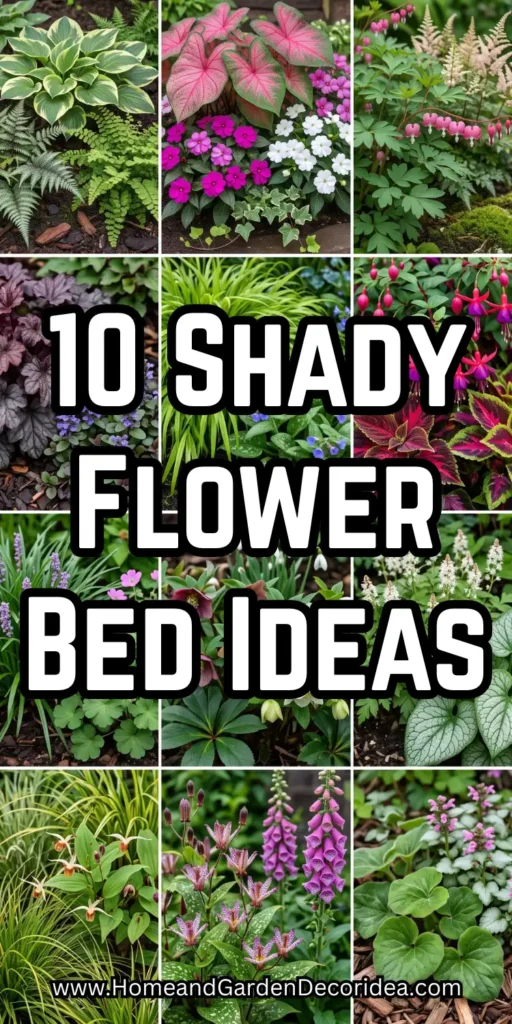
1. Hosta Heaven: The Ultimate Low-Maintenance Statement
Let’s talk about why hostas are absolutely essential when we’re discussing flower bed ideas for shade. First off, they come in like a million varieties—variegated, blue-green, chartreuse, giant, tiny. They’re basically the chameleons of the shade garden world. Plus, they’re nearly indestructible. I’m serious. You could forget they exist for a month, come back, and they’ll still look fabulous.
Hostas create instant texture and visual interest without needing any flowers at all. Their broad leaves catch what little light filters through the trees and make your space feel intentional and designed. This is viral on TikTok right now because people are realizing you don’t need blooms to have a gorgeous garden. The foliage IS the flower, okay?
To make this work, mix different sizes and colors of hostas together. Plant the larger varieties in the back and the smaller ones up front. Add some decorative stones or a cute bench nearby to create a little seating area. Pro tip: Slugs love hostas, so sprinkle some diatomaceous earth around the base if you notice holes in the leaves. It’s natural and works like a charm.
2. Fern Fronds for That Moody Forest Vibe
Here’s why ferns deserve a spot in your flower bed ideas for shade collection: they’re prehistoric, dramatic, and add instant height and movement to your garden. There’s something so romantic and mysterious about ferns swaying in the breeze. They make your yard feel like a secret woodland escape, which is totally the aesthetic everyone’s chasing right now.
Ferns thrive in conditions where most plants would give up. They love moisture, cool temperatures, and dappled light. If you have a spot that stays damp and dark, ferns are your best friend. I planted a cluster of lady ferns behind my deck last year, and they’ve doubled in size. It’s honestly magical how lush they look with zero effort.
Choose native fern species for your area because they’ll be happiest and require the least maintenance. Mix tall ostrich ferns with shorter maidenhair ferns for variety. Water them regularly during dry spells, but otherwise, just let them do their thing. They pair beautifully with hostas and create that layered, professional landscaper look without the price tag.
3. Astilbe Plumes for Soft, Romantic Color
Astilbes are one of my absolute favorites when it comes to flower bed ideas for shade because they bring actual COLOR to shady spaces. Most shade plants are green-on-green, which is beautiful, but sometimes you want a pop. Astilbes produce these fluffy, plume-like flowers in pink, red, white, and purple that look like cotton candy floating above the foliage. Oh my!
These beauties bloom in early to mid-summer and attract butterflies and bees, which is a huge bonus. They also prefer moist soil, so if you have a low spot in your yard that collects water, astilbes will thank you. My friend Sarah has these in her front yard, and every time I visit, I take like fifty photos. They’re that photogenic.
Plant astilbes in groups of three or five for maximum impact. They look best when massed together rather than scattered individually. Make sure the soil stays consistently moist—mulch heavily around the base to retain water. Pair them with hostas and ferns for a complete shade garden trio that’s seriously obsessed-worthy.
4. Bleeding Hearts for Vintage Charm
If you’re into that cottage-core, grandmother’s-garden aesthetic, bleeding hearts are non-negotiable for your flower bed ideas for shade. Why? Because they’re quirky, delicate, and have the cutest little heart-shaped flowers that dangle from arching stems. They look like something out of a fairy tale, and they bloom in spring when everything else is just waking up.
Bleeding hearts go dormant in summer heat, which might sound like a downside, but honestly, it’s kind of nice. It means you get this beautiful spring display, and then other plants take over in summer. It’s like having multiple gardens in one space. Plus, deer usually leave them alone, which is a major win if you’re dealing with wildlife issues.
Plant bleeding hearts in rich, well-draining soil with plenty of organic matter. They prefer cooler temperatures, so position them where they’ll get morning sun but afternoon shade. After they bloom, don’t cut back the foliage immediately—let it die back naturally so the plant can store energy for next year. Trust me, this is one of those flower bed ideas for shade that keeps giving.
5. Coral Bells (Heuchera) for Year-Round Interest
Coral bells are criminally underrated in the world of flower bed ideas for shade, and I’m here to change that. Here’s why they’re amazing: they have colorful foliage that lasts ALL YEAR. We’re talking burgundy, lime green, silver, peach, and even near-black leaves. In spring, they send up delicate flower spikes, but the real star is the foliage that looks stunning even in winter.
I’m seriously obsessed with the ‘Palace Purple’ variety. It’s this deep, rich purple that contrasts beautifully with green hostas and ferns. Coral bells are also drought-tolerant once established, which makes them more versatile than you’d think for shade gardens. They’re compact, too, so they’re perfect for edging or filling in gaps between larger plants.
Plant coral bells in well-draining soil—they hate sitting in waterlogged dirt. They can handle a bit more sun than other shade plants, so they’re great for those borderline areas that get a few hours of direct light. Deadhead the flower spikes after blooming to keep the plant looking tidy. This is easily one of the most popular ideas on Pinterest for good reason.
6. Impatiens for Instant Color Bomb
Okay, I know I roasted impatiens earlier, but hear me out. When done right, impatiens are actually fantastic for flower bed ideas for shade. Why? Because they bloom continuously from spring until frost, providing non-stop color in shades of pink, red, orange, white, and purple. They’re the workhorses of the shade garden.
The key is choosing the RIGHT type. New Guinea impatiens can handle a bit more sun and have larger flowers, while traditional wax impatiens are better for deep shade. I’ve had much better luck with New Guinea varieties—they’re sturdier and less prone to disease. Plus, they self-clean, meaning the dead flowers drop off on their own. No deadheading required. Girl, yes!
Plant impatiens in masses for a carpet of color. They look incredible spilling over the edges of containers or lining a shaded pathway. Keep the soil evenly moist but not soggy. Fertilize every few weeks with a balanced fertilizer to keep them blooming hard. If you want low-effort, high-reward flower bed ideas for shade, impatiens are still a solid choice.
7. Begonias for Tropical Flair Without the Fuss
Begonias are having a major moment right now, and for good reason. They’re perfect for flower bed ideas for shade because they offer both stunning foliage and beautiful flowers. Wax begonias have glossy leaves and clusters of small blooms, while tuberous begonias have huge, rose-like flowers that look expensive but aren’t. The foliage alone is worth it—some varieties have silver markings or deep bronze tones.
What I love about begonias is they feel tropical and exotic, even though they’re super easy to grow. They make your shade garden look curated and intentional, like you hired a designer. My neighbor has these huge bronze-leaf begonias, and honestly, her yard looks like a resort. I’m not even jealous. Okay, I’m a little jealous.
Plant begonias in rich, well-draining soil. They’re sensitive to overwatering, so make sure the soil isn’t constantly wet. They also appreciate humidity, so misting them occasionally in dry weather helps. Use them as focal points in your shade garden or mix them with simpler plants like hostas for contrast. These flower bed ideas for shade are total showstoppers.
8. Hellebores (Christmas Roses) for Winter Blooms
Here’s a pro-level addition to your flower bed ideas for shade: hellebores. Why are they special? Because they bloom in WINTER. Yes, you read that right. While everything else is dead and brown, hellebores are pushing up delicate flowers in white, pink, green, and even near-black. They’re like a gift that keeps on giving.
Hellebores are evergreen perennials, so they provide structure and interest year-round. They’re also deer-resistant and drought-tolerant once established, which makes them incredibly practical. I planted some ‘Merlin’ hellebores last fall, and seeing those dark purple flowers pop up in February was pure joy. It made the whole bleak winter feel hopeful.
Plant hellebores in well-draining soil with plenty of leaf mold or compost. They prefer neutral to alkaline soil, so test your pH if you can. Don’t divide them too often—they like to stay put. Cut away old, damaged leaves in late winter before new growth emerges. If you want flower bed ideas for shade that work when nothing else does, hellebores are your answer.
9. Lungwort (Pulmonaria) for Early Spring Sparkle
Lungwort is another unsung hero in the realm of flower bed ideas for shade. Here’s why you need it: it blooms super early, often while there’s still snow on the ground. The flowers start pink and turn blue as they age, creating this cool two-tone effect on the same plant. Plus, the leaves are spotted with silver, adding texture even after the flowers fade.
Lungwort spreads gently via rhizomes, forming a lovely ground cover that suppresses weeds. It’s perfect for planting under trees or along shaded borders where you want coverage without aggressive spreading. I have a patch of lungwort near my front steps, and every spring, I get compliments from passersby. It’s that eye-catching.
Plant lungwort in moist, humus-rich soil. It prefers cool conditions and doesn’t like to dry out. Mulch heavily to keep the roots cool and moist. Divide clumps every few years if they get too crowded. This is one of those flower bed ideas for shade that feels like a secret weapon—most people don’t know about it, but once they see it, they’re hooked.
10. Japanese Painted Fern for Architectural Drama
Last but definitely not least, let’s talk about Japanese painted ferns for your flower bed ideas for shade. Why are they incredible? Because they look like someone painted them. The fronds have this striking silver-white center stripe against deep green edges, creating a graphic, almost modern look. They’re architectural and sculptural, adding structure to softer shade gardens.
Japanese painted ferns are smaller than many other ferns, making them perfect for containers, rock gardens, or tight spaces. They’re also slower-growing, so they won’t take over your garden. I use mine as accent plants among hostas and coral bells, and they always draw the eye. They’re like the jewelry of the shade garden.
Plant Japanese painted ferns in rich, moist soil with good drainage. They’re more delicate than other ferns, so protect them from harsh winds. They prefer consistent moisture, so don’t let them dry out completely. Pair them with dark-leaved plants like heuchera for maximum contrast. These flower bed ideas for shade are sophisticated and unique—perfect for standing out.
Quick Comparison: Which Shade Plant Is Right for You?
| Plant | Bloom Time | Foliage Interest | Moisture Needs | Deer Resistant? | Best For |
|---|---|---|---|---|---|
| Hostas | Summer (minimal) | High | Moderate | No | Texture & structure |
| Ferns | None | High | High | Yes | Height & movement |
| Astilbe | Early-mid summer | Moderate | High | Yes | Color & softness |
| Bleeding Hearts | Spring | Moderate | Moderate | Yes | Vintage charm |
| Coral Bells | Spring | Very High | Low-Moderate | Yes | Year-round color |
| Impatiens | Spring-frost | Low | Moderate | No | Continuous blooms |
| Begonias | Summer-frost | High | Low-Moderate | Yes | Tropical vibes |
| Hellebores | Winter-early spring | High | Low | Yes | Winter interest |
| Lungwort | Early spring | Moderate | Moderate | Yes | Ground cover |
| Japanese Painted Fern | None | Very High | Moderate | Yes | Architectural accents |
Pro Tips for Mastering Flower Bed Ideas for Shade
Here’s the thing nobody tells you: shade gardening is actually easier than sun gardening in some ways. You water less, weeds grow slower, and plants don’t scorch. But there are a few tricks to make your flower bed ideas for shade truly successful.
First, improve your soil. Shade areas often have poor soil because tree roots compete for nutrients. Add lots of organic matter—compost, leaf mold, aged manure—to give your plants a strong start. Second, don’t overcrowd. Shade plants need air circulation to prevent fungal diseases. Give them room to breathe.
Third, layer your plantings. Use tall plants in back, medium in middle, and short in front. This creates depth and makes your garden look professionally designed. Fourth, mulch heavily. Mulch retains moisture, suppresses weeds, and regulates soil temperature. It’s a game-changer for flower bed ideas for shade.
Finally, be patient. Shade gardens take time to establish. Don’t expect instant perfection. Let your plants settle in, and they’ll reward you with years of low-maintenance beauty. I promise, once you see your shady corner transform, you’ll wonder why you ever stressed about it.

Leave a Reply