
Before you buy a single plant or spend one dollar on landscaping, learning how to assess your backyard for landscaping can save you money, prevent expensive mistakes, and help you create the backyard of your dreams.
I have to tell you, girl, I learned this lesson the hard way. A few years ago, I walked into my local garden center feeling way too confident, grabbed a cart full of gorgeous flowers, and imagined I’d have one of those Pinterest-perfect backyards by the weekend. Spoiler alert: I definitely did not. 😂
Within a month, half my plants looked sad, one little tree never really recovered, and I realized I had planted sun-loving flowers in the shadiest corner of my yard. My friend Jess still teases me about my “very expensive compost collection.” Honestly, she wasn’t wrong lol.
That’s when I discovered that how to assess your backyard for landscaping isn’t just something professional landscapers do. It’s actually the secret that makes every beautiful outdoor space look effortless. Once I started paying attention to sunlight, soil, drainage, and how we actually used our backyard, everything changed.
If you’ve been dreaming about creating an aesthetic backyard that’s Instagram-worthy but also practical for real life, you’re in exactly the right place. I’m sharing everything I’ve learned so you can avoid my mistakes and create a backyard you’ll absolutely love.
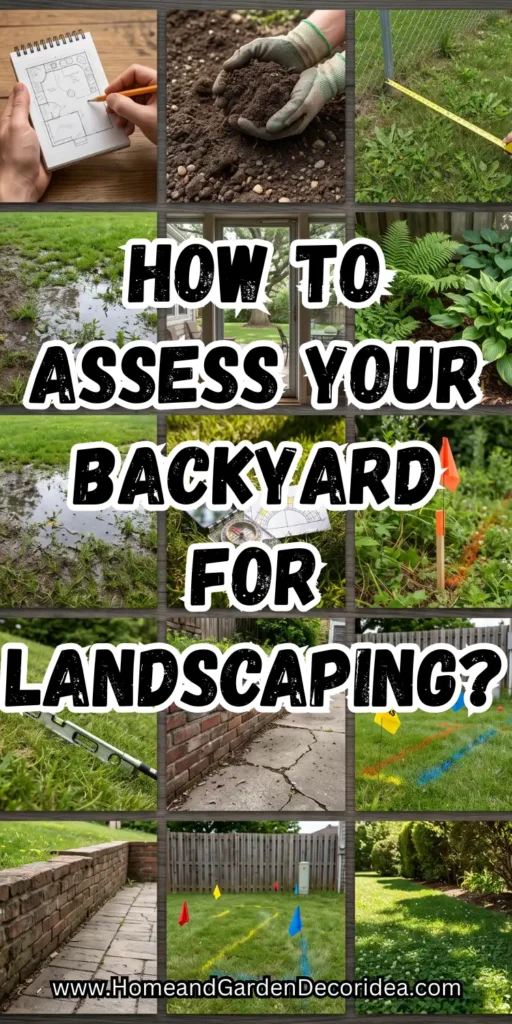
Why Learning How to Assess Your Backyard for Landscaping Changes Everything
Before we jump into the fun stuff like flowers and patio furniture, let’s talk about why how to assess your backyard for landscaping matters so much. Trust me—this one step can literally save you hundreds (sometimes thousands) of dollars.
I can’t say enough about how much easier every landscaping decision becomes once you understand your yard. Suddenly you’re buying plants that actually thrive instead of crossing your fingers and hoping for the best.
This idea has become super popular on Pinterest because homeowners are realizing that successful landscaping isn’t about copying someone else’s yard. It’s about working with what your own backyard naturally offers.
| Without Assessing Your Backyard | After Assessing Your Backyard |
|---|---|
| Plants die quickly | Plants thrive naturally |
| Wasted money | Smart investments |
| Constant maintenance | Easier upkeep |
| Random design | Cohesive landscape |
| Poor drainage problems | Better water management |
| Frustrating results | Beautiful outdoor space |
Pro Tip: I always spend at least one full weekend simply observing my backyard before making any landscaping decisions. It sounds boring, but honestly, it’s one of the smartest things I’ve ever done.
Watch How Sunlight Moves Throughout the Day
This is probably my favorite part of how to assess your backyard for landscaping, mostly because it’s completely free and surprisingly eye-opening.
One Saturday, I grabbed my coffee and walked outside every couple of hours just to see where the sunlight landed. Oh my! I discovered spots I thought were sunny only got about three hours of direct light.
That’s huge because plants are incredibly picky about sunlight. Those gorgeous lavender bushes you’ve been eyeing won’t be happy in partial shade, while hostas absolutely love those cooler corners.
I highly recommend taking photos of your yard in the morning, noon, afternoon, and evening. Your phone becomes the easiest landscaping notebook you’ll ever use, and you’ll thank yourself later.
Quick Sunlight Guide
| Sunlight Type | Hours of Direct Sun | Best For |
|---|---|---|
| Full Sun | 6-8+ hours | Roses, lavender, vegetables |
| Partial Sun | 4-6 hours | Hydrangeas, herbs |
| Partial Shade | 2-4 hours | Ferns, begonias |
| Full Shade | Less than 2 hours | Hostas, moss, woodland plants |
Check Your Soil Before Buying a Single Plant
One of the biggest parts of how to assess your backyard for landscaping is getting to know your soil. Girl, I know this doesn’t sound nearly as exciting as shopping for pretty flowers, but I promise it’s worth it. I skipped this step once, and my poor plants basically waved goodbye before summer was even over.
My friend Emma swears by doing a simple soil test every spring, and honestly, she’s convinced me. Healthy soil is the foundation for every gorgeous backyard you see on Pinterest, and it’s one of those little secrets that experienced gardeners rarely skip.
You don’t need fancy equipment either. Grab a handful of soil after it rains and squeeze it in your hand. If it stays in a hard clump, you probably have clay soil. If it falls apart immediately, it’s likely sandy. Somewhere in the middle is the sweet spot that most plants absolutely love.
I also recommend investing in an inexpensive soil testing kit. They’re budget-friendly, easy to use, and can tell you if your soil needs extra nutrients before you spend money on plants that might struggle.
| Soil Type | Pros | Challenges | Best Solution |
|---|---|---|---|
| Clay | Holds nutrients well | Poor drainage | Add compost regularly |
| Sandy | Excellent drainage | Dries out quickly | Mix in organic matter |
| Loamy | Ideal for most plants | Very few | Maintain with compost |
| Rocky | Good drainage | Hard to plant | Use raised beds or amend soil |
Pro Tip: Keep adding compost every year, even if your soil already looks healthy. It’s one of the easiest ways to improve your backyard naturally over time.
Look for Drainage Problems Before They Become Expensive
If you’re serious about how to assess your backyard for landscaping, don’t ignore drainage. Honestly, water can either become your backyard’s best friend or its biggest enemy.
I learned this after one corner of my yard turned into what my husband jokingly called “our seasonal pond.” It looked harmless until I realized every plant I put there slowly drowned. Definitely not my finest gardening moment lol.
The easiest way to check drainage is after a heavy rain. Walk around your yard and notice where water sits for hours or even days. Those spots need special attention before you start planting.
The good news is that drainage issues usually have simple solutions. Adding a rain garden, improving grading, or choosing moisture-loving plants can completely transform problem areas into beautiful landscape features.
Signs Your Backyard Has Drainage Issues
| Sign | What It Means | Easy Fix |
|---|---|---|
| Standing water | Poor drainage | Improve grading |
| Mud stays for days | Heavy clay soil | Add compost |
| Grass turns yellow | Waterlogged roots | Install drainage |
| Moss growing everywhere | Constant moisture | Choose shade-loving plants |
This is actually one of the most popular backyard makeover tips trending on TikTok because people are realizing that solving drainage first makes every other landscaping project so much easier.
Measure Your Space Instead of Guessing
I cannot stress this enough—measuring your yard is one of the smartest steps in how to assess your backyard for landscaping.
Girl, I used to eyeball everything. Big mistake. I once bought a beautiful outdoor dining set that looked perfect online but completely overwhelmed our tiny patio. My friend Jess still laughs every time she remembers us trying to squeeze around it.
Now I always measure every section of my backyard before buying anything. Suddenly, planning becomes so much easier because you’re working with real numbers instead of wishful thinking.
Take measurements of patios, walkways, garden beds, fences, and even trees you want to keep. Sketching a simple layout on paper doesn’t have to be fancy—it just needs to help you visualize the space.
| What to Measure | Why It Matters |
|---|---|
| Backyard length and width | Overall planning |
| Patio dimensions | Furniture placement |
| Existing garden beds | Plant spacing |
| Trees and shrubs | Shade planning |
| Walkways | Traffic flow |
| Fence lines | Privacy design |
Pro Tip: Use your phone to take photos from every angle after measuring. I constantly refer back to mine whenever I’m shopping for plants or outdoor décor.
Pay Attention to How You Actually Use Your Backyard
One of the most overlooked parts of how to assess your backyard for landscaping is thinking about your lifestyle instead of copying someone else’s.
Pinterest is full of dreamy backyard inspiration, but honestly, the prettiest backyard isn’t always the one that works best for your everyday life. I used to save every viral landscaping photo I saw, only to realize most of them didn’t fit how my family actually spends time outside.
Ask yourself simple questions. Do you love entertaining? Need space for kids or pets? Want a peaceful reading corner? Dreaming about growing vegetables? Your answers should shape every landscaping decision you make.
This mindset completely changed the way I planned my own backyard. Instead of chasing every trend, I focused on creating spaces we’d actually use, and the result feels so much more personal and welcoming.
I highly recommend making a short list of your top three backyard priorities before buying anything. It keeps you focused, saves money, and helps you create a space that feels beautiful and functional all year long.

Leave a Reply