
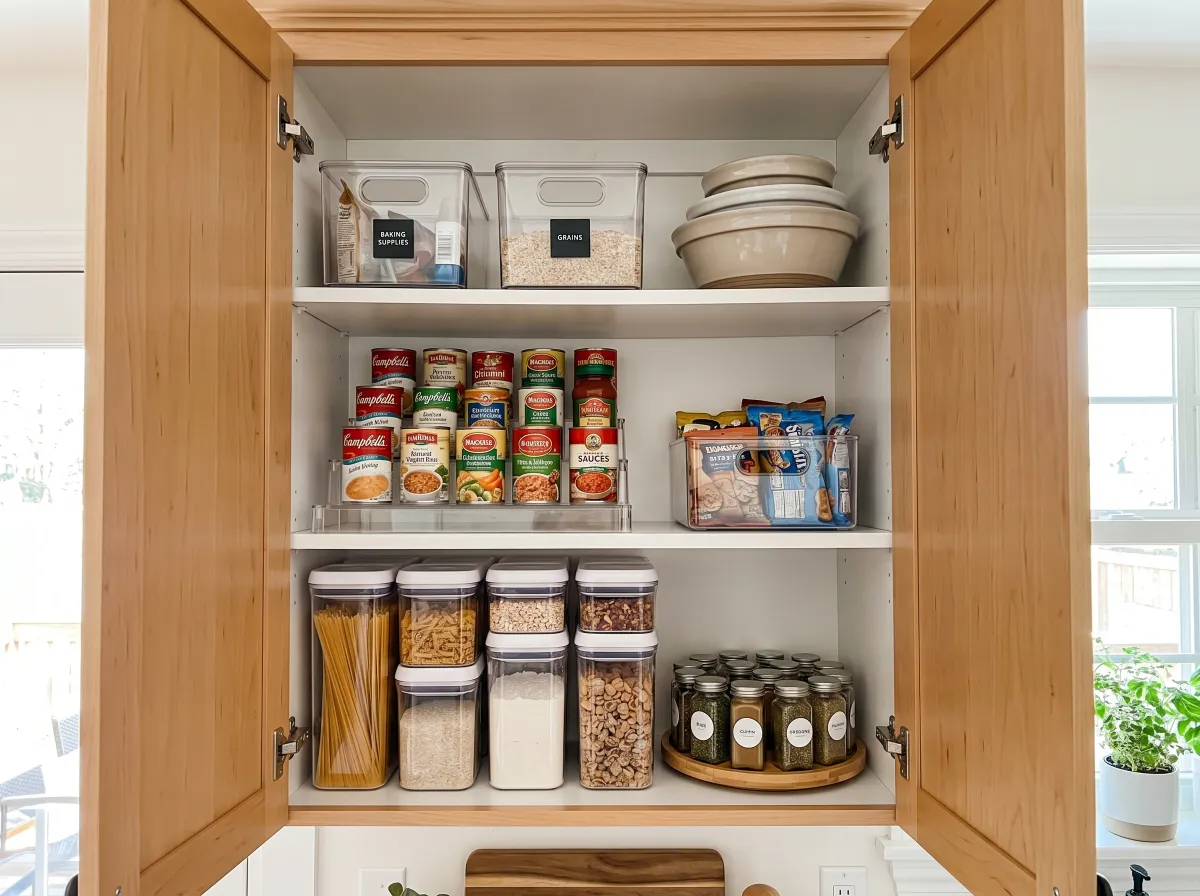
The most honest and genuinely transformative guide to the 6 cabinet organization rules that turn a one-time organizing project into a permanently organized home — because the difference between cabinets that stay organized and cabinets that fall apart within weeks is almost always about which rules you are following.
Here is a truth about home organization that most organizing content avoids saying directly: organizing your cabinets once is the easy part. Anyone can have beautifully organized cabinets for a week.
The actual challenge — the thing that separates the homes that stay organized from the ones that need to be reorganized every few months — is understanding and following the rules that make organization stick permanently.
Most people who organize their cabinets and then watch them descend back into chaos assume they failed because they are not disciplined enough, not tidy enough, or not the type of person who can maintain organization.
This assumption is almost always wrong. What actually went wrong is that the organization system they built was not based on the principles that make systems sustainable. They organized beautifully, but they organized in a way that works against the natural grain of how their household actually functions — and any system that fights human nature loses eventually.
My friend Samira organized her kitchen cabinets four times in five years. Four complete reorganizations. Bins, labels, the whole project each time. And each time, within two to four months, the cabinets were back to chaos. She could not figure out what she was doing wrong. She called herself disorganized. She told herself she just wasn’t made for a tidy kitchen.
What she was doing wrong, as became clear when I helped her organize for the fifth time using these six specific rules, was not any failure of character or discipline. She was building systems that looked right but violated several of the six principles that make cabinet organization sustainable.
When we rebuilt her kitchen around these rules — specifically rules two, four, and six — she maintained it. She has maintained it for two years. Without the four-time cycle of reorganization. Without calling herself disorganized anymore.
These are the six rules. They are not complicated. They do not require expensive organizers or professional help. They require understanding and applying them genuinely — and once you do, the organization you build will stay.
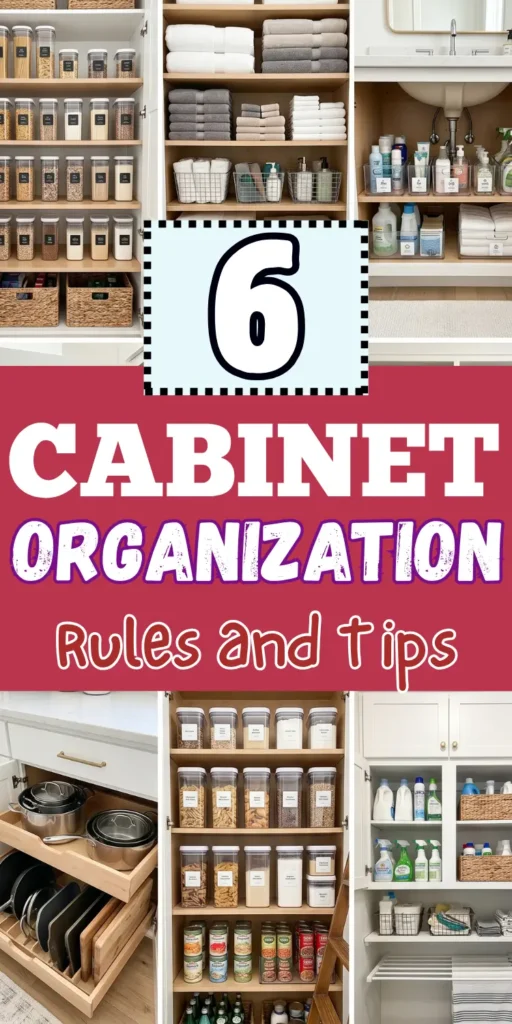
Rule 1: Everything Must Have a Specific Home, Not a General Area
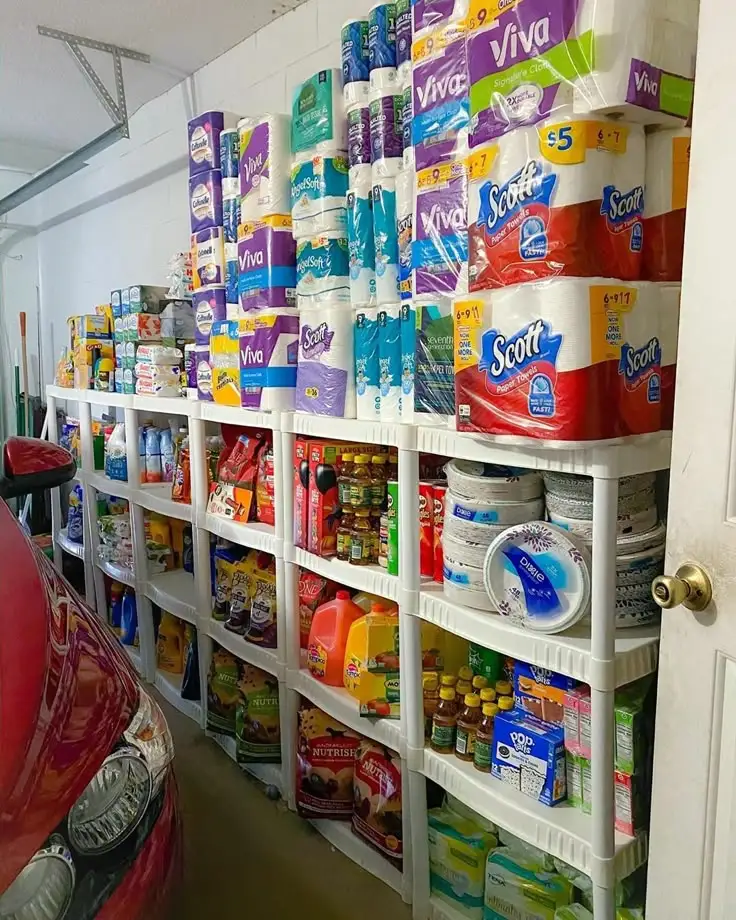
This rule sounds simple. It is deceptively powerful. And the distinction between “home” and “general area” is the distinction between organization that lasts and organization that drifts.
A general area is a zone of your cabinet where a category of items approximately lives. “The coffee stuff is in the upper left cabinet.” “The baking things are somewhere in the pantry.” “The Tupperware is in one of those lower cabinets.”
A specific home is an exact, designated location for a specific item or specific category. “The coffee pods are in the front-left corner of the second shelf in the upper cabinet beside the refrigerator.” “The cake flour is in the labeled canister on the baking shelf, second from the right.” “The square Tupperware bases are in the right half of the lower drawer, stacked by size.”
When items have general areas, the exact position within that area is determined in the moment — by whatever space is available, by whatever angle is easiest, by whatever the person putting it away feels like doing. Over time, the position of every item drifts. Items migrate to adjacent areas. Categories overlap and merge. The general area becomes a general mess.
When items have specific homes, the position is not determined in the moment — it is already determined. The item goes back to its home. The home is always the same place. Nothing drifts because there is no decision to make.
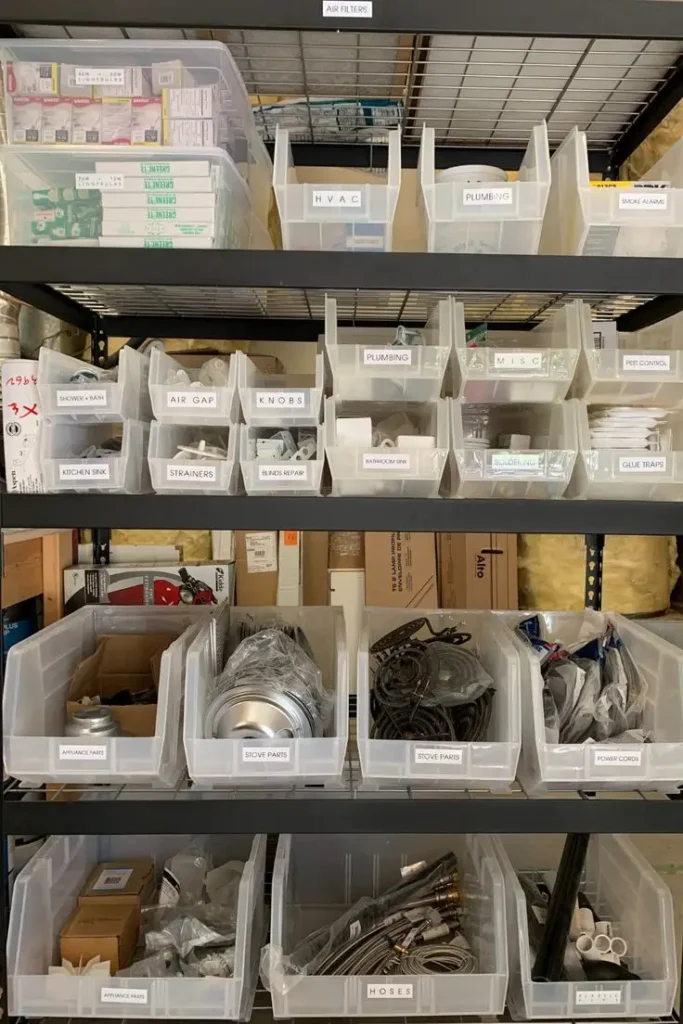
The practical way to enforce specific homes is labeling. When a shelf section or a bin is labeled with its specific category, the home is visible and unambiguous. Nobody has to remember where the baking powder lives — the label tells them. Labels remove the decision-making from the return process, which is the critical moment where drift begins.
Samira’s first four organizing attempts all created general areas. Her fifth — using this rule — created specific homes. The difference in stability was immediate and dramatic.
Rule 2: The Home Must Be Where You Actually Use the Item — Not Where It “Should” Go
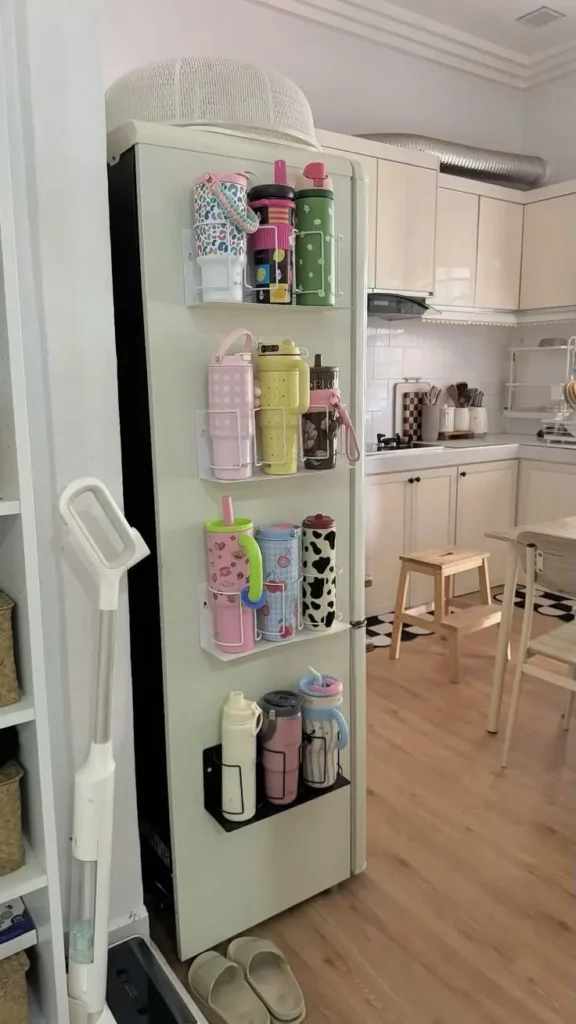
This is the rule that Samira was violating most consistently across all four of her failed attempts — and it is the rule whose violation most reliably causes organization systems to collapse in practice.
Organization “logic” that is based on what makes sense from an outside perspective — where things should go in a rational, ideal kitchen — frequently conflicts with what makes sense from the inside perspective of how a specific household actually cooks, eats, and lives. And when the system is built on the outside logic rather than the inside reality, the system loses to reality every time.
If your coffee maker is on the counter to the right of your refrigerator, the coffee mugs should be in the cabinet directly above the coffee maker — not in the cabinet “where mugs belong” based on some abstract organizing principle. If you always do your breakfast prep beside the window at the far end of the counter, the cereal and breakfast supplies belong in the cabinet closest to that window — not in the pantry where “dry food” lives.
The test for whether an item’s home is correctly placed is simple: when you finish using it, does putting it back in its home require less than three steps from where you used it? If yes — the home is correctly placed. If no — the home is fighting the natural use pattern of your household and will eventually lose.
Go through your kitchen and ask honestly: am I storing this where I use it, or where I think it “should” go? The two are often different. Wherever you use it is where it should go, regardless of what abstract organizing logic says.
Rule 3: Make the Return as Easy as the Retrieval
This rule is one I first encountered through the professional organizer Ghada referenced in the kitchen cabinet organization guide in this series, and it is one that I have come to believe is the single most mechanically important rule of sustainable cabinet organization.
Every item that fails to get put away does not fail because the person is lazy or disorganized. It fails because the friction of putting it away is greater than the friction of setting it down somewhere convenient. When the natural path of least resistance leads to the kitchen counter rather than back to the cabinet, items accumulate on the counter. The cabinet system stays neat for the duration of people’s motivation to put things away properly — which is not always very long after a long day.
Make putting things away the path of least resistance, and things get put away.
The specific ways this rule manifests in cabinet organization:
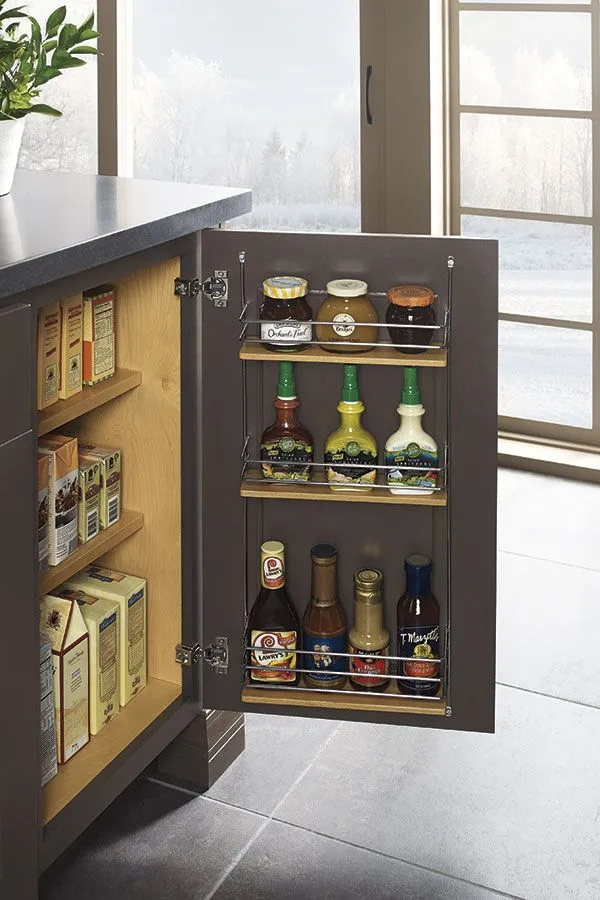
No lids that require two hands or careful placement. If putting a food storage container back requires holding the base, finding the correct lid, and pressing it on in a specific alignment — the lid will live on the counter. Use lids that snap on easily in any orientation, or store container bases and lids in separate organized sections where grabbing and returning either is a one-second motion.
No stacking that requires removing items to access. If getting to the pot you need requires lifting and setting aside two other pots — those other pots will live on the stovetop. Use vertical dividers, pot racks, or pull-out shelves to give each pot its own accessible position.
No organizers with complicated return mechanics. If putting a spice back in its organizer requires careful alignment in a specific slot — spices will live on the counter beside the organizer rather than inside it. Use a lazy Susan where “return” means “set it anywhere on the rotating platform.”
Test every home you create: if you were tired, in a hurry, or distracted, would you still put this item back in its home? If yes — the return is easy enough. If no — simplify the home until the answer is yes.
Rule 4: Never Organize More Than You Need to Store
This is the rule that prevents the most common cabinet organization failure mode — the system that collapses not because the organization is wrong, but because the cabinet is simply too full.
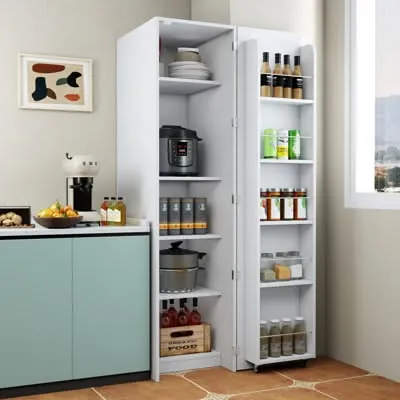
Every cabinet has a storage capacity — a maximum amount that it can hold while remaining organized. When you put more than that amount into the cabinet, organization is physically impossible regardless of how good your system is. The system cannot compensate for too many items in too little space. The overflow defeats the system.
The rule is deceptively simple: before you organize any cabinet, declutter it until what remains fits comfortably with room to breathe. Not crammed in with perfect Tetris arrangement. Comfortably — with space to add and remove items without disrupting the arrangement, with space to see everything clearly, with space that makes the cabinet feel like a system rather than a maximum-capacity container.
If what you need to store in a cabinet genuinely requires more space than the cabinet has — there are three options: remove items that do not truly need to be in this specific cabinet (redistribute to other storage), upgrade to a system that uses the cabinet’s space more efficiently (pull-out shelves, lazy Susans, shelf risers), or accept that some items need to be stored elsewhere in the home.
What is not an option is organizing a cabinet that is too full and expecting the organization to hold. It will not. The fullness defeats the organization regardless of how carefully the organization is designed.
Samira’s kitchen had this problem in two cabinets — more items than the cabinet could comfortably hold. The organization kept breaking down because there was literally not enough room for everything to return to its designated home consistently. When we removed the items that did not belong in those specific cabinets, the organization held immediately and permanently.
Rule 5: Match Your Organization System to Your Real Household — Not Your Ideal Household
This rule is the one that requires the most honesty and the least judgment — because it asks you to organize for who you actually are and how you actually live, rather than who you wish you were and how you aspire to live.
If you live alone and cook elaborate meals from scratch using specialty ingredients and carefully maintained tools — organize for that. Your system can be detailed, category-specific, and precision-oriented because you are the only user and you are a precise user.
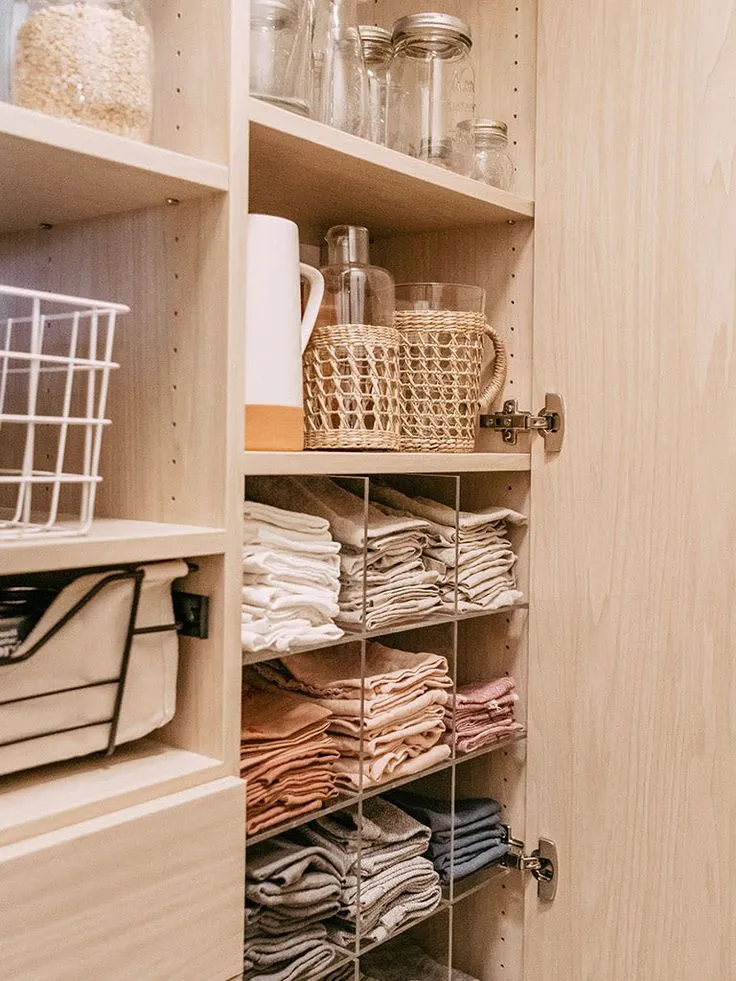
If you live with three children under ten and a partner who cooks differently than you do and a daily routine that involves more chaos than calm — organize for that. Your system needs to be simple enough that four different people with four different levels of organizational attentiveness can use it correctly without any of them thinking carefully about where things go. Color coding for children’s items. Labels on everything because adults will not remember where things go either. Simple categories rather than specific ones because specific categories require specific attention that a busy household does not always have.
The most common version of this rule being violated is the household that organizes for aspirational meal-prep efficiency but actually eats a very different diet than the one the organization assumes. If you optimistically buy a spice organizer with 36 individual slots because you aspire to cook elaborate meals with many spices — but you actually cook four or five meals on rotation using twelve spices reliably — the 36-slot organizer is fighting your actual household rather than serving it. Twelve spices that are always accessible where you use them beats 36 perfectly organized spices in a system you never fully populate.
Ask yourself honestly: what does my household actually do, every day, in this kitchen? Organize the cabinet for that reality. The aspiration is a lovely goal for future Sundays. The system is for every Tuesday.
Rule 6: Maintenance Is Part of the System — Build It In, Not On
This is the final rule and the one whose absence undoes every other rule. It is the one that determines whether the organization you build becomes a permanent feature of your home or a temporary project that needs to be redone in six months.
Organization without maintenance is not a system — it is a before photo waiting for an after photo to fail. No cabinet organization system maintains itself. Items drift slightly from their homes during busy weeks. New purchases arrive and need to be integrated. Seasonal changes shift what needs to be accessible and what can go to the back. Children grow and their cabinet needs change. Life happens, and life creates organizational entropy.
The rule is not that you need to constantly maintain your cabinets. The rule is that maintenance needs to be explicitly built into your routine as a scheduled, expected, normal part of how your home functions — not added on as an extra task when you notice things have gotten bad.
The three-level maintenance system that works for most households:
Daily: The Two-Minute Return. At the end of every meal or cooking session, before you leave the kitchen, take two minutes to return everything that was taken out back to its home. Two minutes. Not a cleaning session — just the return of what was used. This is the smallest and most important maintenance habit because it prevents the accumulation that requires larger maintenance sessions.
Weekly: The Five-Minute Check. Once a week, open each cabinet and spend thirty seconds confirming it looks the way it is supposed to look. If anything has drifted — a jar in the wrong section, a stack that has gotten uneven — return it to its correct home. The weekly check takes five minutes total for an entire kitchen and catches drift before it becomes chaos.
Monthly: The Ten-Minute Reassessment. Once a month, spend ten minutes looking at each cabinet with fresh eyes. Is the system still working well? Are there new items that need a home? Is there anything that needs decluttering? Is there anything about the organization that is not working and needs adjustment? This is not a reorganization — it is a light assessment that keeps the system responsive to how your household’s needs evolve.
These three levels, maintained consistently, are the complete maintenance system. The daily habit prevents accumulation. The weekly check prevents drift. The monthly reassessment prevents the system from becoming outdated as life changes.
Samira’s previous four failed systems all relied on willpower rather than scheduled maintenance. When motivation was high, the cabinets stayed organized. When life got busy and motivation dropped, the cabinets drifted and the drift was never caught before it became chaos. When we built the three-level maintenance system into her routine from the start of the fifth attempt, the system caught its own drift before it could compound.
The Connection Between All Six Rules
I want to point out something about these six rules before we close, because I think the connection between them is important — and understanding it makes applying them feel less like a checklist and more like a coherent philosophy.
All six rules are about the same thing: building a cabinet system that works with reality rather than against it.
Rule 1 (specific homes) works with the reality that humans need clarity to act consistently. Rule 2 (homes where things are used) works with the reality of how people actually move through a kitchen. Rule 3 (easy return) works with the reality that tired and busy people take the path of least resistance. Rule 4 (never more than you need to store) works with the reality that storage has physical limits. Rule 5 (organize for your real household) works with the reality that people organize well for who they actually are, not who they wish they were. Rule 6 (maintenance as part of the system) works with the reality that entropy is a force that never stops and must be regularly countered.
Every rule that is violated is a place where the system fights reality — and reality always wins eventually. Every rule that is honored is a place where the system works with reality — and systems that work with reality hold indefinitely.
Samira’s cabinets have held for two years not because she became a more organized person. She is exactly the same person she was during the four failed attempts. Her cabinets have held because her system finally works with the reality of her household rather than against it — and a system that works with reality does not need its user to be a different person to succeed.
That is the real promise of these six rules. Not that you have to become more disciplined, more tidy, or more inherently organized. Just that you build a system that is honest about how you actually live and designed to work with that honesty rather than in spite of it.
Now go pin this complete guide, share it with everyone who has ever organized their cabinets and watched it fall apart within weeks, and go look at your own cabinets through the lens of these six rules. The rule you are most obviously violating is the change that will make the biggest difference.
Pin this and save it — these are the 6 cabinet organization rules that will finally make your organization last, and you will want to come back to this guide every single time a cabinet stops working the way it should!









Leave a Reply