
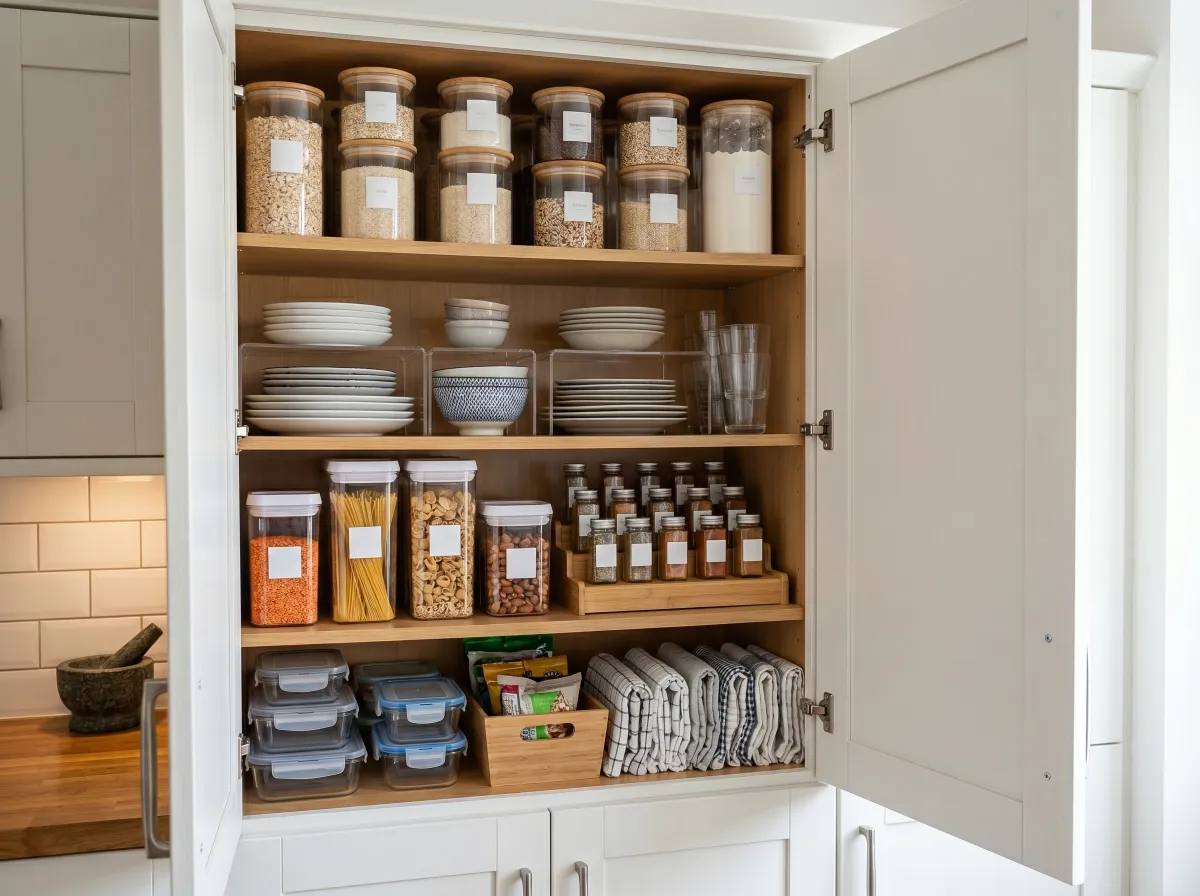
The most timely and genuinely practical guide to organizing your kitchen cabinets for the holiday cooking season — because when the most ambitious cooking of the year happens, your kitchen should be working for you, not against you.
There is a specific kind of kitchen stress that only exists during the holidays. You are making three times as many dishes as usual, often for three times as many people, often in a shorter time window than feels comfortable, often while managing guests, children, music, decorations, and the general beautiful chaos that the holiday season creates. And in the middle of all of that — you cannot find the roasting pan.
The good serving dishes are buried behind the everyday ones. The turkey baster has not been seen since last November and could genuinely be anywhere. The baking sheets are all being used simultaneously and there is nowhere to put the cooling racks.
The holiday kitchen is not just a regular kitchen turned up louder. It is a fundamentally different operational environment that requires different organization, different accessibility, and different thinking about which items need to be front and center versus stored away.
And for most households, the kitchen is organized for everyday cooking — which means holiday cooking has to fight the organization rather than being supported by it.
My friend Nada is the holiday cook in her family in the way that some people are the holiday cook — comprehensively, ambitiously, joyfully, and at genuinely impressive scale. She cooks for sixteen people at Thanksgiving, bakes thirty types of cookies in the weeks before Christmas, and hosts three additional holiday dinners between them.
Her kitchen is a 200-square-foot galley — not large, not newly renovated, not equipped with anything that is not available at any regular kitchen store. And yet her holiday cooking happens with a fluency and efficiency that makes watching her work in her kitchen feel almost like watching a professional kitchen in motion.
The secret, she told me one December afternoon while we were labeling her holiday baking cabinet, is that she reorganizes her kitchen before the holiday season begins every year.
Not a full renovation — a specific, deliberate, holiday-season reset that moves certain items to front-of-cabinet positions, consolidates holiday cooking tools into one accessible zone, and clears the paths between the tools and equipment that holiday cooking actually needs. The kitchen goes from organized for everyday to organized for the holidays, and it makes everything that follows significantly easier.
This guide is that reset. It is the complete process for organizing your kitchen cabinets for the holiday cooking season — from the strategic pre-season reorganization to the specific cabinet systems that make holiday cooking effortless to the post-season return that sets you up for the new year. Let’s get your kitchen ready.
Why Holiday Cooking Needs Its Own Kitchen Organization
Before the how-to, a brief but important case for why the holiday season specifically justifies a dedicated kitchen organization reset — because “just use your regular kitchen” is the approach that leads to the roasting pan not being where it should be at the exact moment the turkey needs to go in the oven.
You are cooking significantly more than usual. Holiday cooking typically involves more dishes, more ingredients, more equipment, and more simultaneous cooking operations than any other time of year. The tools and equipment that rarely come out of deep storage — the large roasting pan, the turkey baster, the gravy separator, the electric carving knife — all need to be accessible. The baking equipment that lives in the back of a cabinet — the springform pans, the cookie scoops, the pastry bags, the candy thermometer — all need to be reachable without a cabinet excavation.
You are cooking for more people. More guests means more serving dishes, more serving utensils, more place settings, and more equipment for keeping food warm. This serving equipment, which lives in storage for most of the year because everyday cooking does not require it, needs to move to an accessible position before the guests arrive.
You are cooking under more time pressure. Holiday cooking has deadlines — the bird needs to be done at a specific time, the appetizers need to be ready before guests arrive, the desserts need to cool before they can be decorated. Time pressure in a kitchen is dramatically worsened by a disorganized one. When you can reach for what you need immediately, cooking under pressure feels manageable. When you have to search for what you need, cooking under pressure feels chaotic.
Your cooking tools and equipment change. The spatulas and skillets and everyday pots of regular weeknight cooking give way to roasting pans, basting equipment, pie dishes, cookie sheets, candy molds, and specialty equipment that has been in deep storage since last holiday season. These tools need to come forward. The everyday tools can move back temporarily.
Step 1: Take Inventory of Your Holiday Cooking Equipment Before You Begin
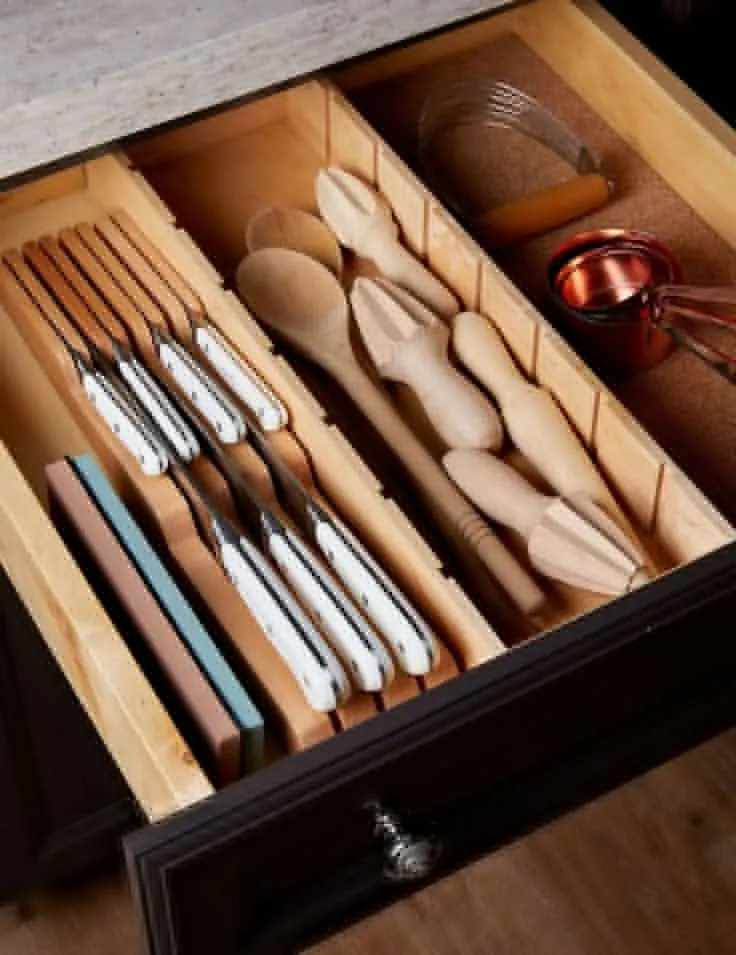
The holiday kitchen organization reset begins not in your cabinets but in your notebook — with a complete inventory of what you will actually be cooking and what equipment that cooking requires.
Do this before you move a single thing. Sit down with your planned holiday menu (or a realistic version of what you typically cook for the holidays) and work through every dish, asking: what tools and equipment do I need for this? What size and type of pan? What specialty gadgets? What serving dishes?
Create a list divided into three sections.
Section 1: Tools I use for holiday cooking but not everyday cooking. This is the equipment that needs to move from wherever it currently lives to a front-of-cabinet, easy-access position. Roasting pans. Turkey basters. Gravy separators. Large stockpots for soup and broth. Specialty baking equipment. Electric carving knife. Meat thermometer. Electric mixer accessories you only pull out for holiday baking.
Section 2: Tools I use everyday AND for holiday cooking. These stay where they are — their current position already gives them appropriate accessibility for the elevated use they will get during the holidays.
Section 3: Tools I use everyday but NOT for holiday cooking. These can temporarily move to less accessible positions to free up prime cabinet space for the holiday equipment that needs it. Your everyday skillet can move to a less convenient position for six weeks while the roasting pan takes its spot. Your everyday dinner plates can move back on the shelf while the good china moves to the front.
This inventory — which takes about twenty minutes — is the complete brief for your holiday kitchen reorganization. Everything that follows is just executing on it.
Step 2: Set Up Your Holiday Baking Zone
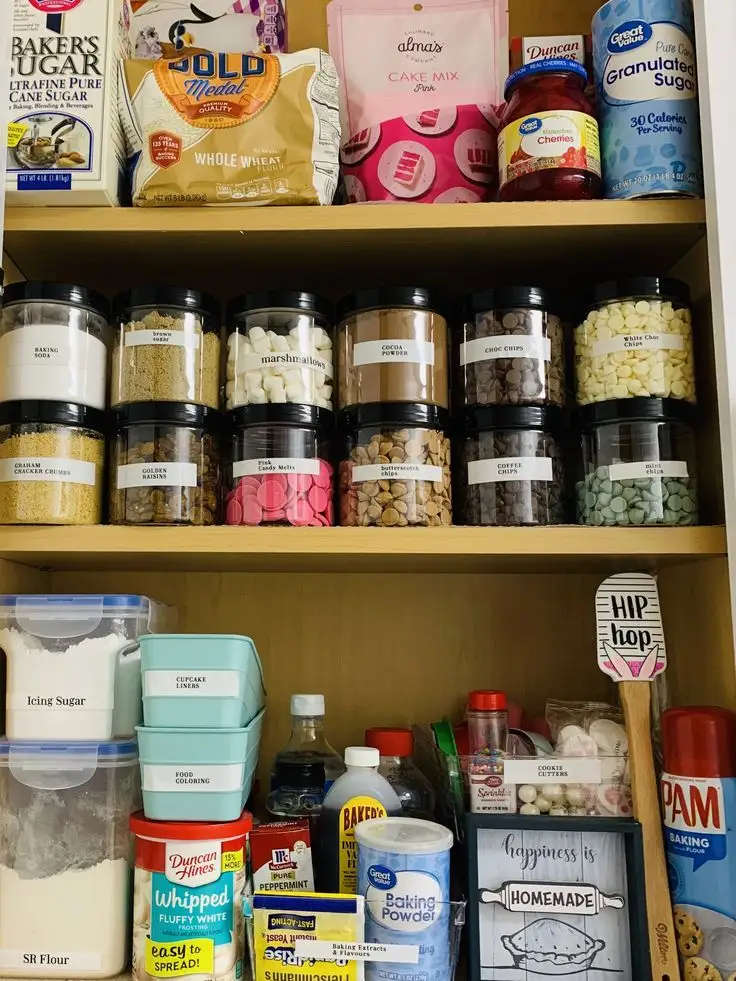
If you bake during the holiday season — even just cookies and one pie — a dedicated holiday baking zone is the single most impactful cabinet organization change you can make for holiday cooking ease. And the holiday season is the one time of year when baking equipment justifies its own dedicated cabinet zone rather than sharing space with other cooking equipment.
Designate one cabinet — or one clearly defined section of the pantry — as the holiday baking zone. Pull everything baking-related that you will use during the holiday season into this zone:
Baking vessels: All sheet pans and baking sheets, muffin tins, loaf pans, pie dishes, springform pans, tart pans, and any specialty baking molds (bundt pans, shaped holiday molds, etc.).
Baking tools: Rolling pin, pastry cutters, cookie cutters (all of them — the holiday ones out front, the everyday ones behind), pastry brush, offset spatula, bench scraper, pastry bags and tips, cookie scoops in all sizes.
Dry baking ingredients: Flour, sugar, brown sugar, powdered sugar, baking powder, baking soda, salt, vanilla, almond extract, and any holiday spices (cinnamon, nutmeg, ginger, cloves, cardamom) that only come out for holiday baking.
Decorating supplies: Sprinkles, sugar pearls, food coloring, edible glitter, piping bags, and anything else used for cookie and cake decoration.
When everything for holiday baking is in one zone, you stop making ten trips to different cabinets every time you start a baking session. You go to the baking zone, you assess what you need, you take everything out in one pass, and you start baking. Every single baking session becomes faster and less frustrating than it would be if you were hunting through your everyday kitchen for specialty equipment.
Label the baking zone clearly — a simple piece of masking tape on the shelf edge with “Holiday Baking” written in marker is sufficient. Label every bin and canister within the zone specifically. When you are in the middle of making three batches of cookies and you need the second type of flour, you reach for the labeled canister and you have it in five seconds.
Nada’s holiday baking cabinet has been the same every year for six years. She sets it up the weekend after Thanksgiving and takes it down after New Year’s. She says the predictability of the system is part of what makes it so effective — she knows exactly where everything is because it is always in the same place each holiday season.
Step 3: Create a Holiday Roasting and Large-Format Cooking Zone
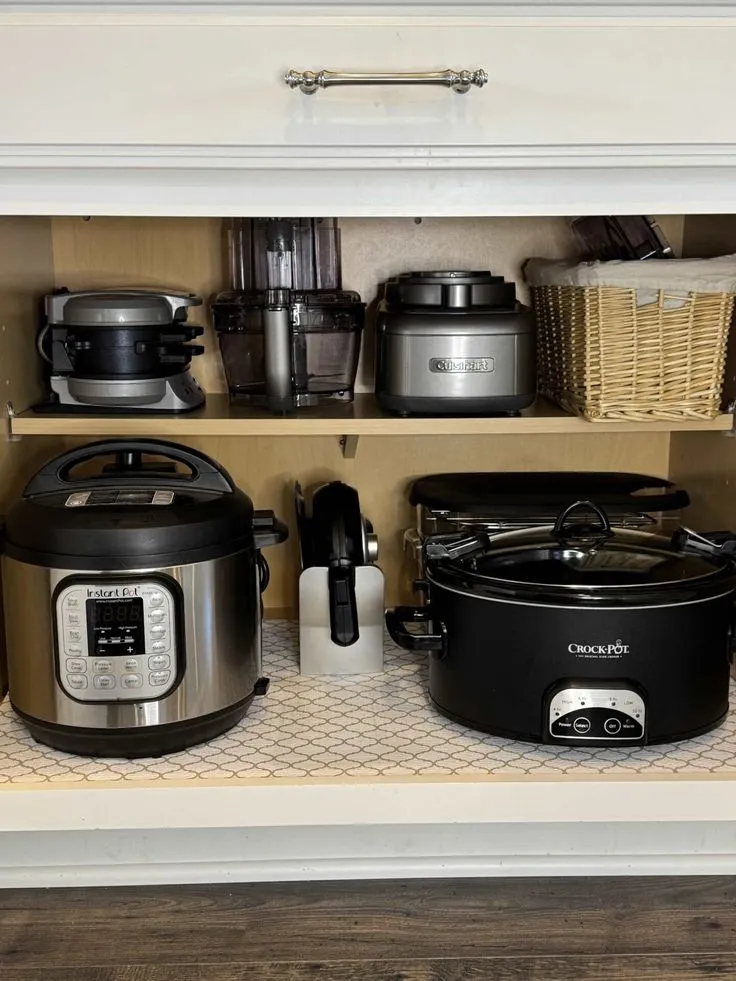
Holiday cooking for a crowd is large-format cooking — large pans, large vessels, large quantities, large equipment. This equipment is typically bulky, heavy, and in storage for most of the year because everyday cooking does not require it. Before the holiday season, it needs to come out of storage and into an accessible position.
Designate a base cabinet — ideally near the oven and cooktop — for large-format holiday cooking equipment:
Roasting pans: Your large roasting pan (and lid if it has one), any smaller roasting pans, and the roasting rack that sits inside the pan. These should be stored together as a set — pan with rack inside it — so you retrieve everything you need in one movement rather than hunting for the rack separately.
Large stockpots and dutch ovens: Holiday cooking often involves large batches of soup, broth, and one-pot dishes. These pots should be accessible from the front of the cabinet, not buried behind smaller everyday pots.
Holiday serving vessels: Large serving bowls, platters, and serving dishes that only come out for holiday meals. These can move from their storage positions to a more accessible cabinet for the duration of the season.
Specialty holiday cooking tools: Turkey baster, gravy separator, instant-read and leave-in meat thermometers, electric carving knife, carving board, kitchen twine for trussing, bulb baster, cheesecloth.
Store everything in this zone organized by use: the roasting setup together, the stockpots together, the serving pieces together, the specialty tools together. When the day of a big holiday meal arrives, you open this cabinet and everything for that meal is in one zone, organized by what you reach for at each stage of the cooking process.
Step 4: Move Your Good China and Serving Pieces to the Most Accessible Cabinet
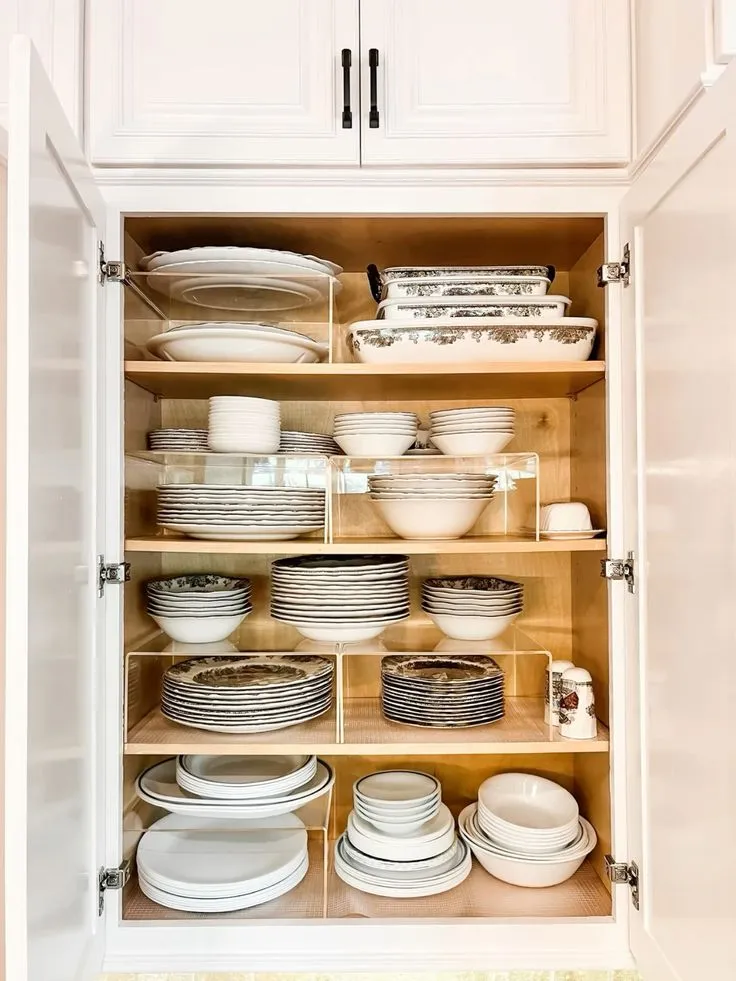
For most of the year, the good china, the crystal glasses, the special serving pieces, and the holiday tableware live in a cabinet that is less accessible than the everyday dishes — because for most of the year they are needed less often. During the holiday season, this logic inverts. The good china is the daily dish (or close to it). The crystal glasses come out for every gathering. The special serving platters are needed for every meal.
Before the holiday season, swap the positions of your everyday dishes and your holiday/good dishes. Move the good china and serving pieces to the most accessible cabinet position — the one at the easiest height, with the best shelf clearance, with the most straightforward retrieval path. Move the everyday dishes slightly back or to a slightly less convenient position for the duration of the season.
This feels counterintuitive because we are so conditioned to think of the good dishes as the “special occasion” items that live in the less accessible position. During the holiday season, they are the occasion items. Give them the position their frequency of use justifies.
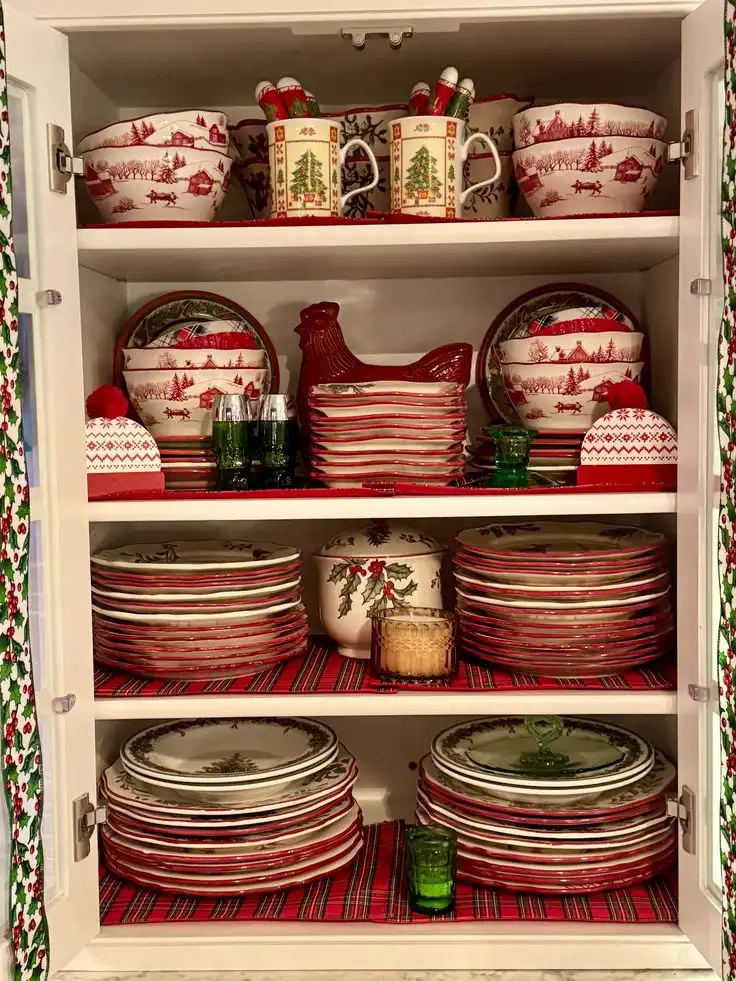
Stack carefully — china should be stacked with felt protectors or paper plates between each piece to prevent chipping and scratching. Organize by type: dinner plates together, salad plates together, soup bowls together, so any individual plate type can be retrieved without disturbing the others.
While you are at it: pull out your holiday glassware, clean it (holiday glasses often have a faint layer of dusty storage smell even when they look clean), and position it at the most accessible height in your glass cabinet. Nothing communicates hospitality like crystal glasses that appear without effort — and nothing undermines the effect like visibly hunting for them.
Step 5: Create a Holiday Pantry Section for Specialty Ingredients
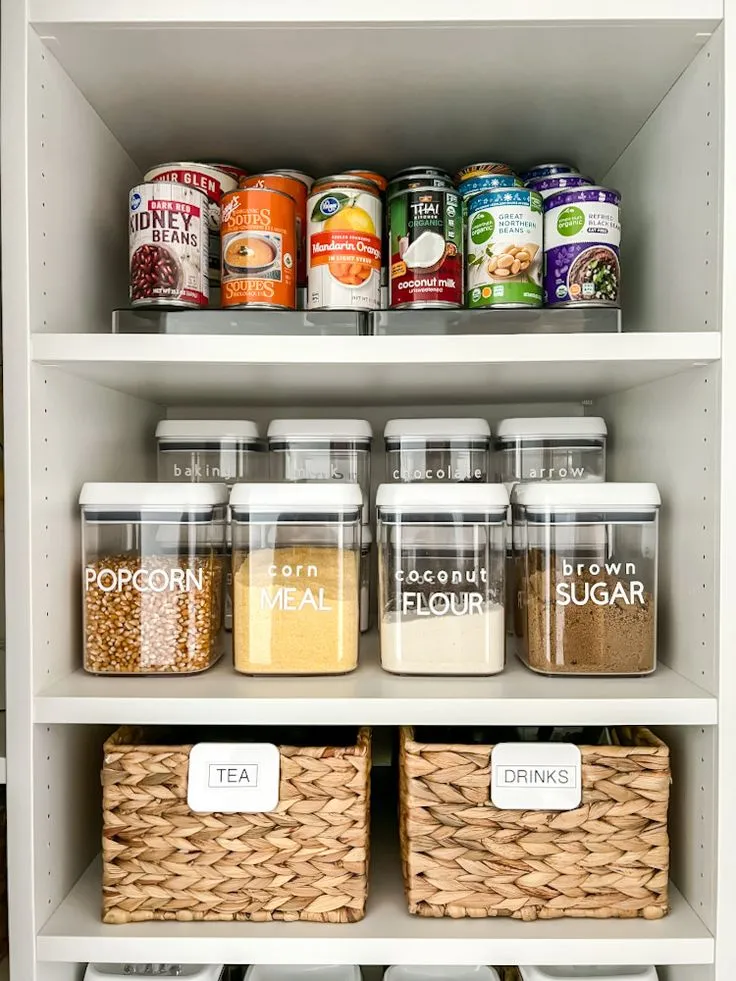
Holiday cooking involves ingredients that do not appear in your kitchen at any other time of year — specialty items that are either too expensive, too specific, or too seasonal for everyday cooking but that are essential for the holiday dishes that define your family’s traditions.
Before the holiday season, create a dedicated section of your pantry specifically for holiday cooking ingredients. This is not a rearrangement of your entire pantry — it is the designation of one specific shelf or one specific zone for the collection of holiday-specific items as they arrive in your kitchen.
The holiday pantry section holds: canned pumpkin, evaporated milk, condensed milk, and pie filling for holiday pies. Pecans, walnuts, and specialty nuts for baking. Dried cranberries, cherries, and raisins for fruitcakes and baked goods. Chocolate in various forms — chips, bars, cocoa — specifically purchased for holiday baking. Specialty spirits for cooking — brandy for the sauce, rum for the cake, wine for the braise. Any specialty spices or extracts (rose water, orange blossom, cardamom) that only come out for specific holiday recipes.
Label the shelf clearly: “Holiday Ingredients — [Year]” is sufficient. As you grocery shop in the weeks before the major holidays, holiday-specific items go directly to this shelf rather than being distributed throughout the pantry. This creates a visible inventory of what you have and what you still need for each dish on your menu — which is the organizational advantage that prevents the specific frustration of going to make a dish on the day and discovering you are missing one key ingredient.
Step 6: Prepare the Coffee and Beverage Station for Holiday Entertaining
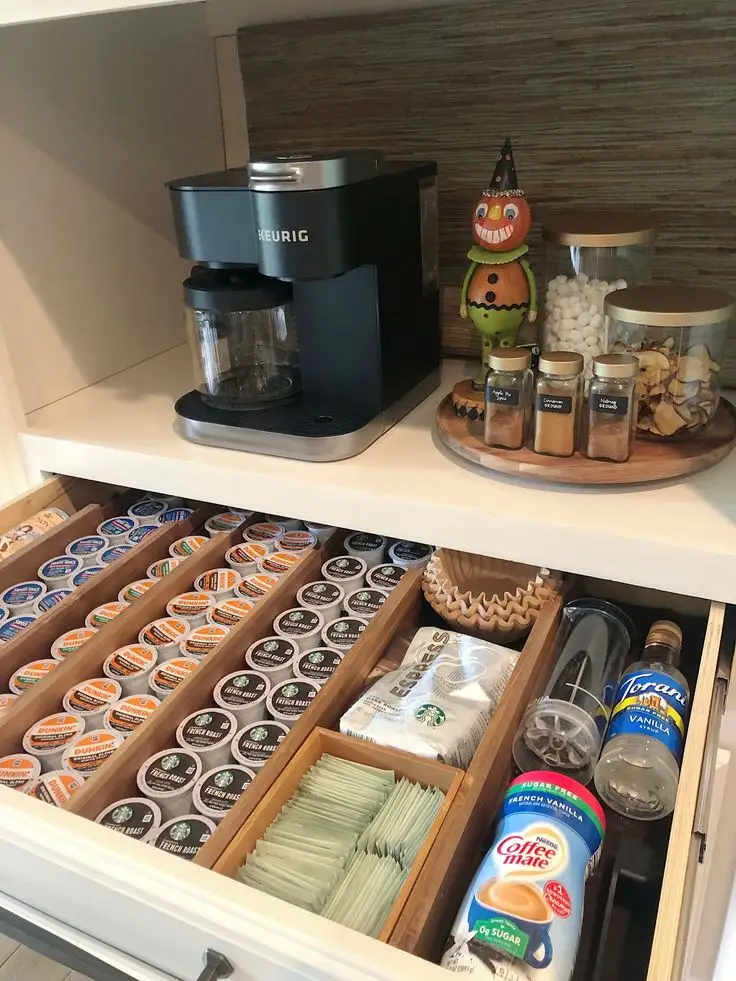
If you host guests during the holiday season — even one or two people for coffee and dessert — the way your kitchen handles beverage service deserves specific attention before the season begins.
Holiday entertaining involves more beverage variety than everyday life. Coffee and tea in larger quantities. Hot cocoa for children and cold evenings. Sparkling water. Mulled wine or cider on the stovetop. Holiday cocktails. Regular wine and spirits for dinners. The equipment and ingredients for all of these lives in various places in your kitchen for most of the year and needs to be consolidated and accessible before the guests start arriving.
Create a dedicated holiday beverage station — either a cabinet section or a section of your counter — that holds: coffee and coffee making equipment, tea varieties in an accessible tin or basket, hot chocolate supplies together, mugs and cups at the front of the mug cabinet, wine glasses polished and accessible, any specialty beverage equipment (electric kettle, milk frother, cocktail shaker) from wherever it has been living.
When a guest asks if they can have tea, you say yes, and you reach for the tea basket in the beverage station and it is there. When the cookie exchange guests arrive and you want to serve coffee, the coffee setup is right there, accessible and ready. The beverage station makes hospitality feel effortless — because the equipment for it is organized and accessible rather than requiring a cabinet expedition every time someone wants a drink.
Step 7: Do a Pre-Season Test Run of Your Most Important Holiday Dish
This step is the one that most holiday kitchen organization guides leave out — and it is the step that catches problems before they become day-of disasters.
Before the major holiday cooking events begin, do a dry run of the dish that matters most: the centerpiece, the thing people are coming for, the dish that has the longest cooking time and the most specialized equipment requirements.
Not the full dish necessarily — but the process. Pull out every piece of equipment you would need. Check that the roasting pan fits in your oven. Confirm that the thermometer has batteries. Verify that the carving board is large enough. Locate the gravy separator and confirm it is not cracked from last year. Find the kitchen twine.
This fifteen-minute test run will reveal every organizational gap before it matters — and it is the most direct possible application of the holiday kitchen organization you have just done. If anything is still hard to find or still not in the right position, you have time to fix it now. Not on the morning of the holiday when guests are arriving and the bird needs to be in the oven.
Nada does this test run every October for Thanksgiving and every year she finds at least one thing that needs to be addressed — a missing tool, an equipment failure, something in the wrong place. Every year she addresses it while she has time. Every year her Thanksgiving cooking happens without the specific anxiety of not being ready, because she was already ready.
Step 8: Plan the Post-Season Return Before the Season Begins
The holiday kitchen organization reset is only half the project. The other half is the return — putting everything back to its everyday positions after the holiday season ends, refreshed and reorganized rather than just shoved back wherever it fits.
Before you begin the holiday kitchen reset, spend five minutes thinking about where everything is coming from and where it will return to — because the post-season return is significantly easier when it is planned before things are moved rather than puzzled out after the fact.
Note in your notebook which cabinets you are swapping items between, and note the current position of everything that is moving. When the holiday season ends and it is time to restore the everyday kitchen, you have a specific plan rather than a vague sense of where things used to be.
The post-season return is also a natural declutter opportunity. Holiday cooking reveals which tools and equipment you genuinely use and which ones have been in storage for years because they are no longer part of how you actually cook. As things return to storage after the holiday season, assess each one: was this actually used this holiday season? Is it in good condition? Does it still serve a purpose in this household? Items that were not used, that are damaged, or that no longer serve a purpose leave the kitchen rather than returning to storage.
This annual post-season declutter means your holiday cooking equipment stays relevant and in good condition year over year, rather than accumulating decades of accumulated stuff that was never decluttered because it was always in storage where you never had to confront it.
Your Holiday Kitchen Is Ready — And So Are You
Here is what a holiday kitchen that has been organized using this process actually feels like on the morning of a major holiday meal.
You wake up knowing exactly where the roasting pan is, because it is in the holiday cooking cabinet beside the oven. You know exactly where the meat thermometer is, because it is with the roasting equipment. You know exactly what specialty ingredients you have, because they are in the dedicated holiday pantry section and you have checked it already. You know exactly where the good china is, because you moved it to the front of the cabinet before the season began.
The cooking begins from a place of calm preparedness rather than chaotic searching. Every tool appears when it is needed. Every ingredient is where you expected it. Every piece of equipment is ready to go.
That is not a fantasy version of holiday cooking. That is what holiday cooking feels like when your kitchen is organized for it rather than organized for something else. And that is what Nada has been cooking toward every holiday season for six years — not because she has a bigger kitchen or better equipment, but because she prepares her kitchen for the season before the season begins.
Your kitchen is capable of this. Your holiday cooking deserves this. And the time you spend this week getting your kitchen ready will return to you many times over in the calm and efficiency of every holiday cooking session that follows.
Now go pin this complete guide, share it with everyone who has ever spent the morning of a major holiday digging through cabinets for the roasting pan, and go do your holiday equipment inventory this weekend.
Pin this and save it — this is the holiday kitchen cabinet organization guide you will come back to every single year before the holiday cooking season begins, and every year it will make your holiday cooking better than the year before!









Leave a Reply