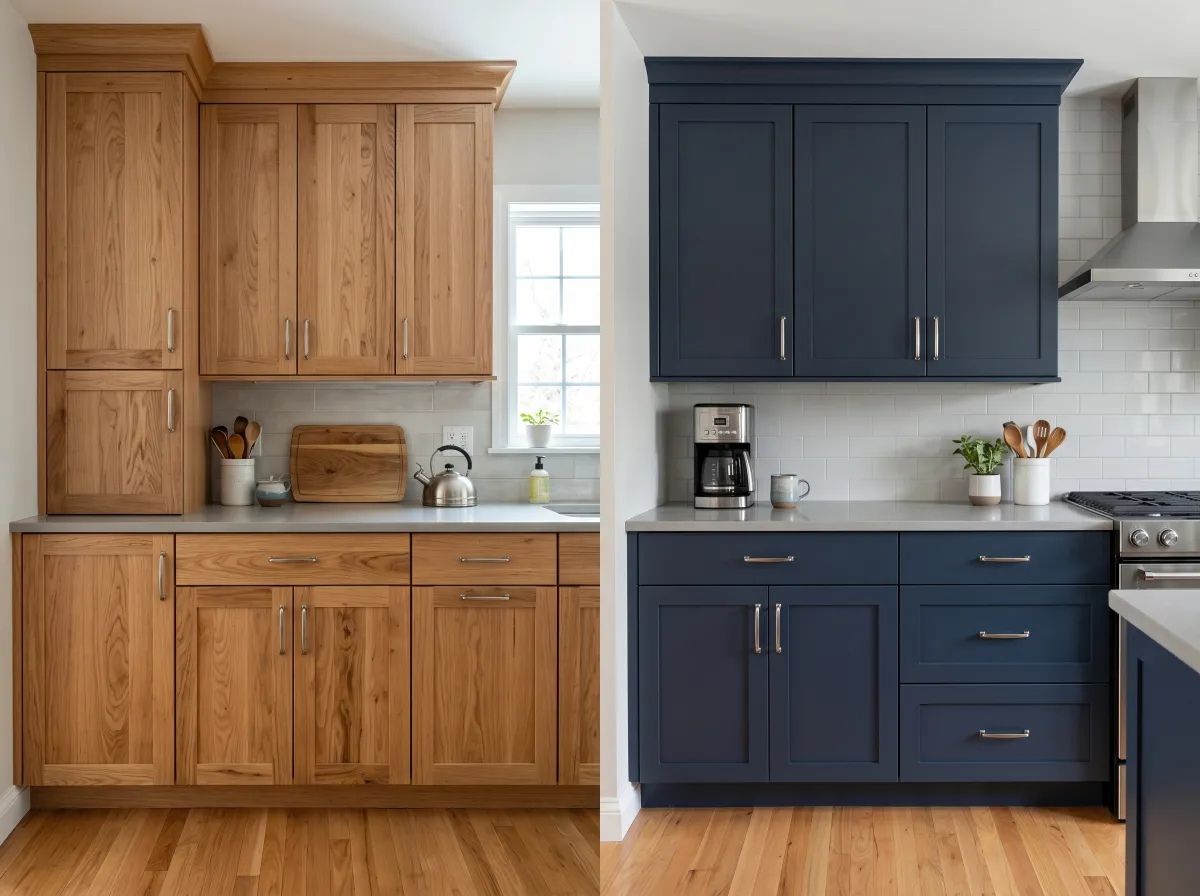
The most balanced, genuinely informative, and honestly useful guide to the wood cabinets vs MDF cabinets debate — because this decision affects your kitchen for decades and deserves real information rather than the oversimplified takes you have probably already read.
I want to start this guide by acknowledging something that most wood vs MDF cabinet comparisons do not say upfront: this debate is more nuanced than the home renovation world typically presents it, and the people who tell you definitively that one is always better than the other are usually either selling you something or have not thought carefully enough about the specific variables that actually matter.
The “solid wood is always superior” camp is populated largely by people who have not reckoned with what wood actually does in a humid kitchen environment over time, or by people selling high-end cabinetry who benefit from the perception that solid wood is the gold standard.
The “MDF is just as good and cheaper” camp sometimes underestimates the specific failure modes of MDF that matter in kitchen applications. The truth, as is usually the case, lives in the details — and the details in this case are genuinely interesting and genuinely useful for making a decision that your kitchen will live with for twenty years.
My friend Laila is a kitchen designer who has been specifying cabinets for residential and commercial kitchens for eleven years.
She is the kind of professional who has seen both materials perform well and both materials fail — not in idealized showroom conditions but in real kitchens used by real families with real cooking habits and real moisture levels and real life happening in them every day. She is the person I called when I was trying to understand this decision genuinely, and everything she told me informed the guide you are reading now.
The honest answer to “wood or MDF” is: it depends. But it depends on specific, identifiable factors — and by the end of this guide, you will know exactly which factors apply to your situation and which choice those factors point toward.
First: What Are We Actually Comparing?
Before the comparison, clarity on what we are actually comparing — because “wood cabinets” and “MDF cabinets” each cover a range of products that are not all equivalent, and the comparison is most useful when we are talking about specific versions of each.
Solid Wood Cabinet Doors and Frames
Solid wood cabinet doors are made from natural wood — pieces of wood milled to shape and assembled into a door, sometimes with a solid panel, sometimes with a frame-and-panel construction where the center panel is a separate piece that floats within the frame (allowing for expansion and contraction without warping). Common wood species used in kitchen cabinetry include maple, cherry, oak, hickory, alder, and birch — each with different grain characteristics, hardness levels, and price points.
Solid wood is typically used for the visible portions of cabinetry — the doors, the drawer fronts, and the face frames — while the cabinet boxes (the interior structure) are almost universally made from plywood or particleboard regardless of what the doors are made from. When someone says they have “solid wood cabinets,” they almost always mean solid wood doors and frames over a plywood box.
MDF Cabinet Doors and Panels
MDF (medium-density fiberboard) is an engineered wood product made by breaking down wood fibers and combining them with resin binders under heat and pressure to create a dense, uniform panel. MDF has no grain, no knots, no voids, and no variation in density from edge to edge to center. It is machined beautifully — routed profiles are crisp and clean, painted surfaces are smooth and flawless, and the material holds its shape without the expansion and contraction that wood is subject to.
MDF is most commonly used for painted cabinet doors — it produces a painted finish that is genuinely superior to painted solid wood for smoothness and consistency. It is also used for furniture-grade millwork, interior trim, and specialty applications where its machining properties and paint-friendliness make it the preferred material.
Plywood Cabinet Boxes
The interior structure of most quality kitchen cabinets — regardless of whether the doors are solid wood or MDF — is plywood rather than solid wood or MDF. Plywood is the standard material for cabinet boxes for specific practical reasons we will discuss. This guide focuses primarily on the door and visible component decision, since the box material is largely settled as plywood in quality cabinetry.
Round 1: Paint Finish Quality
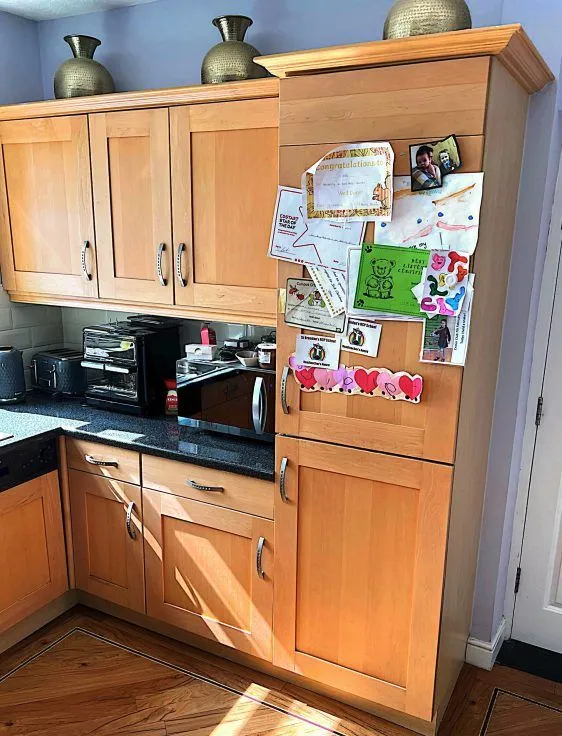
This is the round where MDF wins clearly, specifically, and without much controversy — and it is one of the most practically important rounds for kitchens where painted cabinets are desired.
MDF: When painted, MDF produces a surface that is genuinely flawless. The material has no grain texture to telegraph through the paint, no knots or voids to create uneven spots, and no differential expansion between the center and edges of the panel to create cracking at joints. A well-prepared and well-painted MDF cabinet door has a smoothness and uniformity that can look almost like lacquer — the kind of clean, perfect surface that you see in high-end European-style kitchens and that inspires the aesthetic of flat-panel contemporary cabinetry.
For painted kitchens — white, grey, sage, navy, any of the cabinet color ideas discussed in the color guide in this series — MDF is the material that professional painters and cabinet manufacturers consistently specify because the painted result is simply better. Smoother, more uniform, and more resistant to the telegraphing that painted solid wood is prone to.
Solid Wood: Painting solid wood produces a good result — but not as good a result as painting MDF. Wood grain shows through paint even after multiple coats and careful preparation, to a degree that varies by species (maple is finer-grained and paints better; oak with its open grain shows through more readily). The expansion and contraction of wood with humidity changes can cause paint to crack at joints over time, particularly at the joint between the door stile and rail on frame-and-panel doors. These cracks are not structural — the door is not failing — but they are visible and they require periodic touch-up or repainting over the life of the kitchen.
The verdict: For painted cabinets, MDF is genuinely superior and most cabinet professionals agree. For stained or natural-finish cabinets where the wood appearance is the point, MDF cannot be stained at all and solid wood is the only option.
Round 2: Moisture Resistance
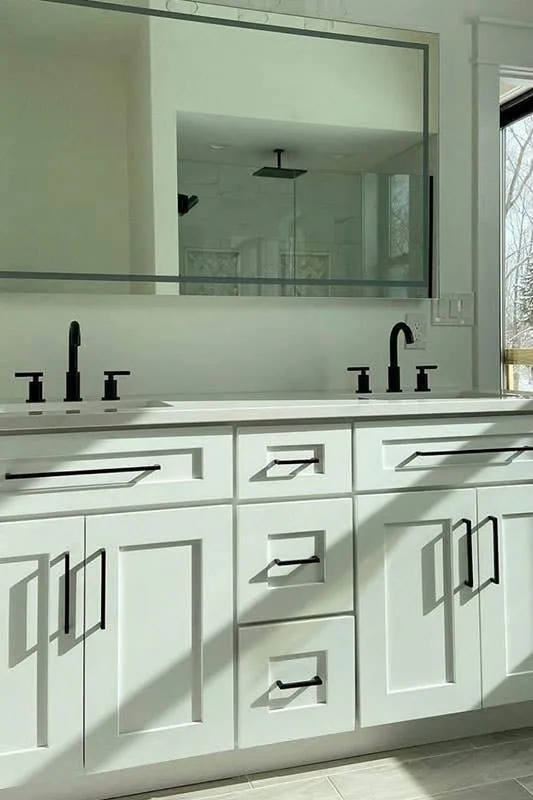
This is the round where solid wood wins — not perfectly, but more reliably than MDF — and it is the round that matters most in a kitchen context where moisture exposure is constant and sometimes significant.
MDF: MDF’s biggest vulnerability is moisture. When MDF gets wet — from a spill that reaches the edge of the door, from high-humidity conditions sustained over time, from steam rising from a pot on the cooktop — it absorbs moisture and swells. Swollen MDF does not return to its original dimensions when it dries. The swelling is permanent, and it is particularly visible and damaging at the edges and corners of MDF cabinet doors, which can develop a soft, crumbling, deteriorating appearance when moisture has gotten in.
A well-sealed MDF door in a well-ventilated kitchen with normal humidity levels will last many years without moisture problems. But MDF is less forgiving of moisture exposure than wood, and in kitchens with high humidity (poorly ventilated, above ground-level cooking, steamy cooking styles), MDF doors show their moisture vulnerability over time.
Laila’s specific recommendation: always seal MDF cabinet doors with a moisture-resistant primer before painting, use a kitchen-specific cabinet paint rather than standard wall paint, and pay particular attention to sealing the edges and back of the door — the places that moisture most commonly reaches first.
Solid Wood: Solid wood is not perfectly moisture-resistant — it expands and contracts with humidity changes, and extreme or prolonged moisture exposure can cause it to swell, warp, or crack. But solid wood is more forgiving than MDF in the ways that matter most in a kitchen context. Small moisture exposures that would permanently damage MDF are typically absorbed and then released by solid wood without permanent damage. Wood can be refinished and repaired in ways that MDF cannot. And the natural oils and density of quality hardwoods provide some inherent moisture resistance that MDF entirely lacks.
The verdict: Solid wood is more moisture-resistant than MDF in kitchen conditions, though neither is moisture-proof. For kitchens with high cooking activity, steam-heavy cooking, or less-than-perfect ventilation, solid wood is the more prudent choice. For kitchens with normal cooking activity and good ventilation, properly sealed MDF performs well.
Round 3: Durability and Impact Resistance
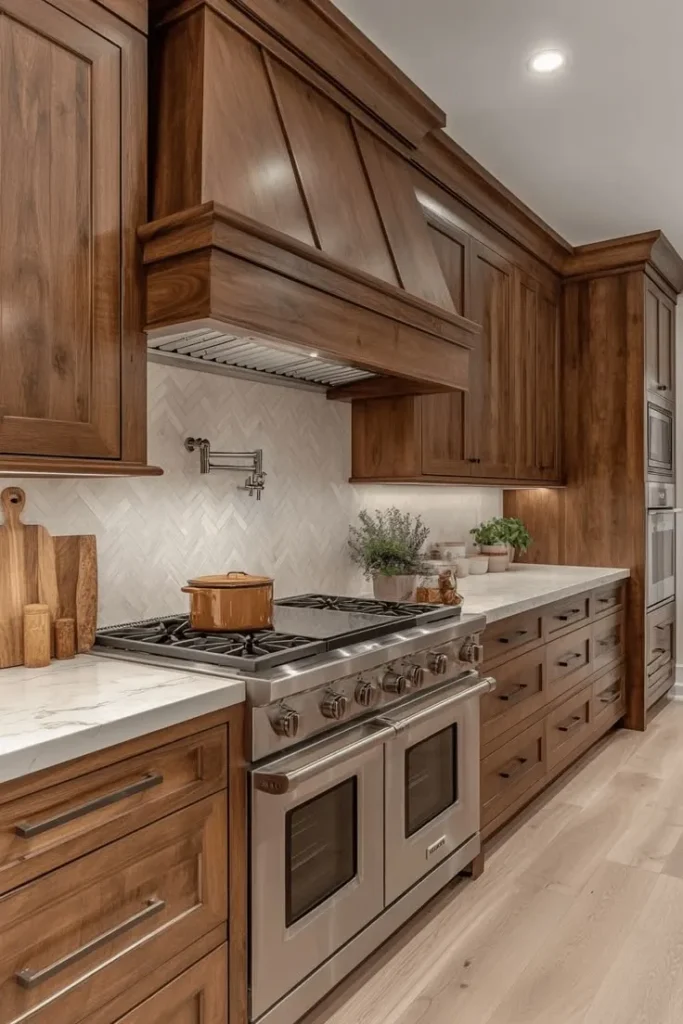
This is a round where the comparison is more nuanced than either material’s advocates typically present.
MDF: MDF is dense and consistent — it does not dent from concentrated impacts as readily as some softer woods, and it holds screws and fasteners reasonably well in the face of the panel but less well at the edges and corners. The edges and corners of MDF cabinet doors are the material’s greatest structural vulnerability: chipping, cracking, and delaminating at corners when impacted. If a cabinet door corner takes a significant blow, MDF is more likely to chip in a visible, difficult-to-repair way than solid wood.
MDF also does not repair as well as solid wood when damaged. A chip or dent in a solid wood door can be filled with wood filler, sanded, and refinished to an invisible or near-invisible result. A chip in an MDF door edge is harder to repair cleanly and often shows as a distinct repair.
Solid Wood: Solid wood is more impact-resistant than MDF at corners and edges — it dents and scratches rather than chipping and crumbling, which is a better failure mode for a kitchen door. Dents and scratches in solid wood can typically be sanded and refinished; the result is often invisible. Solid wood also holds hardware screws at the edges and in the face of the door more securely and over a longer period than MDF.
Over a multi-decade kitchen lifespan, solid wood doors hold up to daily use — opening, closing, children, pets, the general physical interaction that cabinet doors in a family kitchen receive — somewhat better than MDF doors. Laila says the difference becomes more visible in the twelve to fifteen year range, when MDF doors in high-use kitchens start showing corner and edge wear that solid wood doors of the same age do not typically show to the same degree.
The verdict: Solid wood is more durable over a long kitchen lifespan, particularly in high-use kitchens or households with children. MDF performs comparably for lighter-use kitchens in shorter time frames.
Round 4: Cost
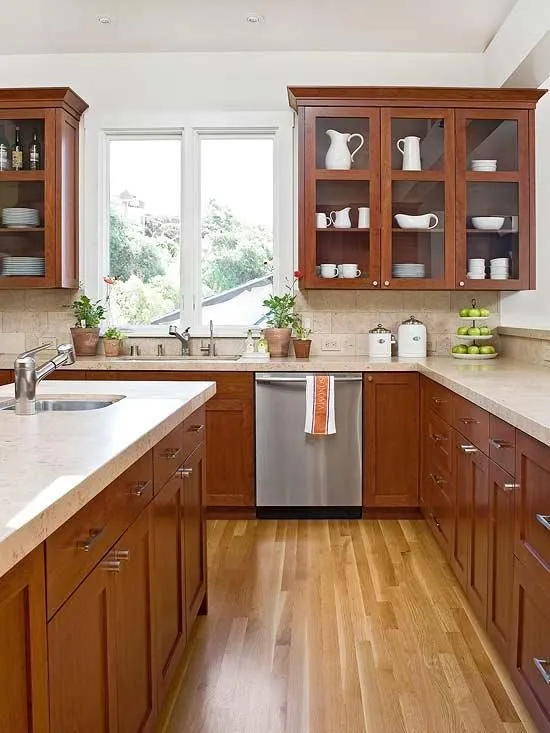
This is the round that drives many kitchen cabinet decisions — and it is worth understanding clearly rather than oversimplifying.
MDF: MDF cabinet doors are generally less expensive than solid wood doors of equivalent size and quality, for two reasons. The raw material (MDF panel) is less expensive than quality hardwood lumber. And MDF machines more predictably and more quickly than solid wood — consistent density means consistent machining, which reduces production time and waste. The cost savings are real and can be significant for larger kitchens.
At the entry-level and mid-range of the market, MDF cabinet doors are frequently 20 to 40 percent less expensive than equivalent solid wood doors. At the higher end of the market, the price difference narrows — high-quality MDF cabinet systems can be comparably priced to mid-range solid wood systems.
Solid Wood: Solid wood cabinet doors are more expensive than MDF primarily because quality hardwood lumber is more expensive than MDF board and because manufacturing solid wood doors requires more skilled labor and more careful handling than MDF. Species choice significantly affects price — maple and alder are more affordable, cherry and walnut are premium.
The verdict: MDF is less expensive, and the savings are real and meaningful. For large kitchens, the per-door savings multiply to a significant total. For renovation budgets that are constrained, MDF allows a larger or better-quality cabinet run for the same money.
Round 5: Environmental Considerations
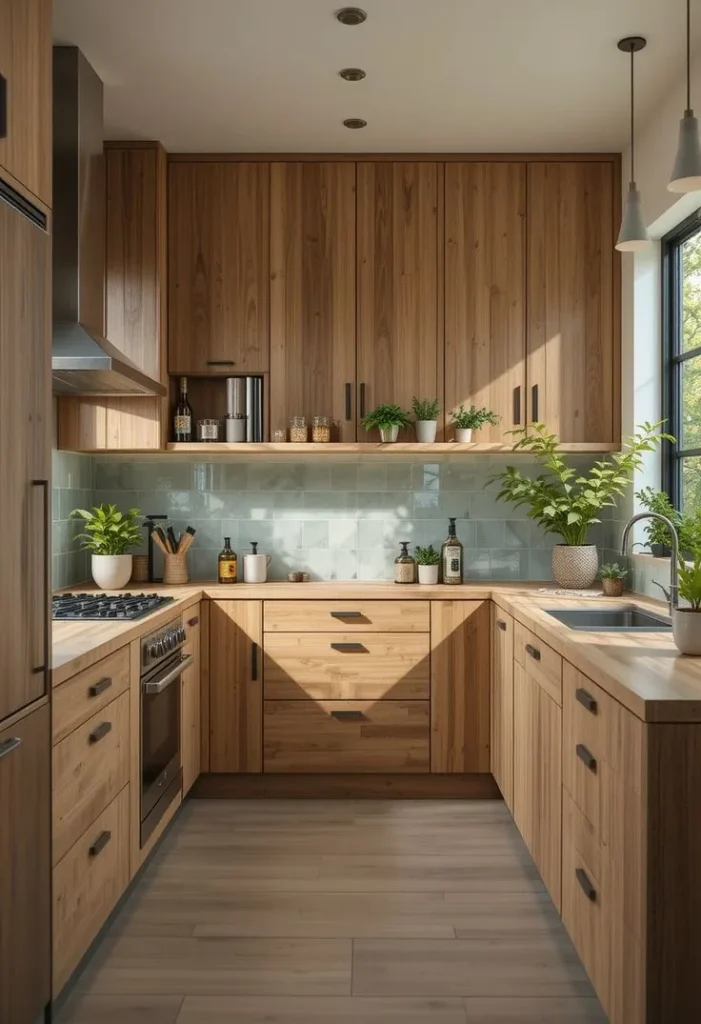
This is a round where neither material wins cleanly, and where the nuances deserve honest acknowledgment.
MDF: MDF is made from wood fibers that are the byproduct of other wood manufacturing processes — in some interpretations, this makes it an efficient use of material that would otherwise be waste. However, MDF typically contains urea-formaldehyde resins that off-gas formaldehyde, particularly when new. The level of off-gassing is regulated and considered safe at approved levels, but it is a genuine environmental and health consideration. Low-formaldehyde MDF options are available and worth specifying for health-conscious installations.
Solid Wood: Solid wood is a natural material, biodegradable, and renewable if sourced from responsibly managed forests (look for FSC certification). However, it is also a more resource-intensive material in terms of the quality hardwood lumber required per door, and the waste in cutting solid wood components is higher than MDF.
The verdict: Neither material is clearly environmentally superior. FSC-certified solid wood and low-formaldehyde MDF are the best options within their respective categories for environmentally conscious buyers.
Round 6: Appearance and Design Flexibility
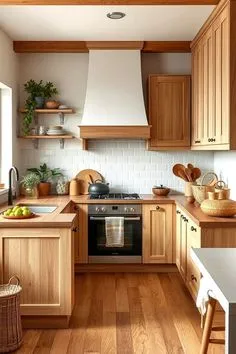
MDF: MDF is the material of contemporary flat-panel cabinetry — the clean, minimalist, line-for-line-perfect aesthetic that dominates modern and European-style kitchen design. Routed profiles in MDF are crisp and consistent because the material has no grain or variation to create inconsistency. MDF is the better choice for the most contemporary kitchen aesthetics. It cannot be stained or finished to show a natural wood appearance — it must be painted or wrapped in a laminate or veneer.
Solid Wood: Solid wood offers what MDF cannot: a natural, genuine wood appearance in stained or natural-finish cabinetry. The grain, the variation, the warmth of natural hardwood are aesthetic qualities that engineered materials can approximate but not replicate. For traditional, transitional, farmhouse, and any kitchen style that values the genuine material quality of wood, solid wood is the correct choice. For shaker-style painted cabinets, solid wood and MDF are competing options with different trade-offs.
The verdict: For painted and contemporary: MDF. For stained, natural, and traditionally styled: solid wood, necessarily.
The Decision Matrix: Which Is Right for Your Specific Kitchen?
Based on everything above, here is the clearest possible guidance for specific situations.
Choose MDF cabinet doors if:
- Your kitchen will have painted cabinets and you want the smoothest, most perfect painted finish
- Your budget is constrained and you need to maximize cabinet quality within a limited spend
- Your kitchen has good ventilation and normal moisture levels
- Your kitchen is lower-use or a second kitchen
- You prefer a contemporary, flat-panel aesthetic
- You are planning to repaint the cabinets yourself or have them repainted in the future and want the best possible paint surface
Choose solid wood cabinet doors if:
- Your cabinets will be stained or finished in a natural wood appearance — solid wood is your only option
- Your kitchen is high-use with children, significant cooking activity, or steam-producing cooking styles
- Your kitchen has high humidity or less-than-perfect ventilation
- You are planning for a twenty-plus year kitchen that will not be renovated again soon
- You prioritize long-term durability and repairability over initial cost savings
- You prefer traditional, transitional, shaker, or farmhouse kitchen aesthetics
In either case, specify plywood for your cabinet boxes. Regardless of what your doors are made of, the interior box of the cabinet should be plywood rather than particleboard. Plywood is stronger, more moisture-resistant, and more durable than particleboard for cabinet boxes, and the step-up from particleboard to plywood boxes is one of the most important quality decisions in kitchen cabinetry.
What Laila Actually Specifies for Clients — And Why
After eleven years of kitchen design, Laila has a settled approach that I think is worth sharing because it reflects the nuance of a professional who has seen both materials in real kitchens over time.
For painted kitchens — which is the majority of her clients — she specifies MDF doors on plywood boxes. She seals the MDF doors with a moisture-resistant primer before painting, specifies a kitchen-grade cabinet paint for the topcoat, and ensures the kitchen ventilation is adequate for the cooking style of the household. In the years of maintenance she has seen on these kitchens, properly specified MDF painted kitchens hold up well.
For stained or natural-finish kitchens, she specifies solid wood doors on plywood boxes — because MDF cannot be stained and solid wood is the only option for achieving a natural wood appearance.
For high-humidity situations — a kitchen above a pool, a kitchen in a house at the beach with high year-round humidity, a kitchen where the client cooks in ways that generate significant steam — she specifies solid wood doors regardless of finish, because the moisture resistance advantage is more significant in those conditions.
She says the single most important specification in any kitchen cabinet job is the box material — and that a kitchen with MDF doors on plywood boxes outperforms a kitchen with solid wood doors on particleboard boxes in almost every practical measure. The door material is the decision people obsess over. The box material is the decision that matters more for the functional longevity of the kitchen.
The Honest Final Answer
Wood cabinets are not categorically better than MDF cabinets. MDF cabinets are not categorically better than wood cabinets. The right material is the one that matches your specific kitchen’s requirements — the aesthetic you want, the use level it will receive, the moisture environment it will live in, and the budget you are working within.
For painted contemporary kitchens with normal use and good ventilation, well-specified MDF produces excellent results that most homeowners will be completely happy with for the useful life of the kitchen. For stained or natural-finish kitchens, for high-use kitchens in demanding environments, and for kitchen renovations intended to last multiple decades, solid wood is the more prudent choice — and the premium is justified by the longer-term performance.
Make the decision based on your kitchen’s specific requirements, not based on categorical claims about which material is universally superior. Laila has seen both materials succeed and both materials fail — and the difference in both cases was almost always about the specificity of the specification and the conditions of the installation rather than the inherent superiority of either material.
Now go pin this complete guide, share it with anyone who is currently trying to make this decision for a kitchen renovation and getting contradictory information from every direction, and use the decision matrix above to make the call that is right for your specific situation.
Pin this and save it — this is the wood vs MDF cabinet guide that gives you the genuinely honest, nuanced, and practically useful information to make this decision correctly for your specific kitchen!









Leave a Reply