Warning: I’m about to make you completely rethink your garden’s edge game.
Okay, let me start by saying something I never thought I’d admit: I used to be a “just shove some random rocks there” kind of girl when it came to flower bed borders. And honestly? It showed. My friend Jess came over last spring and was like, “Girl, what is happening here?” and I wanted to crawl under my hydrangeas and hide.
But here’s the thing—I’ve since become absolutely obsessed with finding the best flower bed border materials, and I’ve tested pretty much everything on the market. We’re talking metal, wood, stone, brick, you name it.
I’ve made the mistakes so you don’t have to, and I’m about to spill alllll the tea on what actually works, what looks incredible, and what will have your neighbors stopping their cars to ask who did your landscaping. Because honestly? The right border changes everything.
Whether you’re a first-time homeowner, a rental queen trying to make her space feel permanent, or just someone who wants her garden to look like it belongs on Pinterest, I’ve got you covered. Let’s dive into the best flower bed border materials ranked by durability AND style—because we deserve both, right?
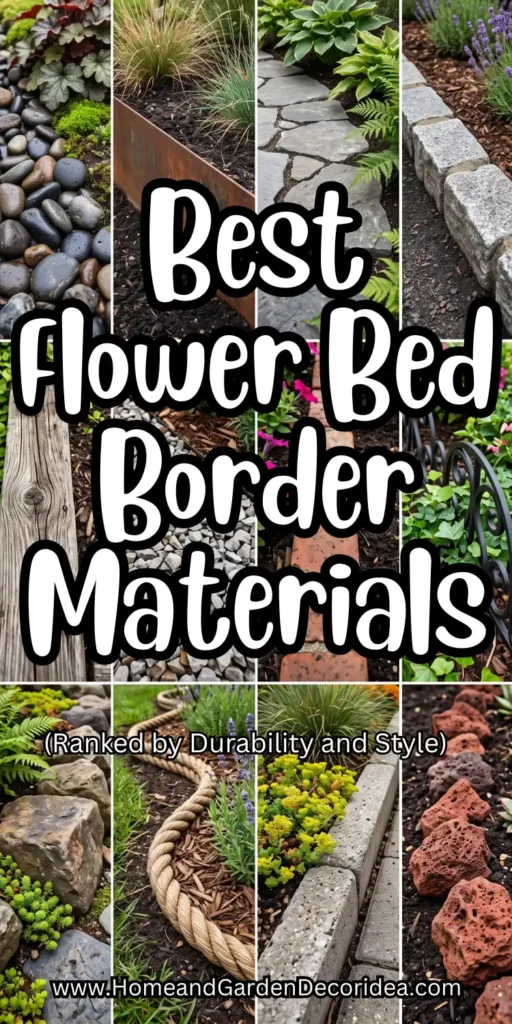
First Up: Why Your Flower Bed Border Actually Matters
Before we get into the nitty-gritty, can we just acknowledge that a good border is like the eyeliner of your garden? It defines everything, makes it look polished, and honestly? It saves you from that awkward “where does the lawn end and the flowers begin?” situation that we’ve ALL dealt with. I bet you’ve spent way too much time trying to keep grass from creeping into your beautiful garden beds—I know I have!
The best flower bed border materials do three things: they keep things tidy, they add serious curb appeal, and they actually save you time on maintenance. And girl, as someone who would rather spend her Sunday brunching than weeding, I’m all about that life. So let me walk you through what I’ve learned from my own trials, errors, and eventual triumphs.
1. Steel and Aluminum Edging: The Modern Minimalist’s Dream
Why it’s amazing: Oh my gosh, where do I even start? Metal edging has become one of the most popular ideas for a reason, and I’m seriously obsessed with how sleek it looks. This is trending all over TikTok right now, and honestly? I get it. There’s something so satisfying about that clean, sharp line that metal creates—it’s like the perfect winged eyeliner for your garden beds.
How to use it: The best flower bed border materials in this category come in rolls or individual stakes. You literally just push them into the ground along your desired edge, and they create this beautiful, uninterrupted curve. I used aluminum edging around my front flower beds last summer, and my friend Sarah literally thought I’d hired a professional landscaper.
The durability factor here is INSANE—we’re talking rust-resistant, weather-proof, and honestly? It’ll probably outlive us all. I don’t recommend getting the cheapest version you can find, though. Trust me, I tried that first and it bent like a cheap straw. Spring for the slightly thicker gauge and you’ll thank me later.
Pro tip: The best flower bed border materials in metal category work especially well for creating those Instagram-worthy curved edges. Use a garden hose to map out your curve first, then install the edging along that line. It’s foolproof!
2. Natural Stone: The Timeless Beauty That Never Goes Out of Style
Why it’s amazing: Okay, I’m about to get real emotional about rocks. Is that weird? 😂 But seriously, there’s something about natural stone that just hits different. My grandma had limestone borders around her rose garden, and it always felt so magical to me. Now that I’m older, I totally get why—stone borders look like they’ve been there forever, in the best way possible.
How to use it: The best flower bed border materials in stone form range from river rocks to flagstone to limestone pavers. You can go as simple or as elaborate as you want, which I LOVE about this option. I used a mix of larger limestone pieces around my backyard sitting area, and it created this gorgeous, organic feel that literally looks like something out of a magazine.
Here’s the thing though—this is NOT the budget-friendly option. And it’s definitely not a quick weekend project, unless you’re hiring someone or have superhuman strength. But if you’re looking for something that adds value to your home and will last forever? This is it. This is absolutely one of the best flower bed border materials for long-term investment.
I highly recommend checking out local landscape supply yards instead of big box stores—you’ll get better prices and actually see the stones before you buy. And girl, bring a friend! My friend Megan and I made a day of it and honestly, it was such a vibe picking out stones together.
Pro tip: For the best flower bed border materials in stone, lay them slightly below the soil line and use decomposed granite between them for stability. This keeps them in place and prevents grass from sneaking through those tiny gaps.
3. Brick: The Classic That Always Looks Put-Together
Why it’s amazing: Okay, can we talk about how bricks just feel like home? There’s a reason they’ve been a favorite for centuries—they’re versatile, beautiful, and they work with literally any house style. I used a herringbone pattern along my side garden, and I’m not kidding when I say I stop and admire it every time I walk past. Like, I’m obsessed.
How to use it: The best flower bed border materials in brick form can be installed in so many ways—soldier course (standing up), sailor course (on their side), or the classic flat lay. I personally love the look of bricks set on their side for a taller border that really defines the bed.
Here’s a pro move: you can find reclaimed bricks for super cheap (sometimes even free!) if you check Facebook Marketplace. My friend Jess found a whole pallet for $20 from someone who was tearing down an old chimney. CAN YOU BELIEVE THAT? The patina on those old bricks was absolutely stunning, and it gave her garden this beautiful, timeless character that new bricks just can’t replicate.
One thing to note—the best flower bed border materials in this category need a proper base if you live somewhere with cold winters. Frost heave is REAL, and you don’t want your beautiful brick border looking like a roller coaster by spring. I highly recommend digging down about 4 inches and laying a gravel base for drainage.
Pro tip: For a modern twist, lay bricks in a chevron pattern. It’s viral on Pinterest right now and honestly? It’s such a conversation starter. My neighbors have literally stopped to ask about it.
4. Concrete Pavers: The Reliable Best Friend
Why it’s amazing: If you want something that looks like stone but costs WAY less, concrete pavers are where it’s at. I used these along my side yard last year and honestly, I’m still so happy with them. The best flower bed border materials don’t have to break the bank, and these prove it.
How to use it: You can find concrete pavers in SO many shapes and sizes—I went with these beautiful rectangular ones that have a slightly weathered finish. They look like aged stone but cost like a fraction. And they’re a breeze to install compared to natural stone because they’re more uniform and lighter to carry.
The durability is fantastic too. My pavers have been through a full winter of freeze-thaw cycles and they’re holding up like champs. I will say though—the best flower bed border materials in this category need to be sealed. Don’t skip this step like I almost did! A good sealer prevents staining and keeps them looking fresh for years.
Pro tip: When installing pavers, use sand between the joints instead of mortar. It’s more forgiving if your ground shifts, and it still looks super polished. And if you want an extra pop of style, plant low-growing ground cover like creeping thyme between them—trust me, it’s gorgeous.
The Ultimate Comparison Table (Because We Love Data, Right?)
Okay girl, let’s get organized. Here’s how the best flower bed border materials stack up against each other:
| Material | Durability | Style Rating | DIY Difficulty | Cost (Per Linear Foot) |
|---|---|---|---|---|
| Steel/Aluminum | ⭐⭐⭐⭐⭐ | Modern, sleek | Easy | $$ |
| Natural Stone | ⭐⭐⭐⭐⭐ | Organic, timeless | Hard | $$$$ |
| Brick | ⭐⭐⭐⭐ | Classic, charming | Medium | $$$ |
| Concrete Pavers | ⭐⭐⭐⭐ | Versatile | Easy-Medium | $$ |
Pro tip: The best flower bed border materials for you really depend on your home’s style. Modern farmhouse? Go with metal. Traditional colonial? Brick is calling your name. Boho garden vibes? Stone all the way!
5. Wood: The Warm, Rustic Option That Will Always Have My Heart
Why it’s amazing: Okay, I’m going to get a little sentimental here. My very first flower bed border was wood—those little scalloped landscape timbers that you can get from any hardware store. And while they didn’t last forever (RIP to those beauties), they hold such a special place in my heart. Wood borders just make everything feel cozy and approachable, you know?
How to use it: If you’re looking for the best flower bed border materials on a budget, wood is absolutely your winner. Cedar and redwood are naturally rot-resistant, but honestly? Even pressure-treated pine will give you a good 5-7 years if you maintain it properly.
I currently use cedar logs around my vegetable garden, and I love how they contrast with all the green. It’s like a natural frame for the veggies, and it feels so organic and intentional. The best flower bed border materials in wood category also score major points for being easy to work with—you literally just cut them to size and stake them in place.
However—and this is a big however—I don’t recommend wood if you want a “set it and forget it” solution. They WILL rot eventually, and you’ll need to replace sections. But for temporary gardens, rentals, or anyone who loves that rustic aesthetic? Go for it. I seriously love how it looks.
Pro tip: The best flower bed border materials in wood should be sealed with a waterproof stain before installation. I learned this the hard way when my first set started showing signs of rot after just two years. Also, keep them slightly above ground level to prevent moisture wicking up from the soil.
6. Plastic and Rubber: The Surprising Contenders
Why it’s amazing: Okay, I know what you’re thinking—”Plastic? Really?” But hear me out! Recycled rubber edging has become seriously popular, and honestly? It’s surprisingly good. The best flower bed border materials don’t always have to be “natural” to be beautiful.
How to use it: This stuff comes in rolls, and you just unroll it along your border and stake it down. The newer versions actually look like real wood or stone (they’re getting SO good at mimicking textures), and they’re virtually indestructible. My friend Megan used recycled rubber in her front yard two years ago and it still looks brand new. Like, brand NEW new.
The best flower bed border materials in this category are also FANTASTIC for problem areas. Need to edge around a curve? No problem. Have a weirdly shaped bed? Easy peasy. And they’re flexible enough that you can make all sorts of gentle waves and curves that would be impossible with rigid materials.
The catch? They’re plastic. And while the recycled versions are definitely better for the environment than virgin plastic, they’ll never have that beautiful patina that natural materials develop over time. But for cost, ease of installation, and durability? These are honestly one of the best flower bed border materials, especially for beginners.
Pro tip: To make plastic edging look more high-end, bury it so only the top 1-2 inches are visible. This creates that clean line without looking like you’ve got a plastic border in your garden. Trust me, this trick has fooled so many of my friends!
7. Living Borders: The Eco-Friendly Dream
Why it’s amazing: Okay, this is the most creative of all the best flower bed border materials, and honestly? I’m obsessed with how unique it looks. Instead of using an installed material, you literally create a border using plants. It’s meta, it’s stunning, and it’s literally the most sustainable option there is.
How to use it: I used dwarf boxwood around my herb garden, and it’s SO satisfying. You just plant them close together along your edge, and they grow into a beautiful green “wall” that defines your flower bed. Other great options include lavender (hello, smell-o-vision!), creeping thyme, or even small ornamental grasses.
The best flower bed border materials approach here means you get something that changes with the seasons—flowers in spring, lush green in summer, interesting textures in fall. It’s like having a border that’s always evolving, and I’m seriously here for it. My friend Sarah tried this with her cottage garden, and it’s literally the most charming thing I’ve ever seen.
The only downside? Patience. This takes time to establish, and you’ll need to maintain it (trimming, watering, etc.). But if you’re looking for the best flower bed border materials that give back to the environment and create habitat for pollinators? This is absolutely it.
Pro tip: When using living borders, stagger your plants in a zigzag pattern so they fill in faster. And choose plants that are appropriate for your zone and the amount of sunlight your bed gets. Nothing’s sadder than watching your beautiful border plants struggle because they’re in the wrong spot!
So, What’s Actually the Best?
Okay, deep breath. You’ve made it through my entire border journey, and you’re probably thinking, “But which one is actually the best flower bed border materials?”
Here’s the real tea: it depends on YOU.
If you want something that’s going to last forever and you don’t mind spending more upfront? Natural stone is your winner. It’s classic, it’s stunning, and it adds value to your home.
If you want something modern and Instagram-worthy that’s also super durable? Metal edging all the way. It’s one of the most popular ideas right now, and honestly, I understand why.
If you’re on a budget and want to DIY something this weekend? Wood or plastic/rubber edging is your BFF. Both are accessible, easy to install, and look great when done right.
And if you want something truly unique that’s also environmentally friendly? Go with a living border. It’s the most creative option, and you’ll have the most stunning border on the block.
My Final Verdict
After trying every single one of these (yes, even the plastic), I honestly think the best flower bed border materials for most people are a tie between metal and natural stone. Metal gives you that clean, modern look that literally makes your house look more expensive, while stone offers this timeless beauty that just never goes out of style.
I personally have metal in my front yard and stone in my backyard, and it’s the perfect combo. One feels polished and presentable for the front-of-house vibes, while the other feels like a secret garden oasis. It works, and I’m not mad about it.
So girl, go forth and border your flower beds with confidence! Choose the best flower bed border materials for YOUR style, YOUR budget, and YOUR garden. And remember—whatever you pick, it’s going to be gorgeous because YOU put the thought and love into it.

Leave a Reply