Girl, let me save you from the mulch madness I went through last spring!
I bet you’re standing in the garden center right now (or scrolling endlessly on your phone, let’s be real) completely overwhelmed by all the bags of mulch. Shredded this, nugget that, organic, dyed, cocoa-scented—honestly, it’s a lot.
And nobody tells you which one actually works for flower beds. Well, I tried them all so you don’t have to! After way too many trips to the hardware store and some serious trial-and-error in my own garden, I’m spilling all my secrets on the best mulch for flower beds.
My friend Jess used to just grab whatever bag was on sale, and her flowers were always kinda… meh. Last year, she finally asked me for help, and we completely transformed her garden with the right mulch.
The difference was literally night and day! So grab your iced coffee, get comfy, and let’s chat about how to make your flower beds look like they belong on Pinterest. Oh my, I’m seriously so excited to share this with you!
Why Mulch Matters More Than You Think (It’s Not Just for Looks!)
Okay, real talk—I used to think mulch was just about making flower beds look pretty. Like, slap some brown stuff on the dirt and call it a day, right? Wrong! I learned the hard way that the best mulch for flower beds does SO much more than just look cute.
Mulch is literally working overtime while you sleep. It locks in moisture so you’re not dragging the hose out every single day (hello, summer survival!). It blocks weeds from even thinking about sprouting, which means fewer Saturday afternoons spent pulling those annoying little invaders. And if you go with organic mulch, it actually feeds your soil as it breaks down, giving your flowers the nutrients they need to bloom bigger and brighter. Like, why didn’t anyone tell me this sooner?!
Oh, and the aesthetic factor? Don’t even get me started. The right mulch makes your flowers POP. It gives your garden that polished, magazine-worthy finish that makes the neighbors stop and stare. So yes, we’re getting both beauty AND brains today, girl!
The Contenders: My Top Picks for the Best Mulch for Flower Beds
I’m not gonna lie—choosing the best mulch for flower beds really depends on your vibe, your budget, and how much effort you want to put in. Here’s my honest breakdown of what I’ve tried and loved!
Shredded Hardwood Bark – The Classic Queen
Okay, this is my absolute go-to and honestly what I recommend to literally everyone. Shredded hardwood bark is the best mulch for flower beds if you want something that looks amazing, lasts forever, and actually works.
Here’s why I’m obsessed: it breaks down slowly (like, we’re talking 1–2 years before you need to refresh it), so you’re not constantly buying more. It stays put during rainstorms—no floating away like some other mulches I’ve tried. And it creates this dense mat that keeps weeds from getting a foothold. My flowers have never been happier!
Pro tip: Go with double-shredded mulch for flower beds. It’s processed twice so the pieces are smaller and more uniform, which means it spreads like a dream around your plants and fills in all those gaps. Trust me on this one!
Best for: Pretty much every flower bed ever. Annuals, perennials, roses—you name it!
Pine Straw – The Budget-Friendly Southern Belle
If you’re looking for the best mulch for flower beds on a budget, pine straw (aka pine needles) is where it’s at! My friend Sarah swears by this stuff, and honestly, I get it now.
It’s lightweight, super easy to spread, and it interlocks into this cozy mat that stays put even on slopes. Plus, it’s naturally acidic, which makes it perfect for acid-loving plants like azaleas, rhododendrons, and hydrangeas (you know, the ones that give you those dreamy blue blooms!).
The only downside? You’ll need to refresh it annually since it breaks down faster than wood mulch. But honestly, for the price and the gorgeous reddish-brown color it adds to your garden? Totally worth it!
Best for: Acid-loving plants, slopes, and budgets!
Compost – The Overachiever (Black Gold, Baby!)
Okay, I can’t say enough about compost. If you want the best mulch for flower beds that actually feeds your plants while it mulches, this is IT. Experienced gardeners literally call it “black gold”, and for good reason!
Compost does everything—it retains moisture, suppresses weeds (when applied thick enough), and packs your soil with nutrients that make your flowers go absolutely wild. It’s made from decomposed organic waste like leaves, grass clippings, and kitchen scraps, so you’re basically recycling while making your garden gorgeous.
The catch? It breaks down faster than other mulches, so you’ll need to top it up more often. But if you’re serious about soil health and big blooms, this is the best mulch for flower beds hands down.
Best for: Gardeners who want to feed their soil AND their flowers!
Coco Mulch – The Trendy New Girl on the Block
Have you seen this on TikTok yet? Because it’s going viral, and honestly, I’m obsessed! Coco mulch is made from compressed coconut coir that comes in a brick and expands when you add water. It’s like magic, I swear.
What makes it the best mulch for flower beds for certain situations is the texture. It stays fluffy and permeable, so water actually gets through to the soil (unlike some mulches that form a crust and repel water—the WORST). Roots absolutely LOVE this stuff. And because it’s sterile, you’re not introducing any weed seeds or diseases to your precious flower beds.
The downside? You have to hydrate it before using, which adds a step. And coverage per brick is smaller than a regular bag of mulch. But for the moisture control and root health? Chef’s kiss!
Best for: Container gardens, raised beds, and anyone who loves a little garden magic!
Let’s Compare, Shall We?
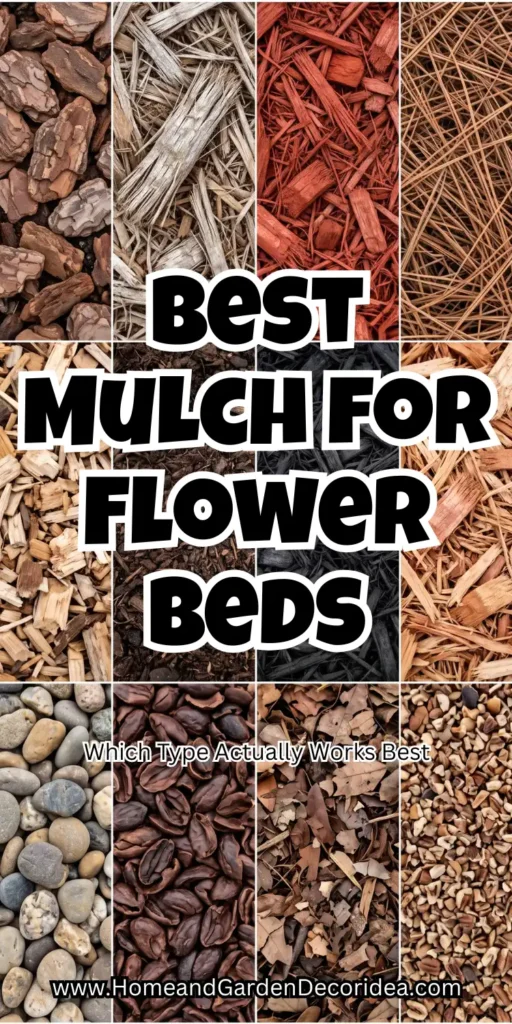
Here’s a quick cheat sheet so you can see at a glance which best mulch for flower beds fits YOUR vibe:
| Mulch Type | Lifespan | Cost | Best For |
|---|---|---|---|
| Shredded Hardwood | 1-2 years | $$ | Most flower beds, slopes, weed control |
| Pine Straw | 6-12 months | $ | Acid-loving plants, slopes, budgets |
| Compost | 3-6 months | $$-$$$ | Soil health, big blooms, feeding plants |
| Coco Mulch | 1-2 years | $$$ | Containers, raised beds, moisture control |
| Straw | 6-12 months | $ | Seasonal beds, vegetable gardens |
| Leaf Mold | 3-6 months | FREE | Woodland/shade gardens, DIY lovers |
Color Matters More Than You Think!
Okay, I know this sounds extra, but the color of your mulch actually makes a HUGE difference in how your flower beds look. The best mulch for flower beds isn’t just about what it does—it’s about how it makes your blooms pop!
Black mulch creates serious contrast. It makes EVERY color pop—bright reds, yellows, pinks, whites—they all stand out against that dark backdrop. If you want your flowers to be the absolute star of the show, black is your color.
Brown mulch is my personal favorite for a natural, earthy vibe. It blends beautifully with most plants and gives that “effortlessly gorgeous” look. It’s perfect if you want something low-key that doesn’t steal attention from your blooms.
Red mulch is bold and dramatic, especially if you have dark green foliage or yellow/white flowers. It’s not for everyone, but when it works, it WORKS.
Pro tip: Dark-colored mulches like black or dark brown are trending hard on Pinterest right now, and I totally see why. They make flower beds look so polished and magazine-worthy!
Mulches I DON’T Recommend (Learn From My Mistakes!)
Okay, let’s get real for a second. Not every mulch is the best mulch for flower beds, and I’ve made some expensive mistakes so you don’t have to.
Rubber mulch is a hard no from me. Yes, it’s eco-friendly in theory (made from recycled tires), but it blocks air and water from reaching plant roots and can leach harmful chemicals into your soil. Plus, it doesn’t break down and add nutrients like organic options do. Just say no, girl!
Rock or gravel mulch might look cute in photos, but it raises soil temperature, can stress out sensitive plants like hydrangeas, and doesn’t improve your soil at all. Save it for pathways, not your precious flower beds.
Dyed mulch (especially the cheap stuff) can sometimes contain questionable chemicals. If you go with colored mulch, make sure it’s from a reputable brand that uses safe, non-toxic dyes.
Fresh, unaged wood chips can actually steal nitrogen from your soil as they break down, which is NOT what you want for your flowers. Always go with aged or commercially prepared mulch!
My Final Verdict: What’s ACTUALLY the Best Mulch for Flower Beds?
Okay, drumroll please…
If I had to pick just ONE best mulch for flower beds, it would be shredded hardwood bark (double-shredded, brown or black depending on your vibe). It’s the perfect balance of beauty, functionality, and longevity. It looks amazing, stays put, suppresses weeds like a champ, and feeds your soil slowly over time. It’s literally the whole package!
BUT—if you’re on a budget, go with pine straw. If you want to feed your soil aggressively, go with compost. And if you’re doing containers or raised beds, coco mulch is your new bestie.
The key takeaway? The best mulch for flower beds is the one that fits YOUR garden, YOUR budget, and YOUR lifestyle. Don’t overthink it—just pick one and get started! Your flowers will thank you, I promise.

Leave a Reply