
Stop guessing and start growing — here’s exactly how to measure sun for flower bed planting like a pro (even if you killed your last succulent, girl).
Okay, can we be real for a second? I used to think I had this whole gardening thing figured out. I’d buy the prettiest flowers at the nursery (total impulse buys, honestly), dig a little hole, pop them in, and just… hope for the best.
And then I’d spend the rest of the summer wondering why my hydrangeas looked like they’d been through a war while my friend Jess’s garden was basically living its best botanical life.
Turns out? I had no idea how much sun my flower bed was actually getting. And girl, I bet you’re in the same boat.
I’m not talking about that casual “oh, it gets sun in the morning” guesswork. I’m talking about real, actual, measurable data. The kind that separates thriving blooms from sad, droopy leaves.
So grab your coffee (or wine, no judgment lol), and let’s figure out exactly how to measure sun for flower bed planting together. Because trust me, once you nail this? Your garden will be the talk of the neighborhood — and definitely Instagram-worthy.
Here’s the Thing About Sunlight (It’s Not That Complicated)
So what’s the big deal anyway? Why do we need to be so precise about this? Honestly, because plants are dramatic little divas. Some want to bake in the sun all day like they’re on a tropical vacation. Others will literally throw a fit if they get more than a few hours of direct light. And when you don’t know how to measure sun for flower bed planting accurately? You’re basically playing Russian roulette with your petunias.
My first year gardening, I planted full-sun perennials in a spot that only got about three hours of light. They grew — but they were sad. Leggy, sparse, and definitely not the showstoppers I’d imagined. I kept asking myself, “Is my yard cursed?” Nope. I just didn’t understand how to measure sun for flower bed planting properly.
But here’s the good news, girl: it’s genuinely simple. And once you get it right? Your flower bed goes from “meh” to “whoa” real quick. I’m seriously obsessed with how much easier everything gets when you actually know what you’re working with.
Method One: The Classic Observation Trick (Old School but Works)
Okay, I want to start with the method that literally anyone can do. It’s free, requires zero tech, and honestly? It’s how I learned how to measure sun for flower bed planting back when I was too intimidated to ask for help.
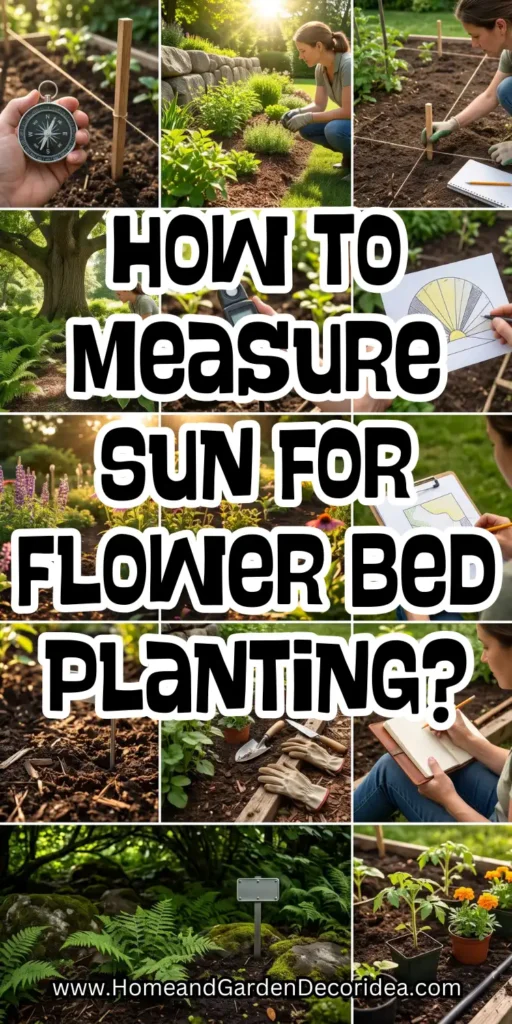
Here’s the deal: pick a day when you’ll be home (Saturday is my go-to), and grab a piece of paper. Sketch out your flower bed area. Then, at sunrise, go outside and note: is there direct sun hitting that spot? Shade? Dappled light? Write it down. Then do it again at 10 AM, noon, 2 PM, 4 PM, and sunset. You’re creating a little sun map!
My friend Jess (she’s basically my gardening guru at this point) used to do this with colored pencils — yellow for sun, blue for shade. She called it “art homework” lol. But you know what? It totally works. When you learn how to measure sun for flower bed planting this way, you start seeing patterns you never noticed before. Like that spot that seems “sunny” but actually gets shaded by the fence from 11-3? Yeah, that’s life-changing info right there.
Pro tip: Do this for a few days straight if you want to be extra sure. Clouds happen! One gloomy day might throw you off. But if you do it consistently, you’ll get a crystal-clear picture of exactly what you’re working with.
Method Two: The Tech-Savvy Approach (Because Who Has Time to Sit Outside All Day?)
Okay, I’ll be honest — while the observation method is great, I don’t always have the patience (or the schedule) to sit in my yard with a notebook every hour. That’s where technology steps in, and it might just be my favorite way how to measure sun for flower bed planting.
There are these amazing little gadgets called sunlight meters or sun calculators. They’re not expensive — we’re talking like $20 on Amazon, girl — and they literally measure the amount of sunlight hitting a specific spot over a period of time. Pop one in your flower bed, wait about 24 hours, and boom. You get an exact reading. No guessing. No “I think it gets enough sun.” Just cold, hard facts.
And honestly? The first time I used one, I was shook. I was convinced my front flower bed was getting “full sun.” The meter said otherwise. It showed I was only getting about 4 hours of direct sun — which explained EVERYTHING about why my sun-loving plants had been so unhappy. Learning how to measure sun for flower bed planting with an actual tool was a game-changer for me.
If you want to go the free route (because I love a budget-friendly hack), there are actually apps now that can help you track sunlight! They use your phone’s camera and sensors. Are they as accurate as a dedicated meter? Probably not. But for a starting point? Oh my, yes. I used one called SunSeeker just to test it, and it was surprisingly helpful for understanding how to measure sun for flower bed planting without buying anything extra.
Sunlight Categories: Decoding What Your Flower Bed Actually Needs
Okay, so let’s say you’ve taken the time how to measure sun for flower bed planting and you have your data. Now what? You need to know what that information means for your plant choices. Because all sunlight is not created equal, girl.
Let me break it down in the simplest way possible:
| Sunlight Category | Hours of Direct Sun | What to Plant |
|---|---|---|
| Full Sun | 6+ hours | Echinacea, lavender, salvia, sedum, black-eyed Susans |
| Partial Sun | 4-6 hours | Foxglove, heuchera, astilbe, hydrangeas, hostas |
| Part Shade | 3-4 hours | Impatiens, bleeding heart, ferns, columbine |
| Full Shade | Less than 3 hours | Hellebores, hostas (yes, they do well here!), ferns, lily of the valley |
My personal take: When you learn how to measure sun for flower bed planting and match it to the right plants, you’re setting yourself up for success. I can’t say enough about how much easier gardening becomes. It’s not about being a “green thumb” — it’s about matching your plants to their happy place.
And here’s the thing nobody tells you: the sun changes throughout the seasons. That spot that gets 6 hours in June might only get 4 in September. So when you learn how to measure sun for flower bed planting, try to do it around mid-summer. That’s usually your “peak” sun. If a plant can handle that? You’re golden.
Pro Tips For Measuring Light In Tricky Spots
Now, let me share a few things I wish I’d known earlier about how to measure sun for flower bed planting in those weird garden areas:
1. Fences and walls are sneaky sun-blockers. My north-facing flower bed gets way less sun than the rest of my yard. I had no idea until I actually tracked it. The fence was casting shade I didn’t even notice. When you measure sun for flower bed planting, don’t forget to look up and around. Those shadows are real, girl.
2. Use a string method for mega precision. Okay, this sounds extra, but hear me out. Drive a small stake into the ground at the center of your flower bed. Then, using string, mark the shadows at different times of day. It’s like a sundial! I tried this after seeing it on Pinterest (so aesthetic, right?) and it gave me a visual representation of how to measure sun for flower bed planting like nothing else.
3. Sun exposure from reflective surfaces counts! Did you know that white fences, walls, or even gravel can reflect sunlight onto your plants? It adds “bonus sun” that your measurements might miss. When I learned how to measure sun for flower bed planting, I realized my white fence was giving my plants an extra boost. Factor that in if you’re in a similarly bright situation.
Why I Don’t Recommend Just “Winging It” Anymore
Look, I get it. Gardening is supposed to be relaxing. And in the beginning, I didn’t want to turn it into a science experiment. I wanted to dig, plant, water, and watch things grow. But honestly? That approach just set me up for disappointment.
The money you spend on plants? The time you spend prepping the soil? The emotional attachment you form with that new hydrangea? When you don’t know how to measure sun for flower bed planting, you’re rolling the dice on all of it. And my heart can’t take another plant funeral, you know?
Now that I understand how to measure sun for flower bed planting, every plant goes in with purpose. I know EXACTLY where each one will thrive. No more moving them around later (which they hate, by the way). No more mysterious plant deaths. Just happy, blooming flowers that make me smile every time I walk out my front door.
Let’s Get You Started, Girl!
Okay, so now you know! You have NO excuse to keep guessing. Whether you go the old-school observation route, grab a sunlight meter, or use an app, just pick ONE way how to measure sun for flower bed planting this weekend.
I highly recommend starting with a simple notebook method this Saturday. It doesn’t need to be fancy. Just give it a try and see what you discover about your own yard. You might be surprised — I sure was!
And listen, once you know how to measure sun for flower bed planting, your whole approach to gardening changes. You’ll be the one giving advice to your friends instead of asking for it. And trust me, it feels so good when people compliment your flower beds and ask, “What’s your secret?”
Just tell ’em a little tip from yours truly: never underestimate the power of a sun meter, a notebook, and a girl who finally knows how to measure sun for flower bed planting!
What about you? Have you ever realized your “sunny” spot was anything but? Share your gardening fails or wins in the comments — I’d love to hear them! And if you try any of these ways to measure sun for flower bed planting, let me know which one works best for you! 🌻
Leave a Reply