Let’s be real: I want a garden that looks like I hired a professional landscaper, but I have the attention span of a goldfish and the energy of a sleepy cat.
If you’re anything like me, you’ve stared longingly at Pinterest boards filled with cottage-core gardens, only to immediately get overwhelmed by the thought of maintenance. Watering schedules? Deadheading? Fertilizing?
Honestly, it sounds like a part-time job, and I already have one of those. But here’s the secret I learned after killing my third succulent (RIP, little guy): It’s not about having a green thumb; it’s about buying the right plants.
I’m talking about the ultimate girlboss move for your yard—building a low-effort flower bed using the best annuals and perennials for flower beds. I spent last spring texting my friend Megan—who literally has a garden that looks like it belongs in a magazine—and she walked me through the “lazy girl’s guide” to gardening. Now, I’m spilling all the tea so you can have a stunning yard without the stress. Trust me, if I can do it, you can do it.
Today, we are breaking down the MVPs of the plant world. We’re looking at the annuals (the overachievers that give us all their energy for one season) and the perennials (the loyal besties that come back year after year). By the time we’re done, you’ll know exactly which ones to grab at the nursery to create the best annuals and perennials for flower beds that practically take care of themselves.
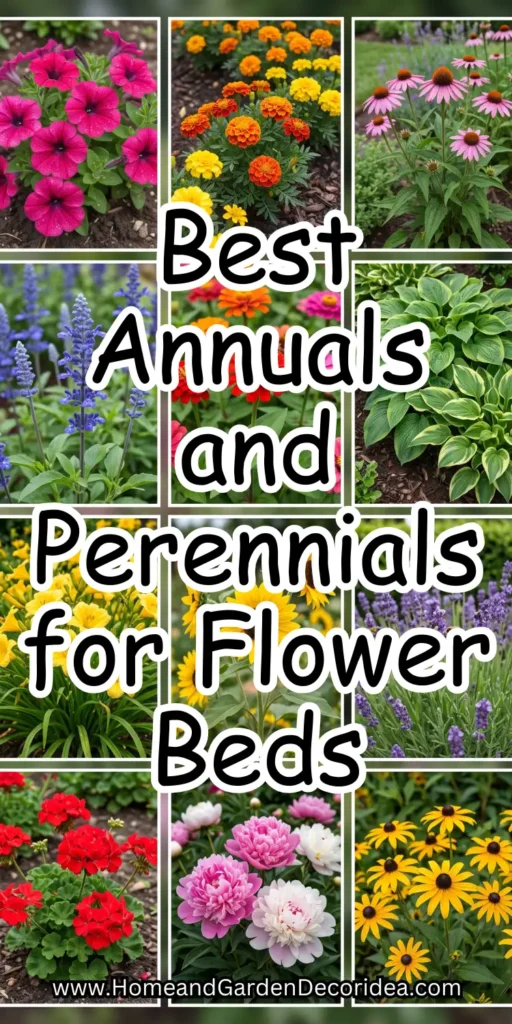
Idea 1: The “Queen of Rebloom” (Perennial) – Coneflowers
Why it’s amazing: Because who doesn’t love a plant that basically ignores you and still looks gorgeous? I’m serious. These beauties are drought-tolerant, they love the sun, and they attract butterflies. It’s like having a little fairy garden without any of the work.
My friend Jess planted these in her front yard three years ago, and she literally forgot about them during a heatwave last July. They didn’t care. They just kept blooming like the resilient queens they are. For anyone trying to figure out the best annuals and perennials for flower beds, Coneflowers are the perennial you cannot skip. They come in beautiful shades of pink, orange, and classic purple, so they fit any aesthetic.
How to do it: Just pop them in the ground in a sunny spot, water them a few times to get them established, and then basically leave them alone. Seriously. They thrive on neglect, which is my favorite kind of plant. They also make amazing cut flowers, so you can bring some inside for your living room shelfie!
Idea 2: The “Instant Dopamine Hit” (Annual) – Zinnias
Why it’s amazing: Okay, if you want instant gratification, you need Zinnias. They grow super fast from seed and just keep producing these bright, pom-pom-like flowers until the first frost. They are the ultimate “pick-me-up” plant.
I can’t say enough about how fun these are. If you’re looking to fill gaps in your bed and add a pop of crazy color, this is it. They are trending all over TikTok right now because people are obsessed with how easy they are to grow. When I’m listing the best annuals and perennials for flower beds, Zinnias take the crown for “most rewarding.”
How to do it: You can literally buy a pack of seeds for like, $2, sprinkle them on the dirt, and cover them with a thin layer of soil. Water them when you remember, and in about 8 weeks, you’ll have a floral explosion. Plus, the more you cut them for bouquets, the more they bloom! It’s the gift that keeps on giving, honestly.
Idea 3: The “Chic Foliage Friend” (Perennial) – Heucheras (Coral Bells)
Why it’s amazing: Let’s talk about texture, girl. Not every plant has to be about the flowers. Heucheras are the ultimate “sophisticated friend” of the garden. They have these gorgeous ruffled leaves that come in lime green, deep burgundy, and even silver.
Why is this a secret weapon? Because these leafy ladies don’t need deadheading. They don’t need pruning. They just sit there looking expensive. This is one of the best annuals and perennials for flower beds if you want a designer look without the designer effort. Megan has a row of these lining her walkway and they look like they belong in a botanical garden.
How to do it: They prefer partial shade (perfect for those annoying spots under a tree where nothing else grows). Just stick them in the dirt, water them when it’s really dry, and watch them thrive. Pro tip: Pair these with bright flowers to make the colors pop even more. It’s a total flex.
Idea 4: The “Maintenance-Free Star” (Annual) – SunPatiens
Why it’s amazing: If you are a chronic over-waterer or a chronic forgetter, SunPatiens are your spirit animal. These are a newer breed of Impatiens that actually thrive in the sun and rain. They bloom non-stop from spring to fall without needing you to pinch them back or spray them for bugs.
Honestly, they are a lifesaver. I put these in a window box on my porch last summer and they got huge. They are one of the best annuals and perennials for flower beds specifically for “set it and forget it” vibes. You don’t have to worry about mold or mildew—they are tougher than they look.
How to do it: Plant them in well-drained soil, give them some sun, and let them do their thing. You might need to water them if we have a crazy heatwave, but generally, the rain handles them. I highly recommend them for anyone who wants color but hates chores. Yes, please!
Idea 5: The “Backbone of the Garden” (Perennial) – Russian Sage
Why it’s amazing: Let’s get dramatic. Russian Sage is tall, airy, and has these gorgeous purple-blue spires that look like a mist. It’s the perfect “filler” plant to add height to your flower bed without it looking messy.
I don’t recommend skipping this one if you want a cohesive look. It’s hardy, it survives winter, and it smells amazing when you brush against it. This is one of the best annuals and perennials for flower beds to create that “wildflower meadow” aesthetic that is trending hard on Pinterest right now.
How to do it: It loves the sun and hates “wet feet” (i.e., soggy soil). Once established, it’s extremely drought tolerant. Just give it space to spread out, and it will reward you with months of color. It’s the low-maintenance queen of the summer garden.
The Ultimate Cheat Sheet: Annuals vs. Perennials
Because we are visual girls, here is the breakdown so you can plan your shopping list for the best annuals and perennials for flower beds.
| Feature | Annuals (e.g., Zinnias, SunPatiens) | Perennials (e.g., Coneflowers, Russian Sage) |
|---|---|---|
| The Vibe | The Party Girl | The Loyal Bestie |
| Lifespan | One Season (Go hard or go home) | Returns Year after Year |
| Bloom Time | All season long (non-stop!) | A specific window (usually weeks) |
| Work Level | Low (mostly water) | Super Low (virtually ignore them) |
| Cost | Cheap (seeds/starters) | Investment (but pays off!) |
| Best For | Filling gaps, instant color | The “bones” of the garden structure |
My Final Pro-Tip for the Perfect Bed
Okay, so now you know the contenders. But how do you pick the best combination? Here is my golden rule for achieving the best annuals and perennials for flower beds: “Thriller, Filler, Spiller.”
- Thriller: This is your tall perennial (Hello, Russian Sage!) to give height.
- Filler: This is your mounding plant (Heucheras or Coneflowers) to fill the middle.
- Spiller: This is your annual trailing plant (like Zinnias or SunPatiens) to spill over the edges.
If you do this, your flower bed will look like you paid a professional. Just plant the perennials in the back, the annuals in the front, and watch the magic happen.
Remember, creating the best annuals and perennials for flower beds isn’t about working harder; it’s about working smarter. Don’t stress if a plant dies—we’ve all been there. You don’t have a black thumb, you just haven’t met the right plants yet. Now go get your hands dirty and make your neighbors jealous!

Leave a Reply