
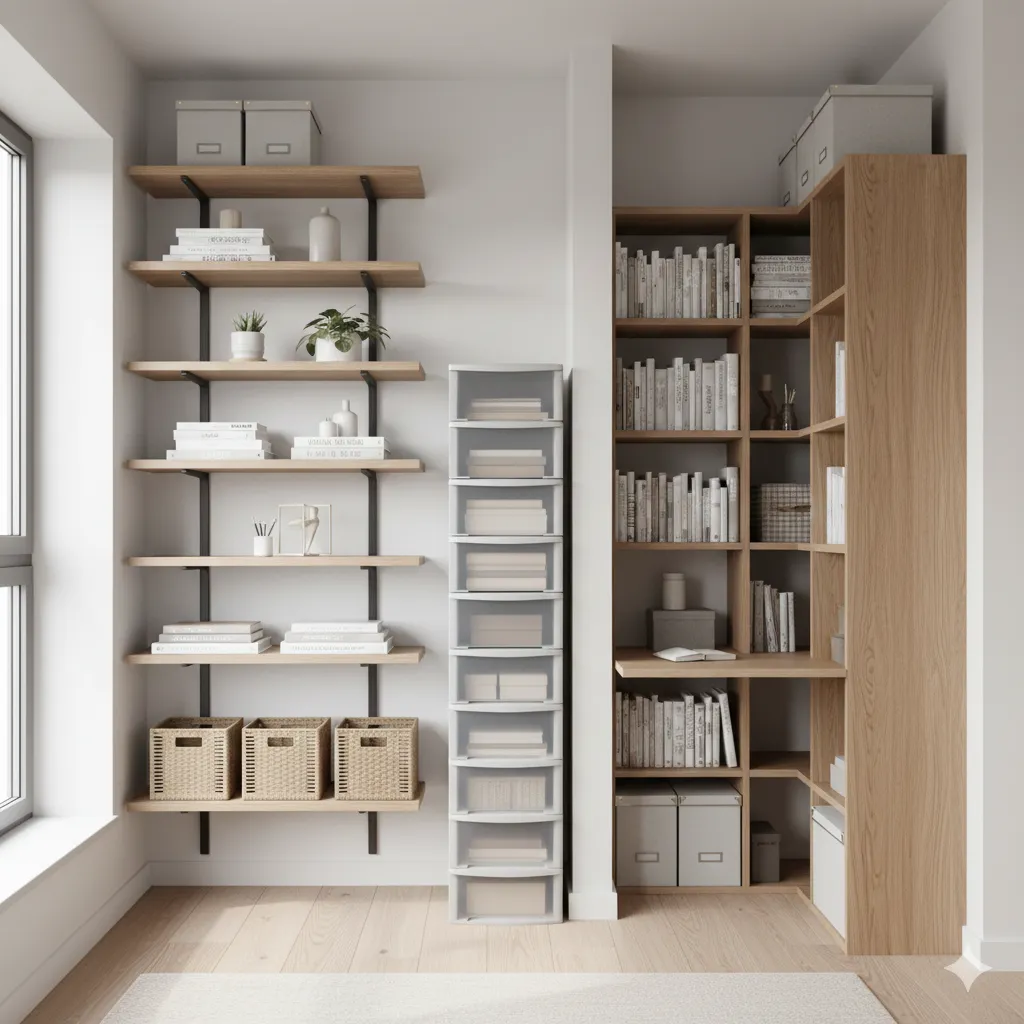
The ultimate guide to using vertical space for storage in any room — because the best storage in your home has been right above your head this entire time and you just didn’t know it.
I want you to do something right now. Look up. No, really — look up from whatever screen you’re reading this on and look up at the walls in the room you’re sitting in. Now notice how much wall space is sitting completely empty above your eye line.
The stretch of wall above your sofa. The empty feet between your bookshelf and the ceiling. The blank expanse above your kitchen cabinets. The bare wall beside your bed that goes all the way to the ceiling and holds absolutely nothing.
That space up there? That is your untapped storage goldmine. And the reason most homes feel cramped, cluttered, and like they never have enough room for everything is not that they don’t have enough square footage — it’s that they’re only using about a third of the actual storage space they have available.
Most people think about storage in two dimensions. They think about the floor space they have and the surfaces they can put things on.
But a room has three dimensions, and the third one — height — is where the real storage magic happens. Learning how to use vertical space for storage in any room is the single skill that will do more for your home organization than any bin, basket, or closet system you have ever bought.
My friend Zeina lives in a 600-square-foot apartment that she shares with her partner and their enormous collection of books, art supplies, kitchen equipment, and general belongings. When I first visited I braced myself for a cramped, cluttered space.
What I walked into instead was a bright, airy, beautifully organized apartment that felt genuinely spacious.
Her secret? She had used every single inch of vertical space in every single room with such intentionality that her walls were doing more storage work than her floors. I stood in her kitchen and genuinely counted six feet of storage above her cabinets that was styled so beautifully it looked like a magazine shoot.
This guide is going to teach you exactly how to do what Zeina did — in every room of your home, at every budget level, whether you rent or own. Let’s start looking up.
Why Vertical Space Is the Most Overlooked Storage Opportunity in Any Home
Before we get into the room-by-room breakdown, let’s talk about why vertical space is so consistently and universally underused — because understanding this helps you start seeing your rooms completely differently.
Human beings are naturally eye-level focused. We notice and interact with things at roughly shoulder height and below. Everything above that tends to disappear from our visual awareness, which means it also disappears from our organizational thinking. When we look at a room and feel like it doesn’t have enough storage, we’re looking at the floor plan — the footprint — and not at the full three-dimensional space.
The math of vertical storage is honestly staggering when you think about it. A wall that is 10 feet tall and 12 feet wide has 120 square feet of surface area. Most people use perhaps the bottom 4 feet of that wall — 48 square feet. The remaining 72 square feet of wall space is sitting completely empty. That’s more than half the wall. In every room. That is a lot of storage going to waste.
Using vertical space for storage also has a secondary benefit that most people don’t expect: it makes rooms feel bigger. When storage goes up instead of out, you free up floor space, which makes a room feel more spacious and open. It sounds counterintuitive that adding more stuff to a room makes it feel bigger, but when that stuff goes vertical, it genuinely works.
Now let’s talk about how to actually do it, room by room.
How to Use Vertical Space for Storage in the Living Room
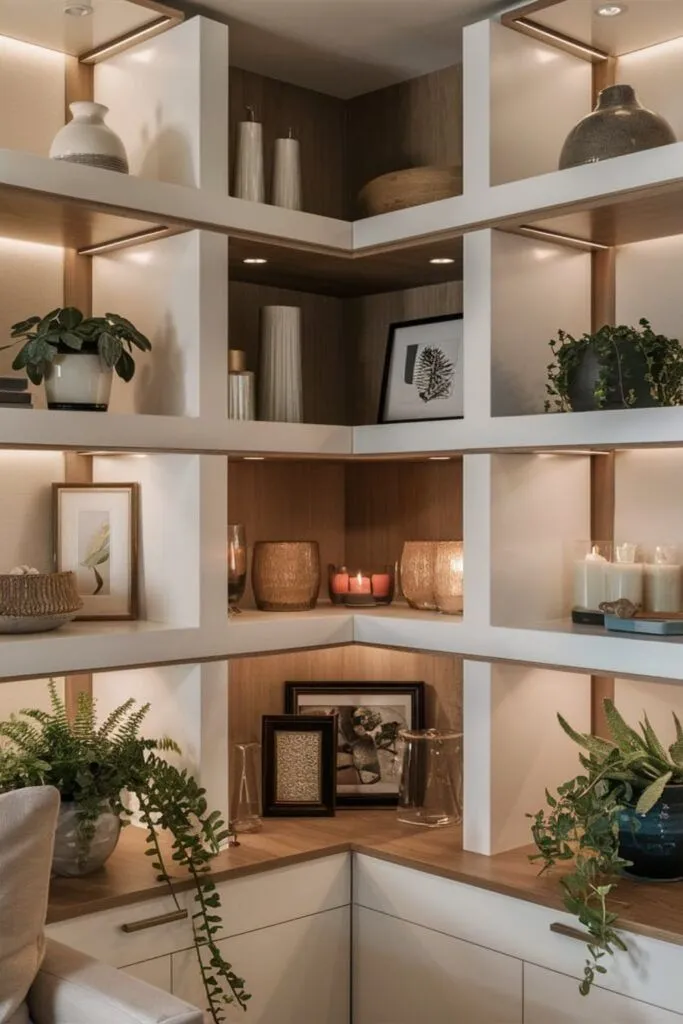
The living room is usually the room where vertical space is most neglected, and it’s also the room where using it well makes the most dramatic visual impact. Let’s change that.
Go floor to ceiling with your bookshelves. The single most impactful way to use vertical space for storage in a living room is to replace standard-height bookshelves with floor-to-ceiling shelving. IKEA’s BILLY bookcase system is perfect for this — the base units are affordable and the add-on height extensions bring them all the way to the ceiling for a built-in look that transforms the entire wall. Use the upper shelves for books you’ve already read and decorative objects. Keep the lower, accessible shelves for everyday items.
Mount your TV and build around it vertically. When your TV is wall-mounted, the wall around it becomes a canvas for vertical storage. Float shelves on either side of the TV from the TV’s height all the way up to the ceiling. These shelves hold everything from your sound system components to your book collection to small plants and candles. The effect is a built-in media wall that looks like a custom renovation but is achievable for a fraction of the cost.
Use the wall above your sofa. The wall space above your sofa is one of the most underused vertical surfaces in any living room. Instead of just one piece of art, create a layered gallery wall that extends up toward the ceiling, or install a floating shelf above the sofa at the height where art would normally stop, and use it for trailing plants, books, and objects. It draws the eye upward and makes the room feel taller.
Stack your storage furniture. If you use cube storage units or bookshelves in your living room, stack them rather than lining them up side by side. Stacking takes the same floor footprint and doubles or triples your storage capacity by using height instead of width.
Recreate this look:
- IKEA BILLY bookcase with height extension add-on (IKEA)
- Full-motion TV wall mount (Amazon)
- Floating shelves for beside and above TV (Wayfair / Amazon)
- Tall stacking cube storage units (IKEA KALLAX)
How to Use Vertical Space for Storage in the Kitchen
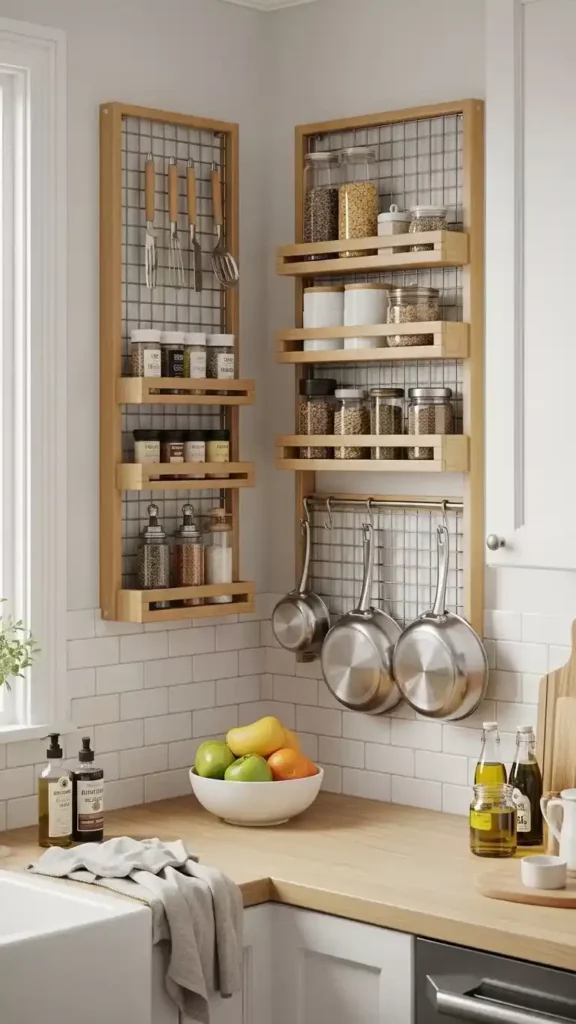
The kitchen is the room where vertical space can solve the most acute and daily storage problems, and it’s the room where most people have the most unused wall and cabinet space going completely to waste.
Use the space above your cabinets. If your kitchen cabinets don’t reach the ceiling — and most don’t — the space on top of them is prime storage real estate. Style it intentionally with large baskets for items you don’t need daily (extra serving dishes, bulk pantry items, seasonal baking equipment), interspersed with a few plants or decorative pieces. Done well, it looks like a beautiful design feature rather than overflow storage.
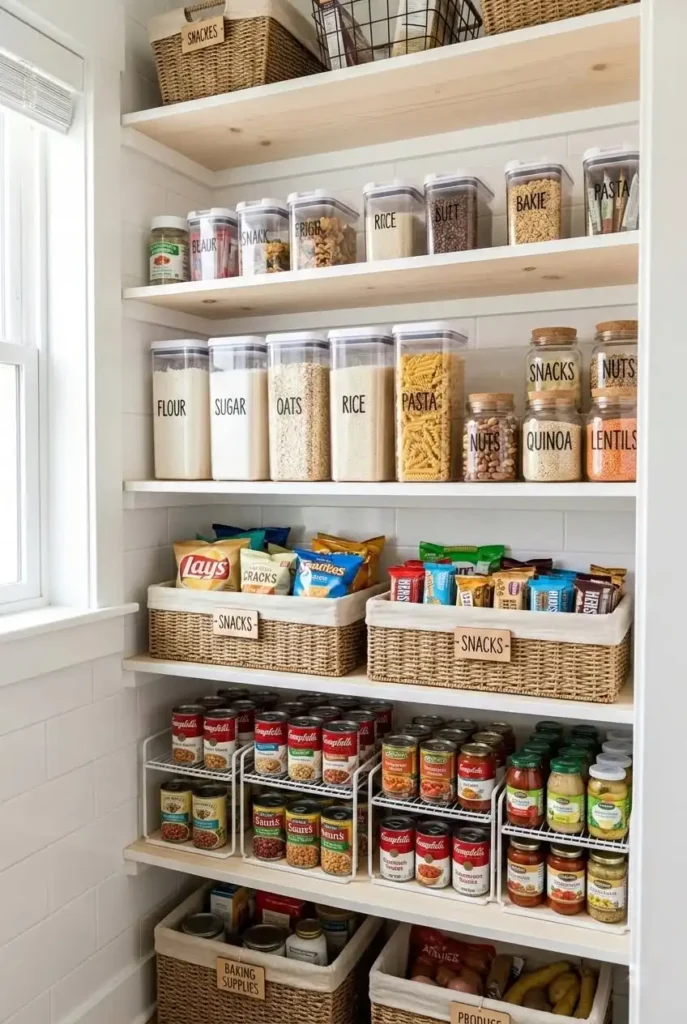
Add a second shelf inside your cabinets. Most kitchen cabinets have one fixed shelf that divides the cabinet space into two levels — but the space on each level is often too tall for what you’re storing, leaving a gap above every item that goes completely unused. Stackable shelf risers inside your cabinets create a second level of storage on each shelf, effectively doubling your cabinet storage capacity without changing anything from the outside.
Mount a magnetic knife strip and pegboard on the walls. Every utensil, knife, and tool that moves off your counter and onto a wall-mounted system is counter space reclaimed and vertical space activated. A magnetic knife strip handles knives. A pegboard handles everything else — spatulas, ladles, whisks, measuring cups, pot lids, even small pots and pans. Mount these on the backsplash wall or on any available kitchen wall and watch your counter clear.
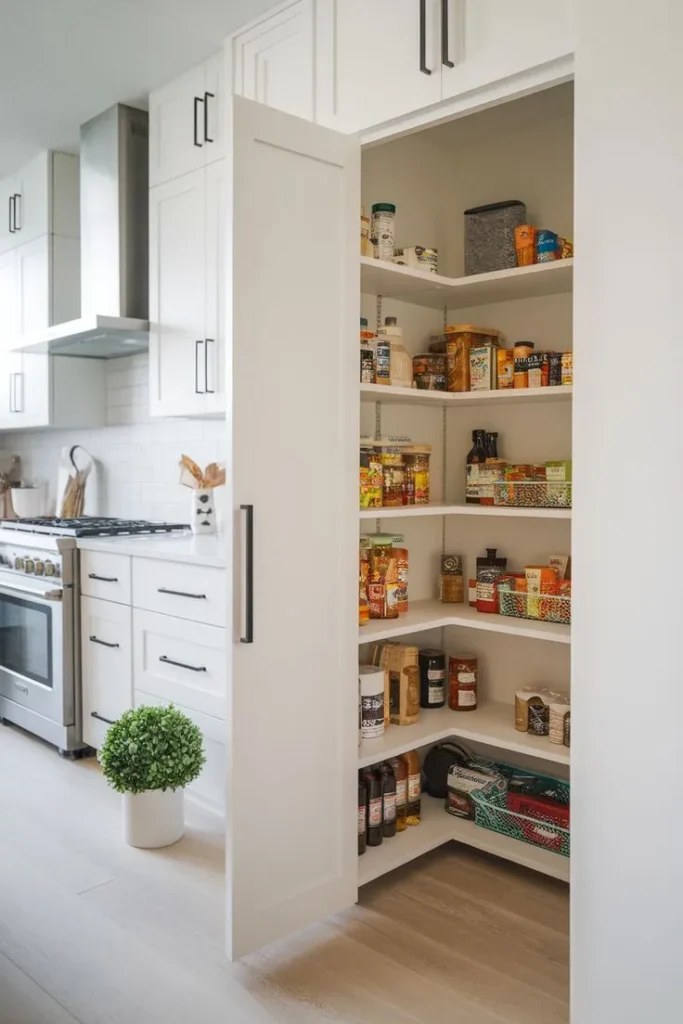
Hang a pot rack from the ceiling. If your kitchen has reasonable ceiling height, a ceiling-mounted pot rack moves your most bulky storage items — pots, pans, and large lids — completely off your cabinet shelves and into the air above your kitchen island or prep area. It’s one of the most dramatic uses of vertical space for storage and it looks absolutely incredible. Your cabinet space is suddenly free for everything that was competing with the pots for room.
Install open shelving above your counter. If you have blank wall space above your kitchen counter, open shelves mounted there give you accessible storage for everyday dishes, glasses, and pantry items while completely freeing up your counter surface. Style them beautifully and they become one of the best design features in your kitchen.
Recreate this look:
- Stackable shelf risers for inside cabinets (Amazon)
- Magnetic knife strip (Amazon)
- Kitchen pegboard system (Home Depot / Amazon)
- Ceiling pot rack (Amazon / Wayfair)
- Floating open shelves for kitchen walls (IKEA / Amazon)
How to Use Vertical Space for Storage in the Bedroom
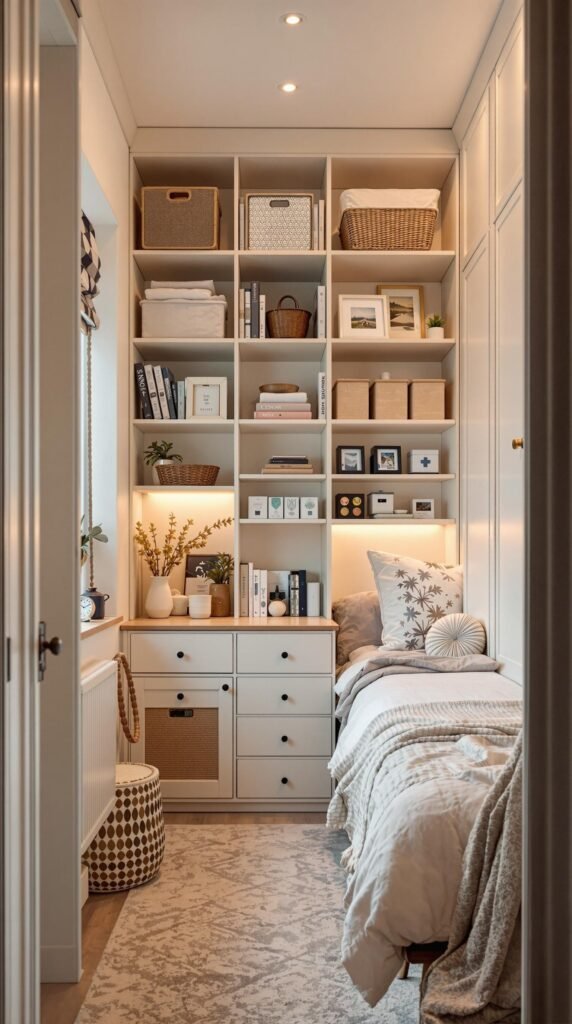
The bedroom is where vertical storage has the most potential to create genuine calm — because a bedroom with clutter, even well-organized clutter at floor level, still feels chaotic. Getting storage off the floor and onto the walls changes the feeling of a bedroom completely.
Loft your bed if possible — or use bed risers. The space under your bed is the most underused storage zone in most bedrooms. Lofting the bed or using bed risers creates enough clearance for storage bins, boxes, and rolling drawers beneath it. Under-bed storage is perfect for seasonal clothing, extra bedding, shoes, and anything else you need access to occasionally but not daily.
Take your wardrobe or closet storage to the ceiling. Most closets and wardrobes have a dead zone above the hanging rail that goes all the way to the ceiling and holds nothing. Add a high shelf that runs the full width of the closet, right up at ceiling height, and use it for rarely needed items in labeled bins. Inside the wardrobe, an additional shelf unit above existing shelves does the same. Every foot of height you activate in a closet is more storage without using any more floor space.
Mount floating shelves above your dresser and desk. The wall above your dresser and bedside tables is vertical space ready to be used. Float shelves there — at the height where they’re still accessible but above the furniture — to hold books, plants, a small lamp, framed photos, and decorative objects that would otherwise clutter the dresser surface. Clear surfaces in a bedroom immediately make the room feel calmer and more restful.
Install a floor-to-ceiling headboard wall with storage. The wall behind your bed is usually just a blank expanse. Mounting shelves on either side of your bed, from mattress height up to the ceiling, creates a dramatic headboard wall feature that also provides storage for bedside books, charging cables, water bottles, a lamp, and decorative pieces. It looks incredibly designed and eliminates the need for bedside tables — which frees up floor space.
Use tall, narrow wardrobes instead of wide, low ones. When choosing storage furniture for the bedroom, always choose tall and narrow over wide and low. A wardrobe that reaches the ceiling uses vertical space efficiently. One that stops at shoulder height wastes the most valuable real estate in the room.
Recreate this look:
- Bed risers for under-bed storage clearance (Amazon)
- Under-bed rolling storage drawers (Target / Amazon)
- IKEA PAX wardrobe with ceiling-height panels (IKEA)
- Floating bedside shelves (Etsy / Amazon)
- Tall narrow wardrobe (IKEA / Wayfair)
How to Use Vertical Space for Storage in the Bathroom
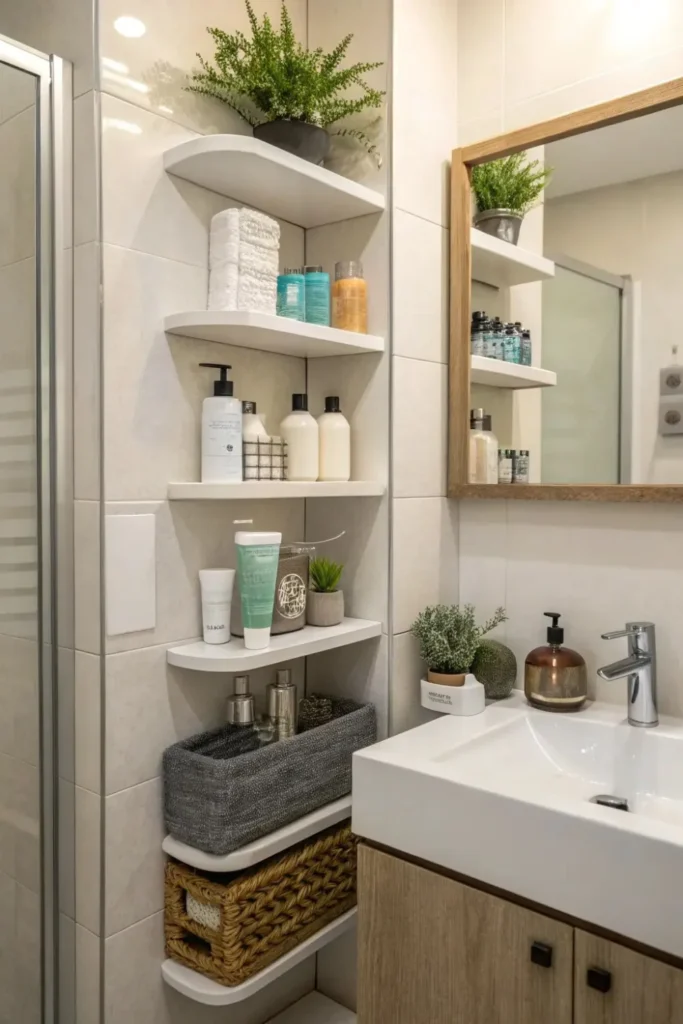
Bathrooms are often the smallest rooms in the home and the rooms with the most acute storage problem — and they are also the rooms where using vertical space for storage makes the most immediate and dramatic difference.
Add a tall ladder shelf beside the toilet or in the corner. A freestanding ladder shelf takes up almost no floor space but provides multiple tiers of storage for towels, toiletries, candles, plants, and baskets of bathroom supplies. It leans against the wall with no installation required, making it perfect for renters, and it looks incredibly chic in a bathroom when styled well. This is the fastest vertical storage win in any bathroom.
Use the wall above the toilet. The wall above the toilet is one of the most consistently wasted vertical spaces in any home. Float two or three shelves there — they can hold rolled hand towels, extra toilet paper in a pretty basket, candles, small plants, and decorative objects. A small cabinet mounted above the toilet gives closed storage for less attractive bathroom supplies. Either way, this wall is too valuable to leave empty.
Install a tall medicine cabinet instead of a shallow one. If you’re replacing a medicine cabinet, go tall. A floor-to-ceiling mirrored cabinet column on the bathroom wall provides a mirror, hidden storage, and uses vertical space efficiently all in one piece of furniture. It looks incredibly sleek and stores far more than a standard medicine cabinet.
Mount hooks vertically on the back of the door and walls. The back of your bathroom door is vertical space that can hold towels, robes, hair tools, and bags. A vertical row of hooks on the back of the door — hooks at different heights, stacked vertically — maximizes what that door surface can hold without using any wall space at all.
Use the full height of under-sink cabinet space. The cabinet under the bathroom sink is usually organized as one big open space where things just get shoved in. Add a small shelf insert to create two levels inside the cabinet, use the inside of the door for additional storage with a mounted organizer, and suddenly the under-sink cabinet has two or three times the usable storage it had before.
Recreate this look:
- Bamboo or wood ladder shelf for bathroom (Amazon / Target)
- Floating shelves above toilet (Amazon / IKEA)
- Over-toilet storage cabinet (Wayfair / Amazon)
- Over-the-door hook rail for bathroom door (Amazon)
- Under-sink shelf insert (Amazon)
How to Use Vertical Space for Storage in the Home Office
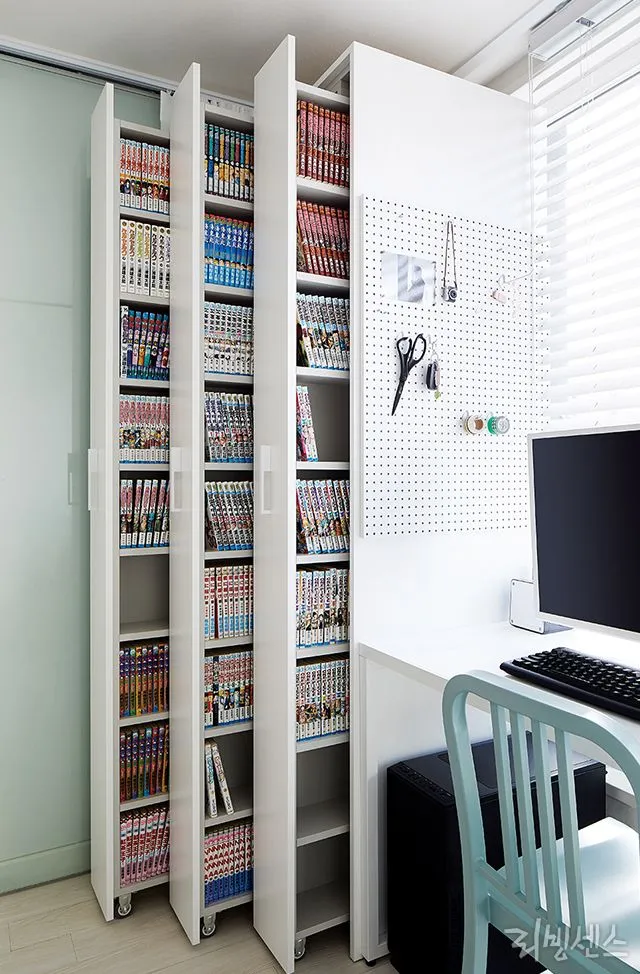
The home office is the room where vertical storage is most directly connected to daily productivity — because when your workspace is organized and your supplies and documents are accessible and clearly stored, you think more clearly and work more effectively. Getting vertical in a home office is a productivity upgrade as much as a storage one.
Build a floor-to-ceiling bookshelf wall behind your desk. This is the home office vertical storage move that makes every video call background look incredible while also providing an enormous amount of storage. Floor-to-ceiling shelves behind your desk hold your books, binders, files, plants, and decorative objects. The shelves closest to your desk height are for everyday-access items. The upper shelves are for reference books and archived materials.
Mount a pegboard above your desk for supplies and tools. Everything that currently lives on your desk surface — pens, scissors, sticky notes, tape, chargers, headphones — can move to a wall-mounted pegboard above the desk. The desk surface clears, the pegboard holds everything within arm’s reach, and the visual organization of a good pegboard setup actually helps your brain feel more organized too. I’m not even being dramatic about that last part.
Use floating shelves for reference materials at eye level. A row of floating shelves mounted at eye level above or beside your desk keeps the books, binders, and reference materials you use most often close at hand without taking up desk real estate. Label the spines clearly, style with a plant or two between sections, and you have a functional reference library that also looks beautiful.
Mount a wall-mounted filing system for paper management. Instead of a filing cabinet on the floor taking up precious office space, a wall-mounted filing system holds your active files and documents vertically on the wall. Combine with a small inbox tray mounted at desk level and a wall-mounted calendar or whiteboard above, and your entire paper and planning system is on the wall rather than on your desk or the floor.
Recreate this look:
- IKEA BILLY bookcase system for home office wall (IKEA)
- Pegboard office wall system (Amazon / Home Depot)
- Floating shelves for reference materials (IKEA / Amazon)
- Wall-mounted file organizer (Amazon)
- Wall-mounted whiteboard or calendar (Amazon)
How to Use Vertical Space for Storage in the Entryway and Hallway
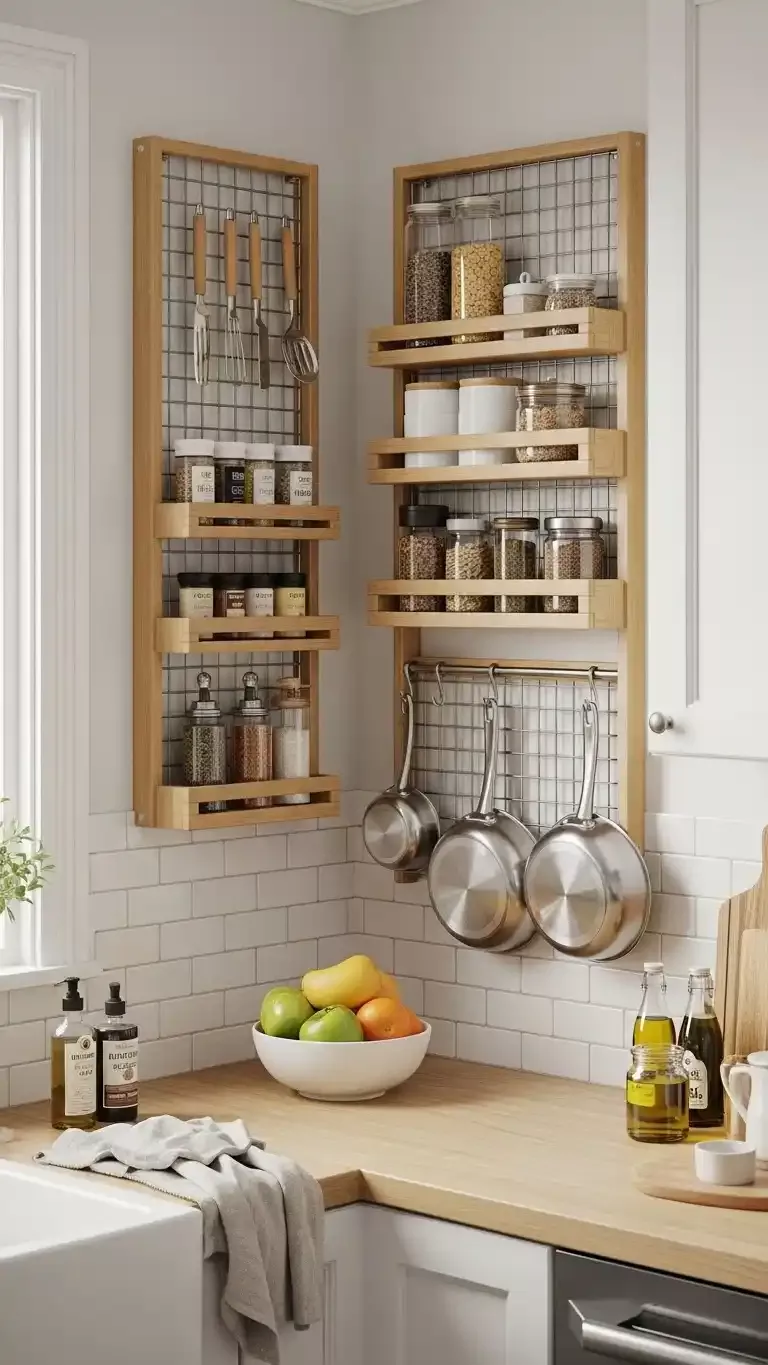
Entryways and hallways are the longest and most linear spaces in most homes, and they are almost always exclusively used at floor and eye level — leaving everything above completely unused. Using vertical space for storage here changes the entire feel of your home from the moment you walk in.
Install hooks all the way up the wall, not just at coat height. Most entryway hook systems stop at coat-hanging height. But if you extend hooks higher — using a tall shaker peg rail or individual hooks mounted at multiple heights, all the way up to near the ceiling — you create space for bags and coats at standard height, hats and scarves at mid-height, and seasonal or occasional items at the highest hooks. More hooks, more storage, same wall.
Mount shelves above your entryway furniture. If you have a console table or bench in your entryway, the wall above it is prime vertical real estate. Float shelves above the furniture up toward the ceiling — the lowest shelf just above head height, additional shelves going up from there. The lower shelf holds everyday items like keys and sunglasses in a tray. Upper shelves hold less-frequently accessed items, decorative baskets, and plants.
Use the hallway walls for closed storage cabinets. In longer hallways, shallow wall-mounted cabinets installed at different heights provide closed storage for all manner of household items without intruding significantly into the hallway floor space. Shallow cabinets — 6 to 10 inches deep — hold an enormous amount when installed from floor to ceiling and barely affect the walkway.
Line a hallway wall with floor-to-ceiling open shelving. A hallway lined entirely with floor-to-ceiling open shelving on one side becomes a home library, a display wall, and a storage system all at once. It looks absolutely stunning, it uses every inch of a wall that would otherwise be completely blank, and it can hold thousands of books, decorative objects, and baskets of stored items.
Recreate this look:
- Tall shaker peg rail for entryway (Amazon / Etsy)
- Floating shelves above entryway console (Amazon / IKEA)
- Shallow wall-mounted storage cabinet (IKEA / Wayfair)
- Floor-to-ceiling shelving for hallway (IKEA BILLY system)
Universal Rules for Using Vertical Space for Storage in Any Room
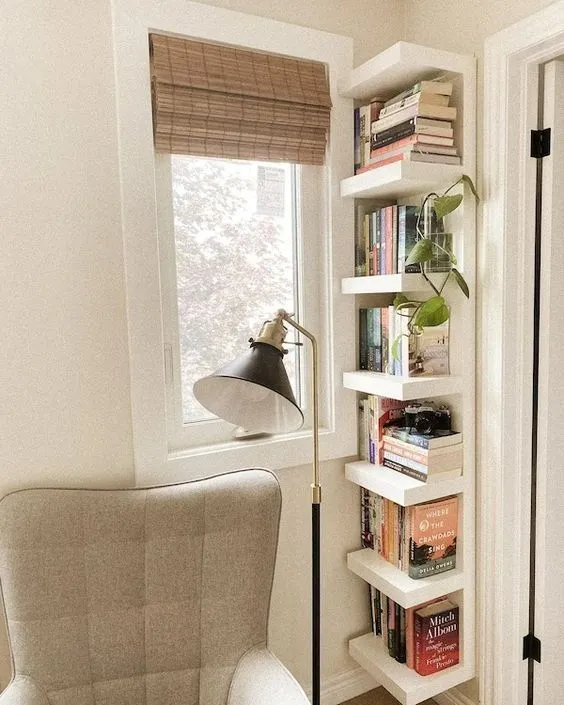
Now that we’ve gone through every major room, I want to share the universal principles that apply to using vertical space for storage anywhere in your home — because these rules work whether you’re in the kitchen, the bathroom, the living room, or anywhere else.
Rule 1: The higher it goes, the less frequently accessed it should be. Store everyday items at eye level and below. Store occasionally needed items above eye level. Store rarely needed items at the very top. This keeps the most-used things accessible while maximizing storage capacity at every height.
Rule 2: Always anchor heavy shelving to wall studs. When you’re loading shelves with books, heavy bins, or kitchen equipment, the shelving must be anchored into wall studs — not just drywall anchors. Find your studs before you install and secure into them. Heavy shelving that falls is a serious safety issue and ruins everything on it.
Rule 3: Make upper storage visible and labeled. When things go high, they go out of sight — which means they need to be labeled clearly so you remember what’s up there. Clear bins with labels on the front, or labels on the bottom edge of closed bins so you can read them from below, are essential for upper storage.
Rule 4: Use a step stool and keep it accessible. Upper storage is only useful if you can actually access it. A small, attractive step stool kept nearby makes upper storage genuinely usable rather than a place things go and never come back from. A folding step stool that stores flat takes up almost no space.
Rule 5: Go cohesive with your containers. When storage goes vertical and becomes more visible — more wall space, more open shelving, more visible organization — the cohesion of your containers matters more than it does in a closed cabinet. Matching bins, baskets, and containers at every height level makes the vertical storage look intentional and beautiful rather than haphazard.
Rule 6: Leave some breathing room. Vertical storage that is packed absolutely solid from floor to ceiling in every room can start to feel overwhelming rather than organized. Leave some empty space — a shelf that has just a plant and a candle, a section of wall that remains open — to give the eye somewhere to rest and the room some breathing room.
Using Vertical Space for Storage in Any Room Will Completely Change How Your Home Feels
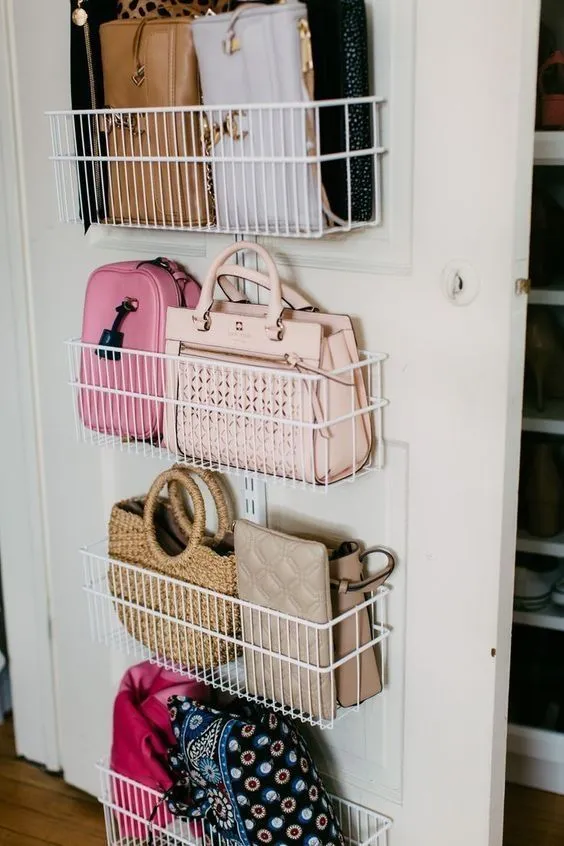
Here’s the thing I want you to take away from this entire guide more than anything else — the storage space you have been wishing your home had more of has been right there above you the entire time. Every room in your home has significantly more storage potential than you are currently using, and almost all of it is vertical.
You don’t need a bigger home. You don’t need a renovation. You need to look up, assess what’s there, and start putting that space to work with intention and a plan.
Start with one room — the one that frustrates you most or the one where the fix feels most achievable — and implement just the vertical storage ideas that apply there. Then move to the next room. Built wall by wall, room by room, the vertical storage in your home will compound into something that genuinely transforms how spacious, organized, and calm your home feels every single day.
My friend Zeina looked at her 600-square-foot apartment and saw vertical storage potential everywhere other people saw limitations. You can do exactly the same thing with your space. The square footage on your floor plan is not the full story. Look up, and start writing the rest of it.
Now go pin this complete guide, share it with someone who swears they don’t have enough storage in their home, and go look at every room with fresh eyes pointed at the ceiling.
Pin this and save it — every time you tackle a new room this guide will show you exactly how to use vertical space for storage and get the most out of every single wall!

Leave a Reply