
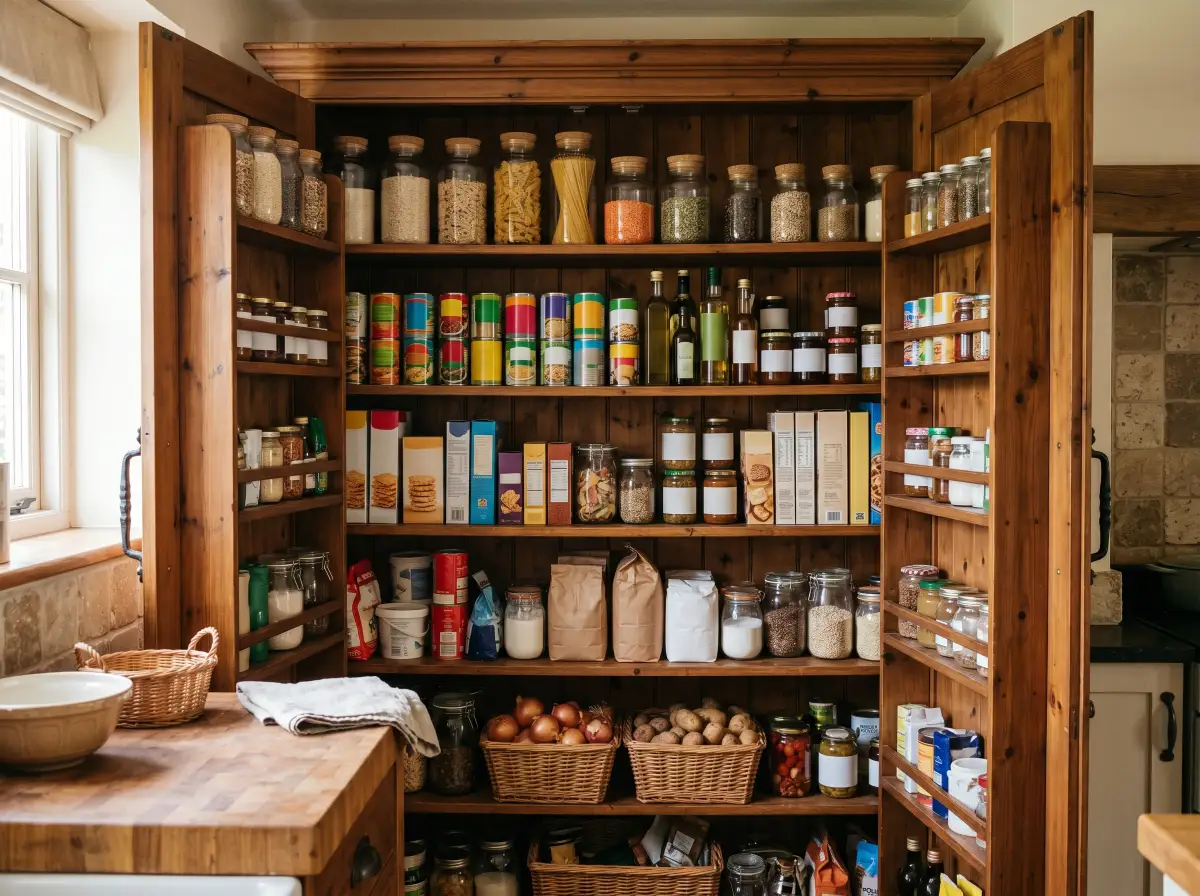
The most practical and genuinely beautiful pantry cabinet ideas that will transform your kitchen storage, end the chaos of searching for ingredients, and make every single meal prep session faster, calmer, and more enjoyable.
Let me ask you something. When you sit down to make dinner on a Tuesday night — not a fancy dinner, just a regular Tuesday dinner — how does the pantry experience go? Do you open the cabinet and immediately see exactly what you have, reach for the ingredient you need in seconds, and get cooking with zero friction?
Or do you open the door and spend three minutes moving things around looking for the cumin that you know is in there somewhere, discover that the pasta you thought you had is actually empty, and knock over a bottle of oil while reaching for the can of tomatoes at the back?
If the second scenario sounds familiar — and honestly, for most people, it does — your pantry is not working for you the way it should. And the difference between a pantry that makes meal prep harder and one that makes meal prep genuinely easier is almost entirely about the cabinet organization system inside it.
I became completely obsessed with pantry cabinet ideas when I moved into a home with a dedicated pantry cabinet for the first time in my adult life. I was so excited. And then I filled it haphazardly with everything that came out of my grocery bags, closed the door, and discovered that a dedicated pantry cabinet that isn’t organized is actually worse than no pantry at all — because now all the chaos is contained in one space and you have to dig through all of it every time you need anything.
My friend Shahad is a meal prep enthusiast in the most genuine, every-Sunday-without-fail way — she batch cooks for the whole week and her meal prep efficiency is something I find genuinely impressive. The secret she always credits is her pantry cabinet organization system.
She told me once that a well-organized pantry saves her at least twenty minutes every meal prep session — not because the ingredients are any different, but because finding them, assessing what she has, and planning around her stock takes almost no time at all when everything is visible, logical, and in its designated home.
These 10 pantry cabinet ideas are what I’ve learned from Shahad, from my own pantry obsession, and from researching what genuinely works in real kitchens with real households. Every single idea is practical, achievable, and going to make your Tuesday night cooking feel significantly less like an obstacle course. Let’s get into it.
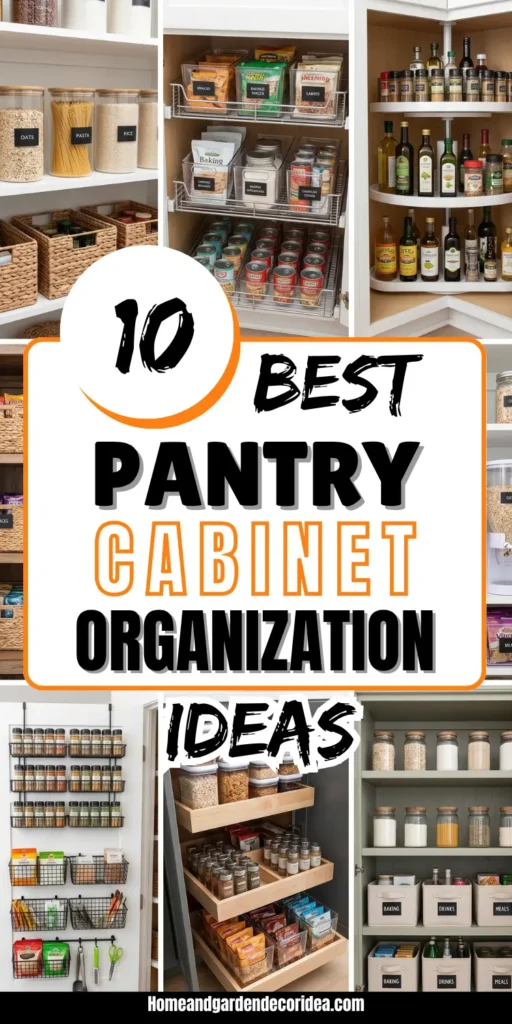
The Best Pantry Cabinet Ideas for Easier Meal Prep
1. Zone Your Pantry Cabinet by Meal Category, Not by Food Type

This is the pantry cabinet idea that has the single biggest impact on how quickly and easily you can execute a meal, and it is the complete opposite of how most people organize their pantries — which is by general food category (all cans together, all dry goods together, all snacks together).
Organizing by meal category means thinking about your actual cooking habits and grouping ingredients by how you use them together. A breakfast zone holds your oats, granola, cereals, nut butters, honey, and dried fruit — everything you reach for in the morning, together. A pasta zone holds your pasta varieties, canned tomatoes, tomato paste, olive oil, and the spices you use for Italian cooking. A baking zone holds flour, sugar, baking powder, vanilla, chocolate chips, and cocoa. A snack zone holds everything that gets grabbed between meals.
When your pantry is organized by meal category rather than food type, you stop making multiple trips to different parts of the pantry to gather ingredients for one dish. Everything for tonight’s pasta is in one zone. Everything for Sunday’s baking session is in one zone. You open the pantry, go to the relevant zone, grab what you need, and close the door. The efficiency gain is genuinely remarkable.
My friend Shahad uses seven zones in her pantry: breakfast, pasta and Italian, Asian cooking, baking, canned goods, snacks, and drinks. She says this single organizational decision cut more time from her meal prep sessions than anything else she has ever done.
How to implement it: Start by listing the five to seven types of meals your household makes most regularly. Those become your zones. Move everything in your pantry to its correct zone. Add a label to each shelf or section marking the zone name. Adjust the zones as your cooking habits naturally evolve.
2. Install Pull-Out Drawer Inserts in Deep Cabinet Shelves
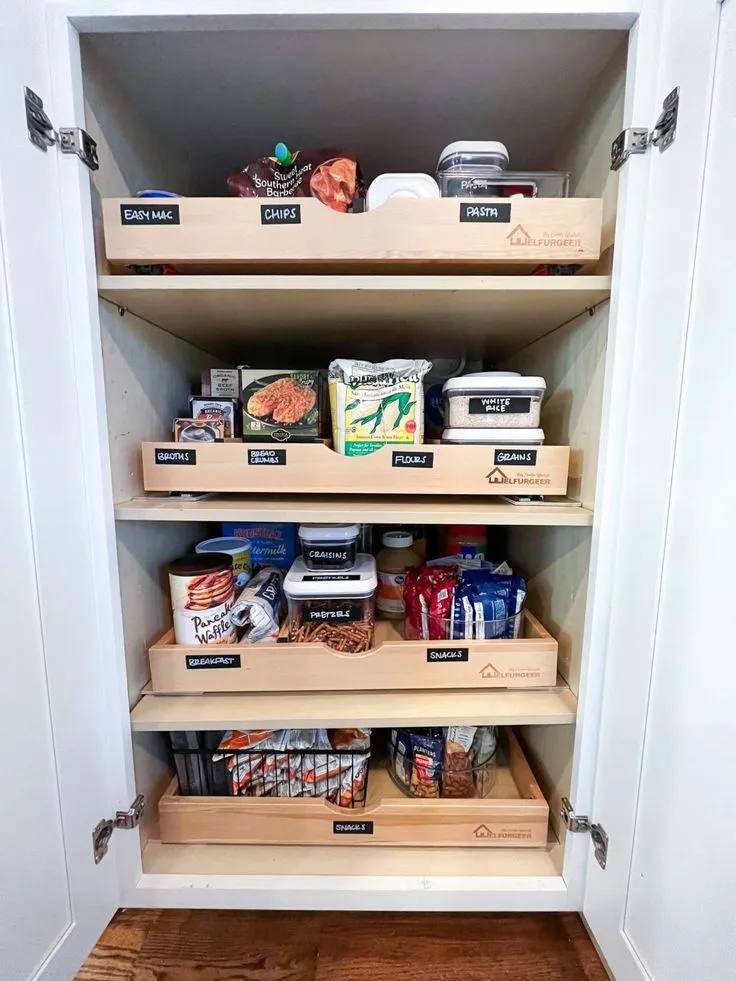
Oh my — this pantry cabinet idea is the one that makes me most excited to talk about because it solves the single most maddening problem with deep pantry cabinet shelves: the black hole effect where things disappear to the back and are never seen again until they expire.
Pull-out drawer inserts — the kind that mount inside your cabinet and create a shallow drawer that slides out toward you — transform a deep, inaccessible shelf into a fully visible, fully accessible storage zone where you can see and reach every single item without removing everything in front of it.
When you pull the drawer out, the entire contents of that shelf come with it, presenting themselves to you like a menu. The can of chickpeas you thought was gone is right there. The jar of tahini you bought last month is right there. Nothing is lost, nothing is forgotten, nothing expires undiscovered at the back of a shelf because you could not see it.
This is especially transformative in corner pantry cabinets and in any cabinet that is deeper than about 12 inches — which is almost every standard kitchen cabinet. The deeper the shelf, the more dramatically the pull-out drawer changes the accessibility and usability of that space.
How to implement it: Pull-out cabinet organizers are available at IKEA, Amazon, and The Container Store in a range of widths and depths. Measure your cabinet interior carefully before buying — the width of the pull-out needs to fit within your cabinet with a small clearance on each side. Most mount to the cabinet shelf with adhesive pads or small screws and require no professional installation.
Best picks: Rev-A-Shelf pull-out cabinet organizers, IKEA UTRUSTA pull-out shelf, YouCopia ShelfSteps cabinet organizer.
3. Use a Lazy Susan on Every Deep Corner Shelf
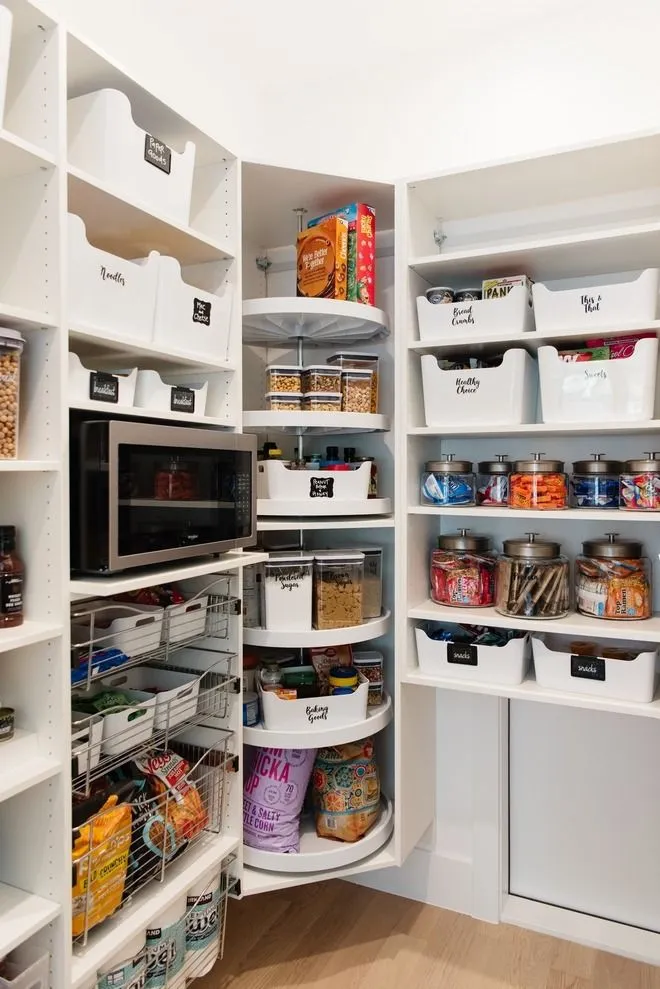
The corner shelf in a pantry cabinet is where spices, condiments, and small bottles go to be completely forgotten forever — and the lazy Susan is the pantry cabinet idea that rescues every single item that has been exiled to a corner shelf and never seen again.
A lazy Susan — a rotating circular platform that spins so every item on it can come to the front — placed on a corner pantry shelf means that nothing stays at the back. You spin the lazy Susan, every item rotates through the front, and you find what you need without moving anything else. For spices, condiments, sauces, and small bottles that tend to accumulate in corners, this is genuinely transformative.
A two-tier lazy Susan stacks two rotating levels in the same footprint, doubling your corner shelf’s functional capacity. For a pantry cabinet with deep corner shelves that currently holds a forgotten graveyard of condiments and spices you haven’t seen since you moved in, a two-tier lazy Susan is the single most impactful cabinet upgrade you can make for under $30.
How to implement it: Measure the depth of your corner shelf and the height between shelves before buying a lazy Susan. The turntable needs to fit within those dimensions with room to actually spin. Two-tier versions need enough vertical clearance for both tiers to rotate freely.
Best picks: mDesign lazy Susan turntable organizer, Copco non-skid lazy Susan, YouCopia SpiceStack rotating spice organizer.
4. Decant Dry Goods Into Clear Airtight Canisters With Labels
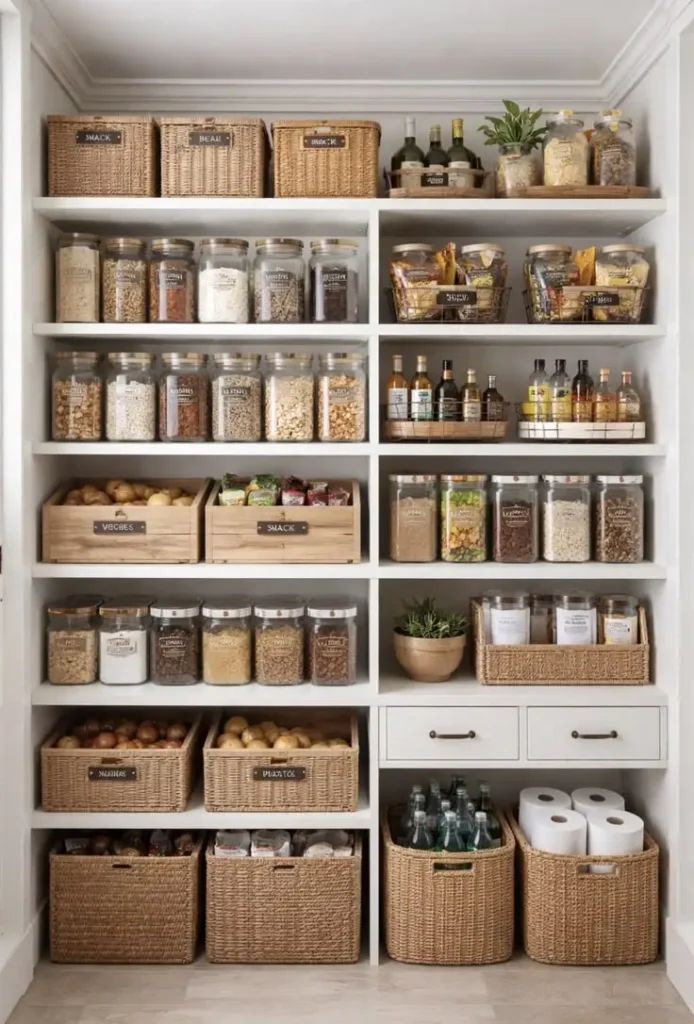
I have recommended this pantry cabinet idea in multiple articles in this series and I will keep recommending it because the transformation it creates is genuinely extraordinary and the impact on meal prep specifically is so significant that it deserves its own dedicated discussion.
When your dry goods — flour, sugar, pasta, rice, oats, lentils, nuts, seeds, granola — are in their original packaging, you cannot see how much you have without picking each bag or box up and checking. Bags get rolled and clipped and stored at awkward angles. Boxes take up more space than necessary. The visual chaos of different-sized original packaging all at different stages of emptiness makes it genuinely hard to assess your stock quickly.
When those same dry goods are decanted into matching clear airtight canisters, everything changes. You can see at a glance how much of everything you have — which is critical for meal planning and grocery shopping. The canisters stack neatly and use shelf space efficiently. The matching containers create visual calm that makes the pantry genuinely pleasant to look at. And the airtight seals keep everything fresher longer, which means less waste.
For meal prep specifically, the ability to open your pantry and immediately see “I have enough rice for this week, I’m running low on pasta, I need to buy more oats” without reading any labels or opening any packages saves real time and prevents the frustration of starting a recipe and discovering mid-cook that you don’t have enough of something.
How to implement it: Buy a matching set of canisters in sizes that suit what you’re storing — a few large ones for flour, sugar, and oats, medium ones for pasta and rice, small ones for nuts, seeds, and dried fruit. Label every canister before filling. Decant in one session so the pantry transforms all at once rather than gradually.
Best picks: Vtopmart 24-piece airtight container set (incredible value), OXO Good Grips POP containers (the premium standard), IKEA KORKEN glass jars for a more affordable glass option.
5. Add a Door-Mounted Spice Rack to the Inside of the Pantry Cabinet Door
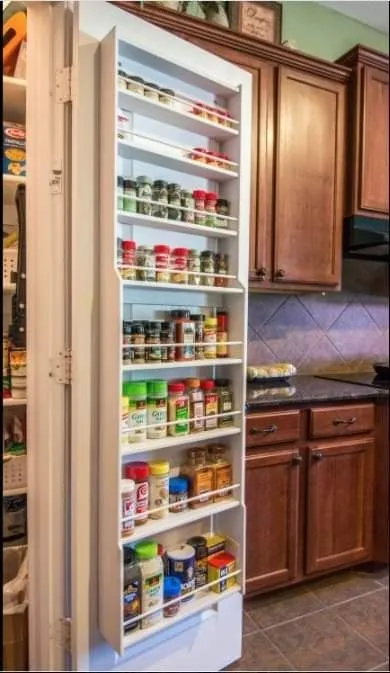
The inside of your pantry cabinet door is prime storage real estate that is almost universally being wasted — and a door-mounted spice rack turns that blank surface into one of the most efficient and accessible spice storage solutions in existence.
A spice rack that mounts to the inside of your pantry cabinet door holds your spices in narrow rows of small labeled bottles, all visible at a glance, all accessible the moment you open the door. No more digging through a cabinet shelf trying to find the paprika. No more discovering that you have four bottles of cumin because you kept buying it thinking you didn’t have any. No more spice jars falling over when you try to get the one at the back.
When your spices are on the inside of the door, they are the first thing you see when you open the pantry. They are at eye level. They are labeled. They are organized. And meal prep gets meaningfully faster because spices are the ingredient type you reach for most frequently and most urgently — usually in the middle of active cooking when you least want to be searching.
How to implement it: Measure the inside of your pantry door and the clearance between the door and the first shelf when the cabinet is closed before buying a door-mounted rack. The rack needs to fit within both dimensions. Most door-mounted spice racks attach with screws into the door and are very straightforward to install.
Best picks: Kamenstein door-mounted spice rack, SimpleHouseware over-door spice organizer, or search “door mount spice rack pantry” on Amazon for a wide range of sizes.
6. Create a First In, First Out System With Shelf Risers and Bin Positioning
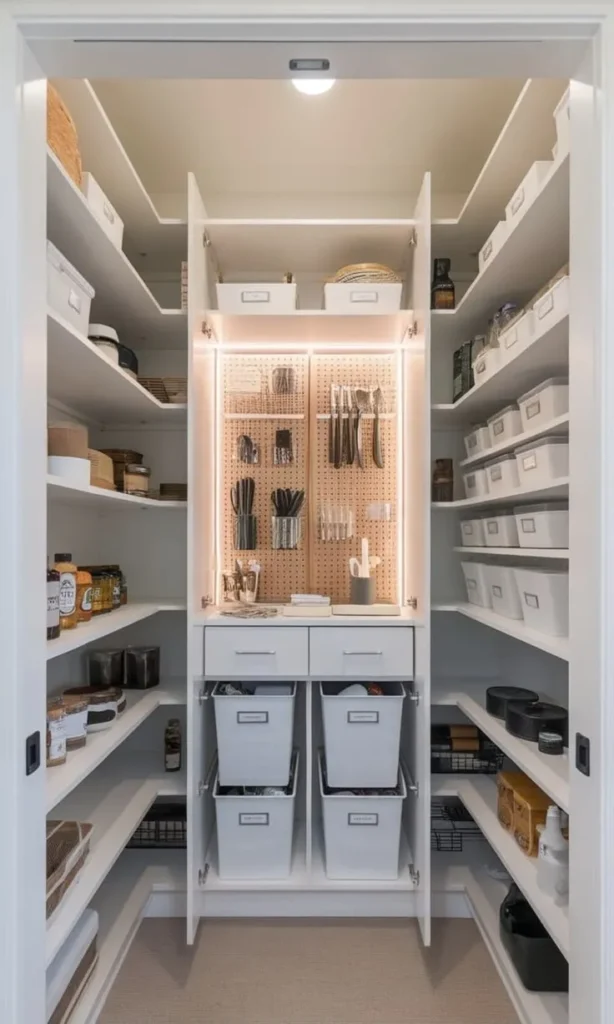
This pantry cabinet idea is more of a system design principle than a product recommendation, and it is the idea that ensures you never again have pantry items expire without being used — which is both a money-saving and a meal-prep-enhancing principle that makes a real difference in how efficiently your pantry serves your cooking.
The first in, first out principle — used in professional kitchens and food service for exactly this reason — means that when you bring new groceries home, the older items come to the front and the newer items go behind them. You always use the oldest stock first, which means nothing expires undiscovered.
Implementing this in a pantry cabinet requires shelf arrangements that make the front-to-back ordering easy to maintain. Deep shelves with two rows of products — older in front, newer behind — work naturally. Shelf risers that create a two-tier display on a single shelf (shorter items in front, taller items behind on the raised back section) work brilliantly for canned goods. First-in-first-out dispensers for cans — the kind where you load from the back and cans roll forward to the front — automate the whole system.
My friend Shahad implemented the FIFO system in her pantry after throwing away several expired cans in one pantry audit and feeling genuinely frustrated with the waste. She said it took one session to set up properly and she has not thrown away a single expired pantry item since.
How to implement it: Shelf risers from any home organization store. Can organizer dispensers (search “can dispenser pantry organizer” on Amazon) for canned goods. A simple habit of always putting new purchases behind older ones for everything else.
Best picks: Copco can organizer, Spectrum Diversified expandable shelf riser, SimpleHouseware stackable can rack organizer.
7. Install Adjustable Shelving So Every Inch of Cabinet Height Gets Used
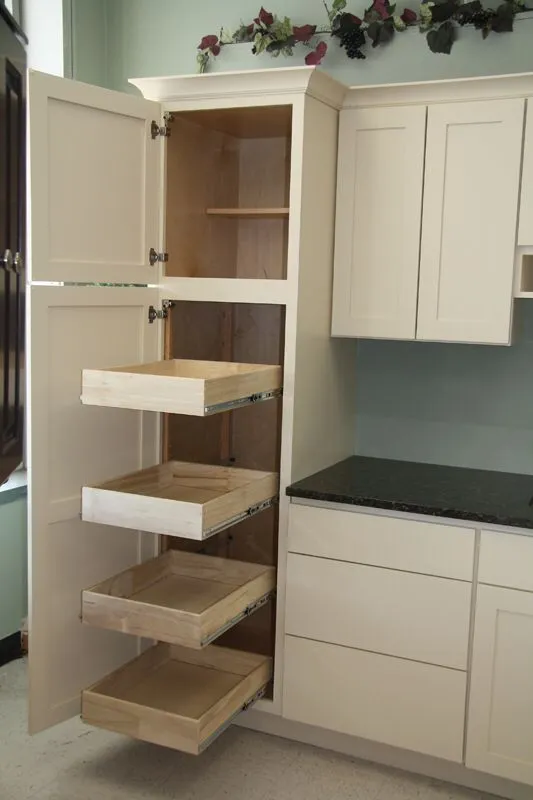
One of the most common ways pantry cabinet space goes to waste is fixed shelf heights that don’t match the items being stored — a shelf spaced for cereal boxes that now holds spice jars, leaving four inches of air above every jar. Or a shelf spaced for canned goods that now needs to hold tall oil bottles, requiring them to be stored on their sides. Fixed shelves that don’t match your actual pantry contents waste a surprising amount of vertical space.
Adjustable shelving — where the shelf brackets sit in vertical tracks at multiple heights and shelves can be repositioned at any increment — solves this permanently. You space your shelves to match exactly what is actually stored on each one: tall shelves for tall items, short shelves for short items, zero wasted air above anything.
This pantry cabinet idea is most impactful when you are setting up a new pantry cabinet or when you have enough flexibility in your current cabinet to add an adjustable shelving system. It is the foundation that makes every other pantry cabinet idea on this list work more efficiently.
How to implement it: IKEA’s cabinet systems (PAX, SEKTION, BESTA) all use adjustable shelf pins. For existing fixed-shelf cabinets, you can add adjustable shelf pin holes using a shelf pin drilling jig — a simple tool that ensures evenly spaced, level holes — and then add adjustable brackets and shelves.
Best picks: IKEA SEKTION kitchen cabinet system for a full pantry cabinet build. ClosetMaid adjustable shelf kit for retrofitting existing cabinets.
8. Dedicate One Basket or Bin to “Use First” Items That Need Using Up
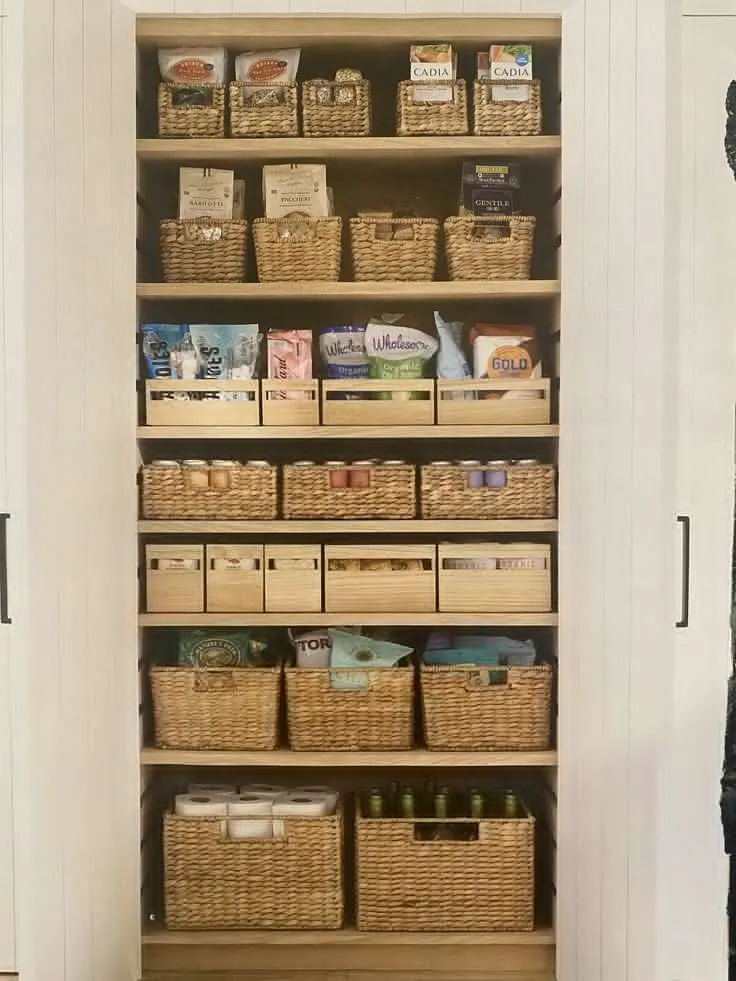
This pantry cabinet idea is one of the most practical and least talked-about organizational strategies for any kitchen — and it is the idea that directly prevents both food waste and the specific frustration of starting a week of meal prep not knowing what needs to be used up.
A single clearly labeled basket or bin in the most visible, most accessible position in your pantry — at eye level, at the front — is designated exclusively for pantry items that need to be used in the immediate future. Ingredients approaching their use-by date. Partially used packages that need to be finished before opening new ones. The half-used tin of coconut milk from last week’s curry. The nearly-finished bag of lentils.
When you do your weekly grocery shop or weekly meal planning, you check the “Use First” basket before anything else. You plan your meals around what’s in it. You reduce food waste, you use up ingredients before they expire, and your meal planning is automatically more informed because you can see exactly what needs using.
This is the pantry cabinet idea that Shahad says saves her the most money per week — because it turns what would have been thrown-away food into planned meals.
How to implement it: Any small to medium basket or bin at eye level in the most accessible position. Label it clearly “Use First” or “Use This Week.” Make checking it the first step of every meal planning session.
9. Group Meal Prep Supplies Together in One Dedicated Ready-to-Cook Zone
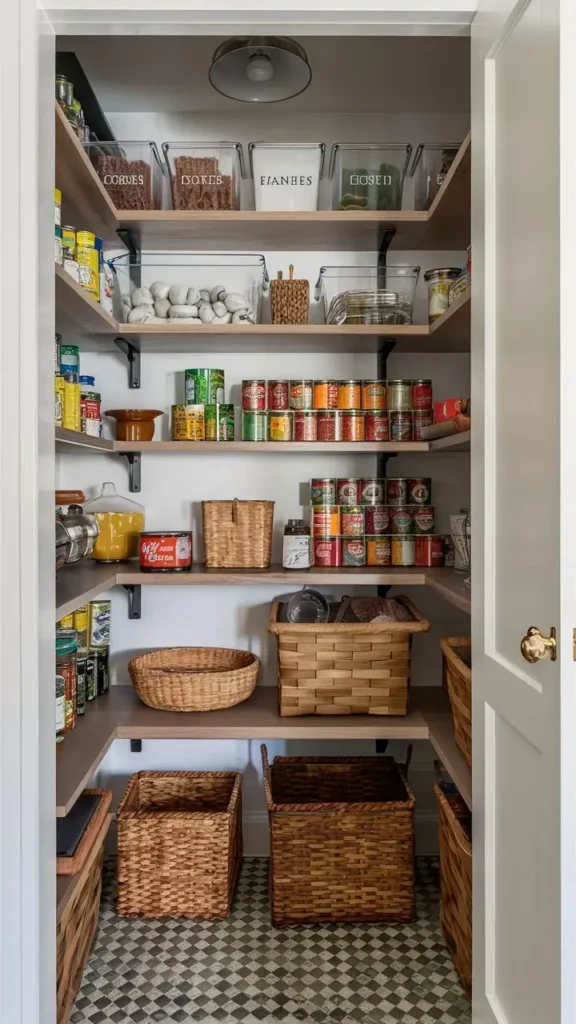
This pantry cabinet idea is specifically designed for the meal preppers, the batch cookers, and the anyone who does a dedicated cooking session once or twice a week — and it is the organizational decision that makes those sessions dramatically more efficient.
A dedicated meal prep zone in your pantry cabinet holds everything you need for a Sunday batch cooking session in one place: your cooking oils, your most-used spices and seasonings, your most-used sauces and condiments, your measuring cups and spoons, and your stock of the dry goods that feature most frequently in your meal prep rotation.
When Sunday meal prep time comes, you go to one zone and everything is there. You’re not moving around the kitchen gathering ingredients from different zones and different cabinets. Your oils are with your spices, which are with your sauces, which are with your dry goods. The zone itself functions as a mise en place — a French culinary term meaning “everything in its place” — that professional kitchens use specifically because it makes cooking faster, calmer, and more efficient.
How to implement it: Identify your five to ten most-used meal prep ingredients and keep them consistently in a single zone at the most accessible height in your pantry. Group by type within the zone: oils and vinegars together, spices and seasonings together, sauces and condiments together, dry goods most used in meal prep together.
10. Label Every Section, Every Bin, and Every Canister With Detailed, Useful Labels
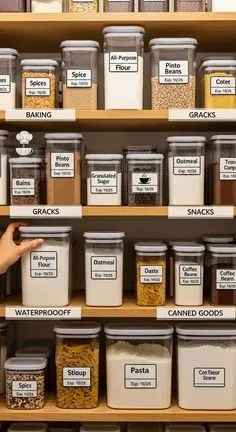
I am ending with this one because it is the pantry cabinet idea that makes every other idea on this list actually work — and it is so consistently underimplemented in real pantries that I want to give it the dedicated, specific attention it deserves.
Labels are not an aesthetic finishing touch. They are the functional infrastructure that turns a pantry cabinet from a space you have to think about into a system that runs automatically. When every zone, every bin, every canister, and every shelf section has a clear, specific, accurate label, you stop making decisions and start executing. The label tells you where things go. The label tells you what is inside. The label tells you what zone you are in. The cognitive load of maintaining and using the pantry drops to almost zero because the system answers every question before you have to ask it.
The specificity of labels matters enormously. “Baking” is less useful than “Baking — Flour, Sugar, Leavening.” “Pasta zone” is less useful than “Pasta Zone — Pastas, Canned Tomatoes, Olive Oil, Italian Spices.” The label should tell you, without opening or moving anything, whether what you’re looking for is in that zone.
For a meal prep context specifically, good labeling means you can do a pantry inventory in under two minutes — scanning each zone’s labels to assess your stock — which makes meal planning faster, grocery shopping more accurate, and mid-cook discoveries of missing ingredients almost entirely impossible.
How to implement it: A label maker produces the most professional, most consistent, most readable labels. If you don’t have one, printed labels on white sticker paper work equally well. Handwritten labels on washi tape are charming and perfectly functional. Whatever your chosen label method — use it on every single container, every single bin, every single zone. No unlabeled pantry storage. Every. Single. One.
Best picks: Brother P-Touch label maker (the gold standard for home organization labeling), NIIMBOT wireless label maker (the current trendy alternative that prints from your phone), or printable label templates on Etsy for a beautiful handcrafted look.
The Before and After of a Well-Organized Pantry Cabinet
I want to paint you two pictures of the same Tuesday night cooking experience — before these pantry cabinet ideas and after — because I think the contrast illustrates better than any list of features why this matters so much to your daily life.
Before: You decide to make a stir fry. You open the pantry and scan for soy sauce — it is somewhere in there but not immediately visible. You move four things and find it at the back. You look for sesame oil and cannot find it. You wonder if you have rice — you open a half-used bag and discover it is nearly empty. You check for the noodles you thought you had and discover the package is actually empty. You have to change the recipe mid-plan. You’re frustrated before you’ve even started cooking. The whole experience takes fifteen minutes of pantry navigation for a thirty-minute meal.
After: You decide to make a stir fry. You open the pantry and go directly to your Asian cooking zone. The soy sauce is right there. The sesame oil is right beside it. The rice canister is clearly visible and you can see at a glance it is three-quarters full. The noodles are in the same zone in a sealed canister you can see is full. You pull out what you need in ninety seconds and start cooking. The pantry did its job invisibly, the way a well-organized system always should.
That before and after is real. My friend Shahad lived the before for years before she implemented these ideas, and she says the difference in how she feels on cooking days is genuinely significant — calmer, more efficient, more in control of her kitchen.
These Pantry Cabinet Ideas Will Make Every Meal Prep Session Better
Every single pantry cabinet idea on this list is achievable this weekend. Not a renovation weekend — an organizing weekend. A few hours, a label maker, a set of canisters, a lazy Susan, a can of determination, and your pantry will be completely transformed.
The reward is a kitchen that works harder for you than it ever has. A meal prep experience that is genuinely faster and genuinely calmer. A pantry you actually open with a small feeling of satisfaction rather than a small feeling of dread. And the specific pleasure — which I promise you will feel — of a Tuesday night dinner that comes together smoothly because your pantry cabinet is doing its job beautifully.
Start with the zone system and the labels. Those two changes alone will make the most immediately visible difference. Add the canisters, the lazy Susans, and the pull-out drawers as budget and time allow. Each addition makes the system better. The cumulative result is a pantry that makes every meal prep session significantly easier — every single week, for as long as you maintain it.
Now go pin every single one of these pantry cabinet ideas, share this with the person in your life who meal preps or wishes they could, and go open your pantry with fresh eyes and a plan.
Pin this and save it — these are the pantry cabinet ideas you will come back to every time you reorganize your kitchen and want your meal prep to be faster, calmer, and genuinely enjoyable!





Leave a Reply